




 Ask an Expert

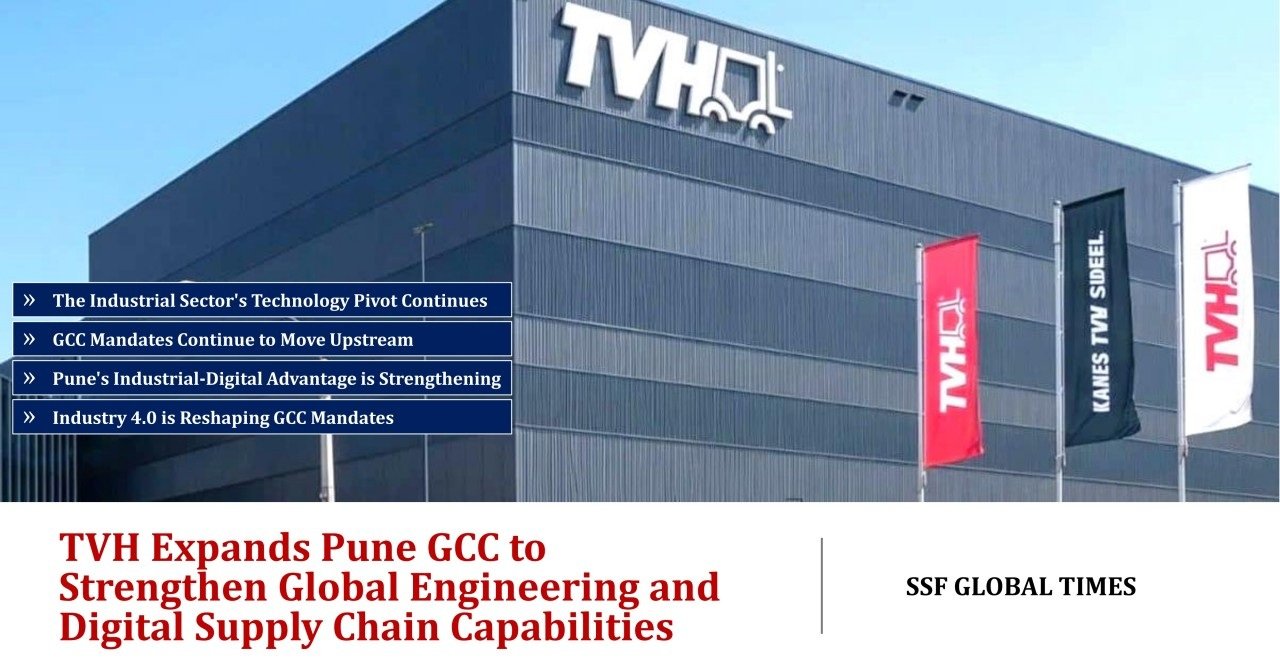
PUNE | 15 July 2026: TVH has expanded its Global Capability Centre (GCC) at Phoenix Fountainhead in Viman Nagar, Pune, increasing its seating capacity to 400 employees to support a growing engineering, technology and business transformation workforce.
The expansion marks an important evolution in TVH’s India operations. Far from functioning as a conventional support centre, the Pune facility has grown into a significant engineering and digital capability hub within the company’s global operating model. The centre supports engineering, digital product development, enterprise applications and business transformation initiatives that enable TVH’s vast global network serving the material-handling, industrial, agricultural and construction equipment sectors across more than 180 countries.
KEY HIGHLIGHTS
- Digital Capability Expansion: TVH has expanded its Pune GCC to strengthen capabilities across engineering, enterprise applications, data, digital transformation and technology services.
- Capacity Expansion: The multi-level extension adds approximately 150 new seats, increasing the facility’s overall capacity to 400 professionals.
- Global Collaboration Model: The upgraded centre is designed to support real-time collaboration with teams across Europe, North America and the Asia-Pacific region.
- Infrastructure for Innovation: The expanded office incorporates collaborative workspaces, digital displays and an atrium-style innovation area designed to facilitate technical workshops, agile development and cross-functional problem solving.
- Long-Term India Commitment: TVH leadership reaffirmed India’s strategic role in supporting the company’s technology, engineering, data and digital transformation priorities.
Founded in 1969 and headquartered in Waregem, Belgium, TVH is among the world’s largest independent aftermarket suppliers of parts and accessories for lift trucks, industrial equipment, construction machinery and agricultural vehicles. The company operates through more than 90 branches worldwide, serving customers in over 180 countries through a global workforce exceeding 5,000 employees. Beyond spare parts distribution, TVH’s portfolio extends into remanufacturing electronic components, equipment services and technical training, positioning the company as an important enabler of uptime and operational continuity across the global heavy equipment ecosystem.
ARCHITECTING THE INDUSTRIAL SUPPLY CHAIN
Managing a global supply chain for industrial, construction and agricultural equipment require sophisticated digital infrastructure and extensive data orchestration. Inventory visibility across millions of specialized parts, cross-border order fulfilment, supplier coordination and customer responsiveness – all depend on resilient enterprise technology systems. To support these requirements, the Pune facility is structured to provide critical engineering and digital capabilities across several strategic areas:
- Digital Product Engineering: Development teams support digital commerce platforms, customer interfaces and enterprise applications that enable customers to source parts, track shipments and manage equipment lifecycles more efficiently.
- Enterprise Technology and Data Platforms: Engineering and analytics teams contribute to enterprise data initiatives focused on inventory optimization, demand forecasting and enhanced supply chain visibility across global operations.
- Business Transformation and Enterprise Systems: The centre supports enterprise platforms including ERP systems, collaboration technologies and business applications that help standardize processes and improve operational consistency across regions.
- Industrial Digitization and Industry 4.0: As industrial enterprises accelerate adoption of connected assets, intelligent supply chains and predictive maintenance technologies, the Pune centre is expected to support broader digital transformation initiatives across TVH’s global ecosystem.
India continues to play a strategic role in TVH’s global operations, with our Pune Global Capability Centre supporting critical capabilities across technology, data, engineering and digital transformation. This expansion reflects our long-term commitment to strengthening these capabilities by investing in the right infrastructure, talent and collaborative environment.
INDIA’S INDUSTRIAL ENGINEERING GCC ECOSYSTEM GAINS MOMENTUM
TVH’s expansion mirrors a broader trend across India’s industrial and manufacturing GCC ecosystem. Global engineering and industrial enterprises including Siemens, Bosch, Schneider Electric, Volvo Group and Caterpillar have steadily expanded their India mandates beyond traditional shared services into product engineering, industrial software, digital manufacturing and connected equipment technologies.
Industry estimates suggest engineering R&D and industrial capability centres today employ well over 700,000 professionals across India, reinforcing the country’s position as one of the world’s largest hubs for engineering and industrial technology talent outside Europe and North America. As manufacturers increasingly become software-defined enterprises, India is emerging as a strategic destination for industrial innovation, digital engineering and intelligent supply chain capabilities.