




 Ask an Expert

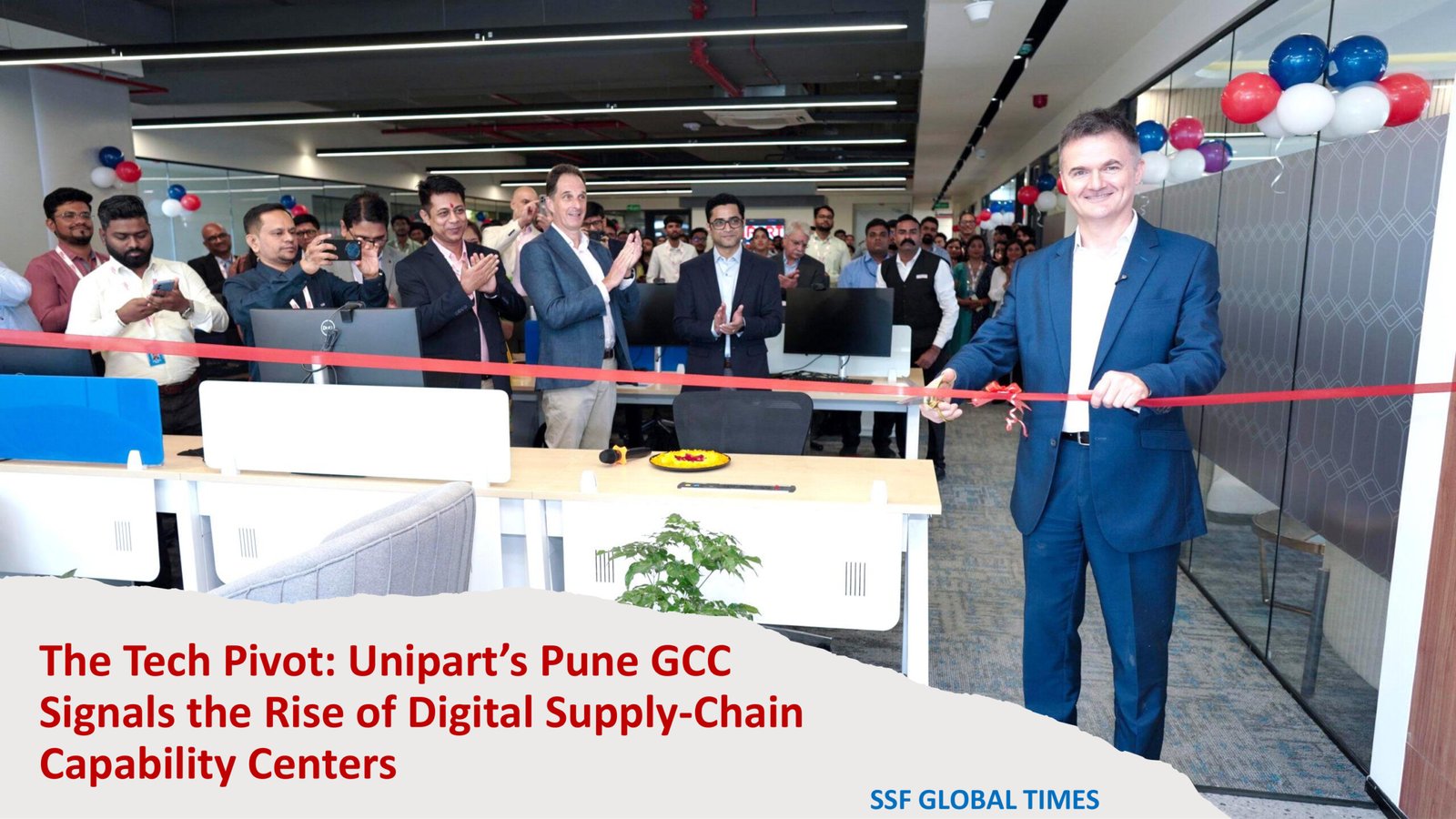
PUNE | May 19, 2026: Unipart, the UK-headquartered supply chain and logistics enterprise, has inaugurated its new Global IT Centre of Excellence in Pune. While the announcement may appear at first glance to be another GCC expansion story, the underlying strategic intent suggests something more significant: the creation of an enterprise technology capability hub designed to support the next phase of Unipart’s digital supply-chain evolution.
For GCC observers, the key question is not how large the center will become, but why the center exists in the first place. And the answer lies in the changing nature of global supply chains themselves.
Why This Centre
The logistics and supply-chain industry is undergoing a structural transformation. Enterprises are no longer competing only through physical distribution networks or operational scale. Increasingly, competitiveness depends on how intelligently organizations can integrate technology, data, platforms, and operational decision-making.
Modern supply chains now require:
- real-time operational visibility,
- predictive intelligence,
- integrated enterprise systems,
- automation-led workflows,
- and digitally connected execution models.
For organizations operating across multiple geographies, fragmented technology environments often become a major operational constraint. Legacy systems, disconnected workflows, and limited data visibility can slow responsiveness, increase operational complexity, and restrict enterprise-wide decision-making.
The Pune Global IT Centre of Excellence appears to be Unipart’s response to these challenges. The center has been setup to help centralize and strengthen enterprise technology capability across Unipart’s global operations. Rather than functioning as a transactional support unit, the GCC is positioned to enable digital integration, accelerate modernization initiatives, and support operational intelligence at scale.
In effect, the center is being established to strengthen the technology backbone that supports global supply-chain operations. Even today, the center appears to sit beyond the maturity profile of a conventional process-driven GCC.
While traditional process centers are typically designed around standardized execution, operational support, repetitive workflows, and cost optimization; the indicators in Unipart’s case point toward a more advanced capability orientation. This IT Centre of Excellence is expected to support functions such as digital supply-chain platforms, enterprise systems modernization, software engineering, analytics, and integrated logistics technologies. These are capabilities that directly influence operational agility, technology architecture, and enterprise scalability.
From a GCC maturity perspective, the center currently aligns more closely with a Value Centre transitioning toward a Strategic Enterprise Capability Hub. That distinction is important because the center’s role appears linked to enterprise modernization, platform capability, digital transformation, and operational intelligence, rather than isolated support execution. This reflects the broader direction of next-generation GCCs globally, where enterprises increasingly expect India-based centers to participate directly in business transformation and technology ownership.
Unipart’s decision to expand in Pune also aligns with the city’s growing positioning within India’s GCC ecosystem. Pune has steadily evolved into a strong industrial-tech corridor with depth across manufacturing technology, industrial engineering, enterprise software, digital engineering, automotive systems, and operational technology capabilities. For supply-chain and manufacturing enterprises, this combination is increasingly valuable because future transformation programs require talent that understands both industrial operations and enterprise technology systems. As logistics becomes more software-defined, the convergence between operational expertise and digital capability becomes a core enterprise requirement.
Darren Leigh (CEO) highlighted that the Pune talent pool will build a high-performance team to solve complex digital challenges and deliver superior customer solutions.
The Mandate: Building Enterprise Technology Capability
The IT CoE is strategically important with what appears to be three broad strategic mandates:
- First, it is expected to help improve integrated supply-chain visibility across global operations. In logistics businesses, fragmented operational data can significantly affect responsiveness, forecasting, and execution efficiency. Centralized digital capability becomes critical in enabling real-time decision-making.
- Second, the center is expected to support enterprise modernization. Global logistics firms are under pressure to modernize warehouse systems, logistics platforms, customer interfaces, operational analytics, and automation capabilities. Sustaining this transformation requires centralized engineering and technology capability rather than fragmented regional execution.
- Third, the centre will help institutionalize digital capability within the enterprise itself. Historically, many logistics organizations depended heavily on external technology ecosystems for modernization. Increasingly, however, enterprises want tighter ownership of their digital platforms, operational intelligence, and engineering capabilities.
The shift we see is about embedding enterprise-critical capability into globally integrated operating models. In the words of Richard Gifford (IT Director) – “the COE is a strategic driver for technical pillars, with the local team partnering globally to scale capacity and add specialized depth.”
The Strategic Outlook
Unipart’s expansion reflects a broader trend emerging across the GCC ecosystem in 2026. Industrial and logistics enterprises are increasingly establishing specialized capability centers in India focused on enterprise platforms, AI-enabled operations, digital engineering, analytics, and transformation management.
Unipart’s Pune IT Centre of Excellence represents more than a geographic expansion. It reflects how logistics enterprises are redesigning their operating models around digital capability and enterprise technology ownership.
The significance of the center lies not in workforce scale, but in the role it is expected to play within the company’s larger transformation agenda. As global supply chains become increasingly digital, data-driven, and platform-centric, GCCs are evolving from support organizations into enterprise capability engines.
And in that evolution, specialized centers such as Unipart’s Pune GCC are likely to become increasingly central to how global enterprises build resilience, responsiveness, and long-term competitive advantage.