




 Ask an Expert

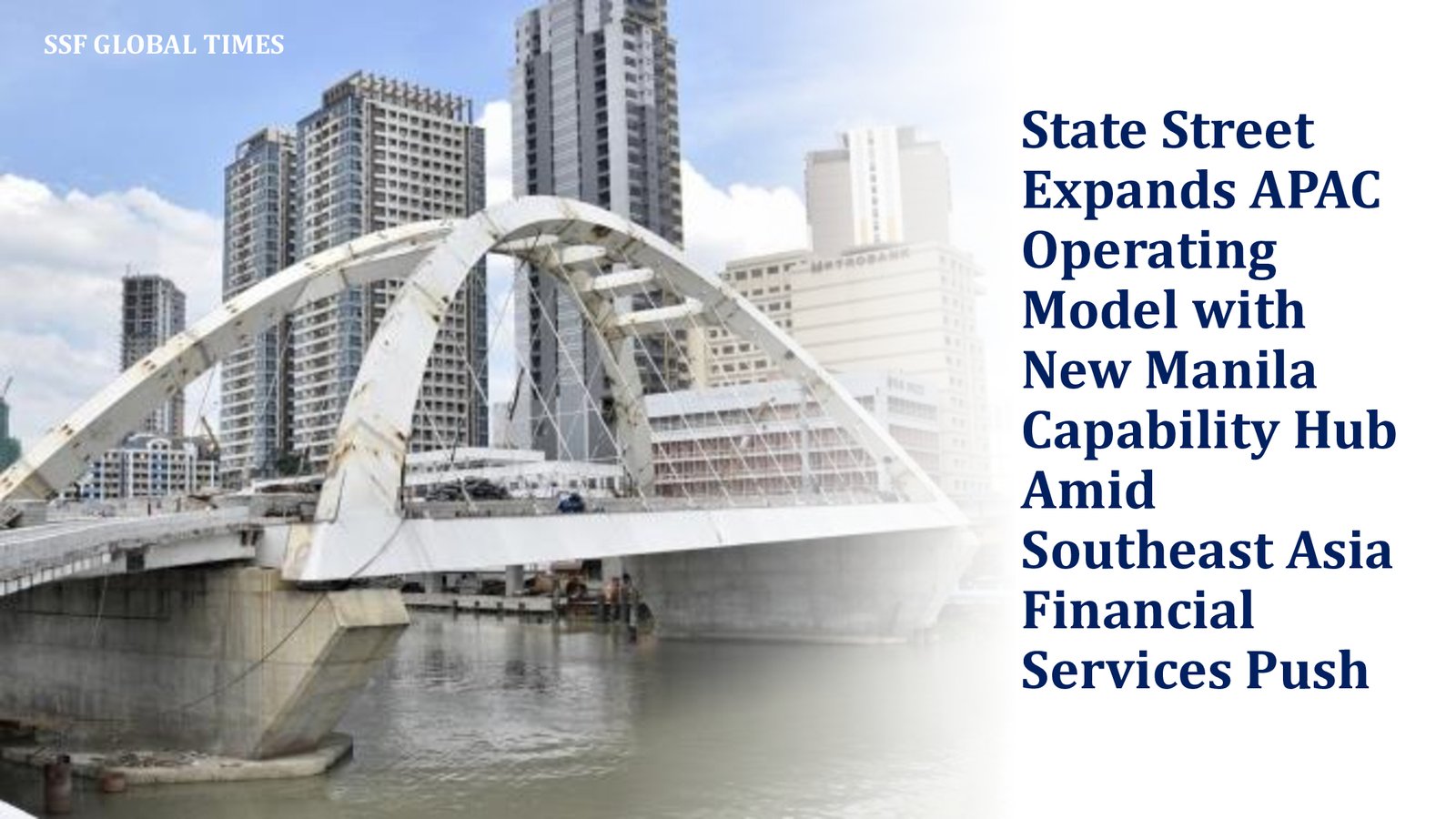
MANILA | May 22, 2026: State Street Corporation has announced the establishment of a new office in Manila, Philippines, scheduled to commence operations in the second half of 2026, marking a significant expansion of the firm’s Asia-Pacific operating footprint and institutional processing capabilities.
After the recent announcement by Mizuho Financial Group, this news unfolds a structural trend across the global banking and financial services industry, where firms are increasingly diversifying and regionalizing operating models to strengthen scalability, resilience, regulatory responsiveness, and access to specialized talent pools across Asia.
Headquartered in Boston, State Street is among the world’s largest providers of financial services to institutional investors, with approximately US$54.5 trillion in assets under custody and/or administration (AUC/A) and US$5.6 trillion in assets under management (AUM) as of March 31, 2026. The company services more than 12% of global financial assets across over 100 geographic markets and employs approximately 51,000 professionals worldwide.
The Manila office will become State Street’s 17th location in the Asia-Pacific region, further deepening a regional presence that spans more than four decades.
The Asia Pacific region is critical to our long-term growth strategy…. The expansion into Manila is an important step in the continued evolution of our global operating model as we continue to support significant client growth in the region.
Philippines Strengthens Position in Global Financial Services Delivery
State Street’s expansion into Manila comes amid growing momentum for the Philippines as a strategic destination for globally integrated financial services operations. While India continues to dominate the global GCC landscape in terms of scale and digital engineering maturity, Southeast Asian markets, particularly the Philippines, are increasingly strengthening their positioning in institutional operations, financial processing, customer operations, compliance support, and shared services delivery.
The company specifically highlighted Manila’s “University Belt” and its access to a young, highly educated, and diverse talent pool with financial services and operations expertise as a key factor behind the expansion decision. Industry observers note that global financial institutions are progressively adopting multi-location operating strategies across Asia to balance:
- Talent availability and workforce sustainability
- Operational resilience and business continuity
- Regulatory and geopolitical diversification
- Proximity to regional institutional clients
- Long-term scalability of core processing operations
This operating model evolution has accelerated in recent years as firms reassess concentration risks and seek geographically distributed capability ecosystems.
Expanding Institutional Processing and Operational Scale
The new Manila office is expected to strengthen State Street’s institutional processing frameworks supporting increasingly complex global asset servicing environments.
Although the company has not disclosed specific functional mandates for the facility, the expansion is expected to support broader operational scalability across middle-office, back-office, and client servicing functions aligned to the firm’s APAC growth strategy.
The development also aligns with wider industry shifts across asset servicing, custody banking, and institutional operations, where firms are modernizing global delivery architectures to manage:
- Rising transaction complexity
- Regulatory reporting demands
- Cross-border asset servicing requirements
- Digital operations transformation
- Increased institutional client expectations for speed and operational resilience
Across the global BFSI sector, firms including JPMorgan Chase, Citigroup, HSBC, Northern Trust, and BNY have continued expanding Asia-based capability ecosystems to support globally integrated banking and investment operations.