




 Ask an Expert

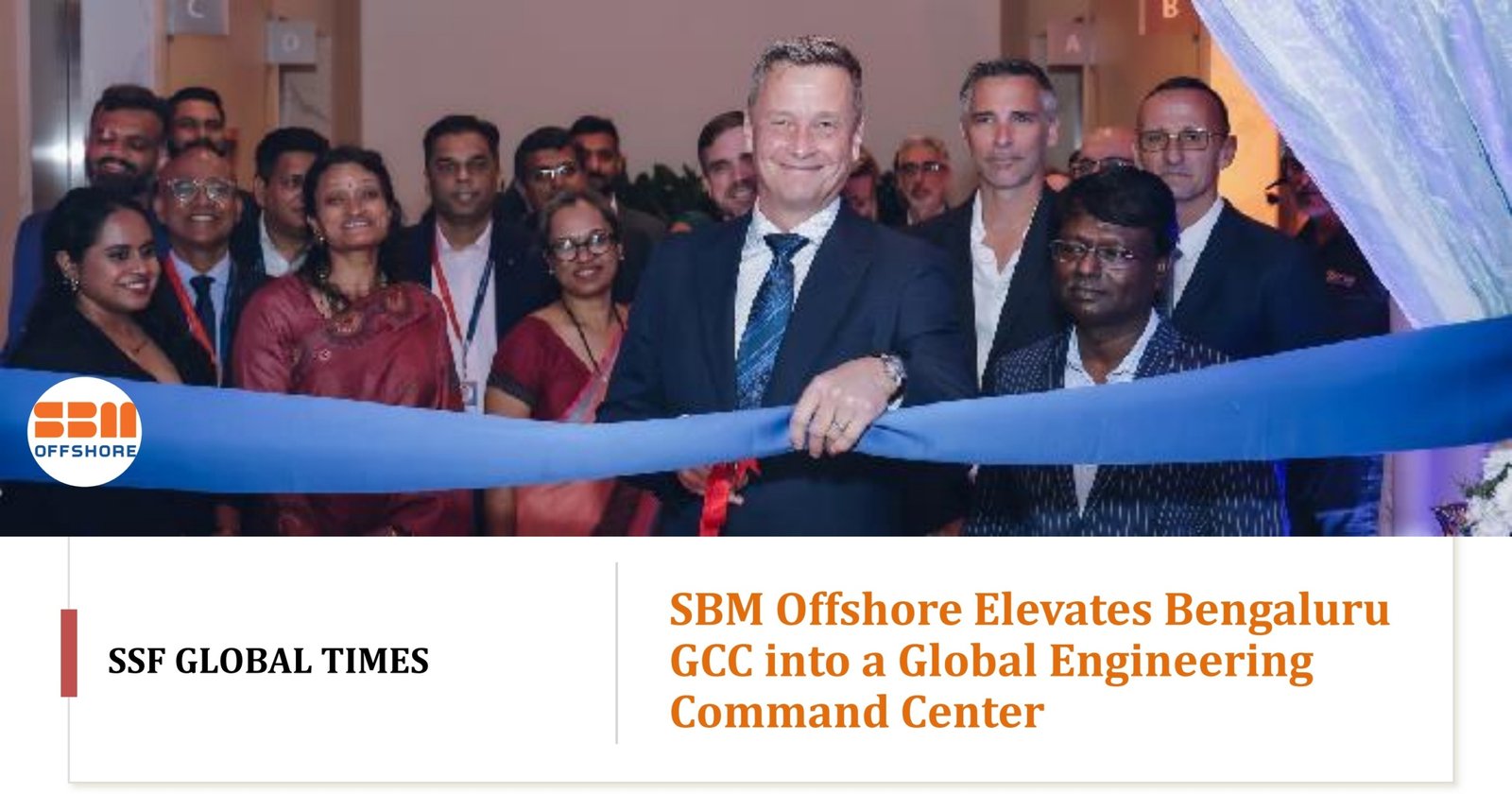
BENGALURU | May 22, 2026: SBM Offshore, a global company in deepwater ocean infrastructure, SBM Offshore has elevated its Bengaluru operation into one of the most critical engineering centers within its global network, with the India team now executing up to 60% of the company’s engineering activities and as much as 80% of its detailed engineering design work worldwide. The inauguration was attended in person by SBM Offshore Chief Executive Officer Oivind Tangen, alongside Scott Sandlin, ExxonMobil’s India Country Chair, and Anne Cremers, the Dutch Deputy Consul General. This convergence of global corporate leadership, massive energy clients, and diplomatic officials signals an important milestone in SBM Offshore’s global operating model, in how multi-billion-dollar deepwater ocean infrastructure is managed, engineered, and executed on the global stage.
Operating a one of the world’s largest FPSO fleets of Floating Production Storage and Offloading (FPSO) units, SBM Offshore relies heavily on technical precision and complex logistical orchestration.
To anchor this output, the company currently employs approximately 790 professionals in India, with immediate plans to scale by an additional 200 high-value roles. Navigating asset lifecycles of this magnitude requires unprecedented industrial expertise; to optimize these massive operations, the conglomerate is actively leveraging its Indian hub to run worldwide procurement pipelines, deploy advanced digital twins, and drive lifecycle innovation directly from Bengaluru. In the current scenario, ‘Digital Twins’ are becoming foundational to modern offshore asset management, enabling operators to simulate equipment performance, predict maintenance requirements, optimize production, and improve safety outcomes across multi-billion-dollar offshore installations.
The Evolution
India-based teams are now designing and managing critical physical infrastructure. SBM Offshore’s expansion reflects a broader trend in which engineering-led GCCs are taking ownership of core industrial operations. From offshore energy and aerospace to automotive and advanced manufacturing, global companies are increasingly leveraging India not just for digital capabilities, but for high-value engineering, design, and asset lifecycle management.
We started as a joint venture in 2019 primarily as an engineering center. Initially we were doing around 10 per cent of engineering work”. Over time, the scope drastically expanded. “Year on year we added the functions consisting of the entire project lifecycle.
The site now takes direct ownership of highly complex functions that span the entire project lifecycle, including:
- Integrated Project Delivery: Functioning as a centralized hub for brownfield project execution, fleet operations, and lifecycle support activities across the global offshore fleet.
- Digital Innovation and Operations: Leading enterprise-wide digital solutions, administering digital twins of massive offshore assets, and managing global asset integrity.
- Global Supply Chain Command: The Bengaluru office now operates as a worldwide procurement hub for critical components. For instance, piping and valves required for any project executed globally are now sourced and managed directly through India.
Brathaban Karuppaiah confirmed the sheer scale of this responsibility: “Any project anywhere in the world that we execute, in order to procure piping, it will be coming to the Bengaluru office”
Why are offshore energy companies expanding engineering GCCs
- Energy Transition Pressures: Energy companies must simultaneously maintain existing hydrocarbon assets while supporting new sustainability and decarbonization initiatives, increasing the demand for specialized engineering capabilities.
- Asset Optimization Requirements: With offshore infrastructure representing multi-billion-dollar investments, operators are prioritizing lifecycle management, reliability, and production efficiency to maximize asset returns.
- Digital Twins Adoption: The growing use of digital twins is enabling real-time monitoring, predictive maintenance, and operational simulations, making advanced engineering expertise central to asset management.
- Engineering Talent Shortages: Aging workforces and limited availability of specialized offshore engineering talent in traditional energy hubs are driving companies to build scalable global engineering centers.
- Cost and Schedule Discipline: Increasing pressure to avoid project overruns has led organizations to centralize engineering, procurement, and execution functions to improve coordination and project control.
- Increasing Project Complexity: Modern offshore developments involve more sophisticated technologies, stricter regulatory requirements, and greater integration across systems, requiring larger and more specialized engineering teams.
Building a Globally Integrated Engineering Network
Corporate headquarters no longer views the Bengaluru facility through the outdated lens of a backend support unit; instead, it is being integrated as an equal institutional peer to the bank’s traditional European nerve centers. This expansion signals a deliberate move toward decentralizing core engineering. SBM Offshore is establishing absolute greater operational integration and organizational parity across its international offices, ensuring that the Indian engineering hub possesses the exact same infrastructure, autonomy, and strategic weight as its Western counterparts.
Highlighting this push for seamless global integration, Brathaban Karuppaiah noted the company’s commitment to baseline equality: “We wanted to give an office to our employees on par with international offices. When you walk into any office, be it in Monaco, Rotterdam, or India, you shouldn’t feel any difference at all.”
This philosophy of parity underscores a broader reality: when the work being executed in India dictates the success of multi-billion-dollar maritime projects, the workplace environment must reflect that heavy enterprise responsibility.