




 Ask an Expert

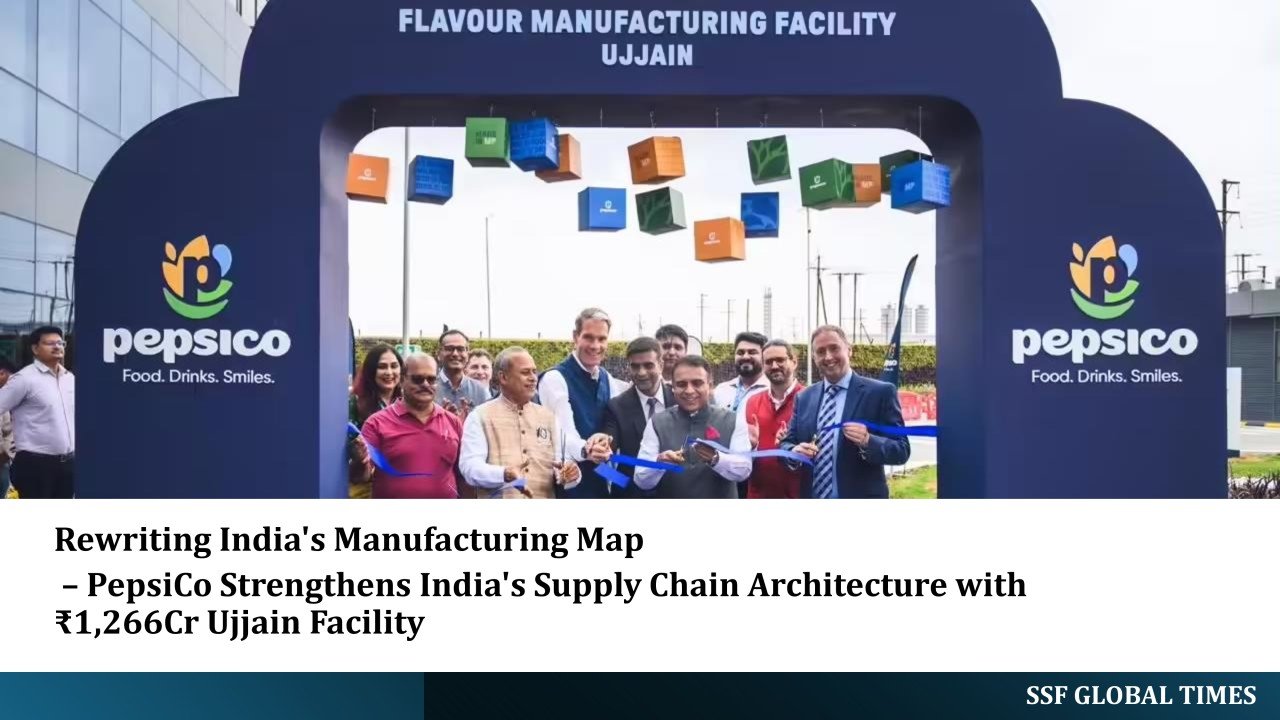
UJJAIN | 1 July 2026: PepsiCo India has commenced operations at its new ₹1,266 Cr beverage concentrate manufacturing facility in Ujjain, Madhya Pradesh, marking another significant investment in the localization of India’s manufacturing and supply chain ecosystem. Spread across 22 acres, the facility will manufacture beverage concentrates, the proprietary ingredients that form the foundation of PepsiCo’s beverage portfolio across the country.
Beyond the commissioning of a new manufacturing plant, the investment reflects a broader structural shift underway across global manufacturing. Multinational companies are increasingly localizing critical production capabilities within India to strengthen supply chain resilience, reduce import dependence, improve operational agility and serve one of the world’s fastest-growing consumer markets more efficiently.
The Ujjain facility forms part of PepsiCo’s broader ₹5,700 Cr investment commitment in India through 2030 and becomes the company’s second beverage concentrate manufacturing facility in India and its ninth globally.
KEY HIGHLIGHTS
- PepsiCo has operationalized a ₹1,266-crore beverage concentrate manufacturing facility in Ujjain, Madhya Pradesh.
- The plant becomes PepsiCo’s second concentrate manufacturing facility in India and ninth globally.
- Forms part of the company’s ₹5,700-crore long-term India investment strategy through 2030.
- Expected to generate nearly 500 direct and indirect employment opportunities.
- Facility operates on renewable energy and incorporates Zero Liquid Discharge (ZLD) technologies.
Headquartered in the United States, PepsiCo is one of the world’s largest food and beverage companies, operating an extensive manufacturing and distribution network across global markets. India continues to be one of the company’s fastest-growing markets, supported by a large consumer base, expanding manufacturing ecosystem and integrated agricultural supply chains.
Within Madhya Pradesh, PepsiCo already works with more than 2,000 farmers through its agricultural sourcing programmes for potato cultivation. The new investment further deepens this regional manufacturing ecosystem by adding high-value beverage ingredient production alongside existing agricultural partnerships.
Building Supply Chain Resilience Through Localization
Unlike conventional beverage manufacturing facilities that produce finished products, the Ujjain plant will manufacture beverage concentrates, the proprietary formulations that serve as the foundation for PepsiCo’s beverage portfolio before final production by regional bottling partners.
Localizing concentrate production fundamentally strengthens supply chain resilience. Manufacturing these critical inputs within India reduces dependence on imported ingredients, minimizes exposure to global logistics disruptions, lowers currency and trade-related risks, and enables faster response to domestic market demand. The addition of Ujjain alongside PepsiCo’s existing concentrate facility in Punjab creates a geographically distributed manufacturing network that improves business continuity while ensuring consistent supply to bottling operations across the country.
The CEO of International Beverages, PepsiCo, also highlighted India’s growing strategic importance, in the below statement.
India continues to be a strategic growth market for PepsiCo globally, and the inauguration of this facility, the ninth globally, and our second in India, further reinforces our long-term commitment to the country.
Central India Emerges as a Strategic Manufacturing Corridor
The investment also reflects the changing geography of manufacturing investment in India. While industrial growth has historically concentrated around coastal states and traditional manufacturing clusters, central India is increasingly emerging as an attractive destination for advanced manufacturing.
Madhya Pradesh has steadily strengthened its industrial ecosystem through improved logistics infrastructure, expanding industrial corridors, policy support and competitive operating costs. Combined with its central location, the state offers manufacturers faster connectivity across northern, western and southern markets while providing access to agricultural supply chains and a growing industrial workforce.
As companies diversify manufacturing locations beyond traditional industrial hubs, states such as Madhya Pradesh are positioning themselves as long-term manufacturing and distribution centres capable of supporting both domestic demand and export-oriented production.
This investment reflects the growing confidence of leading global companies in Madhya Pradesh. This facility will create new employment opportunities, strengthen the industrial ecosystem, and contribute to the economic progress of the state.
Our Perspective
PepsiCo’s investment reflects broader shifts in how multinational manufacturers are designing their India operations. Manufacturing strategies are increasingly being built around resilience rather than scale alone. Companies are localizing critical production capabilities, reducing dependence on global supply chains and creating geographically distributed manufacturing networks that improve responsiveness to market demand.
The investment also signals India’s evolution from being primarily a consumer market to becoming an integrated manufacturing base where production, sourcing, agriculture and distribution increasingly operate as one connected ecosystem. As companies continue to diversify global supply chains, investments of this nature are expected to become increasingly common across food processing, consumer goods, healthcare and advanced manufacturing.