




 Ask an Expert

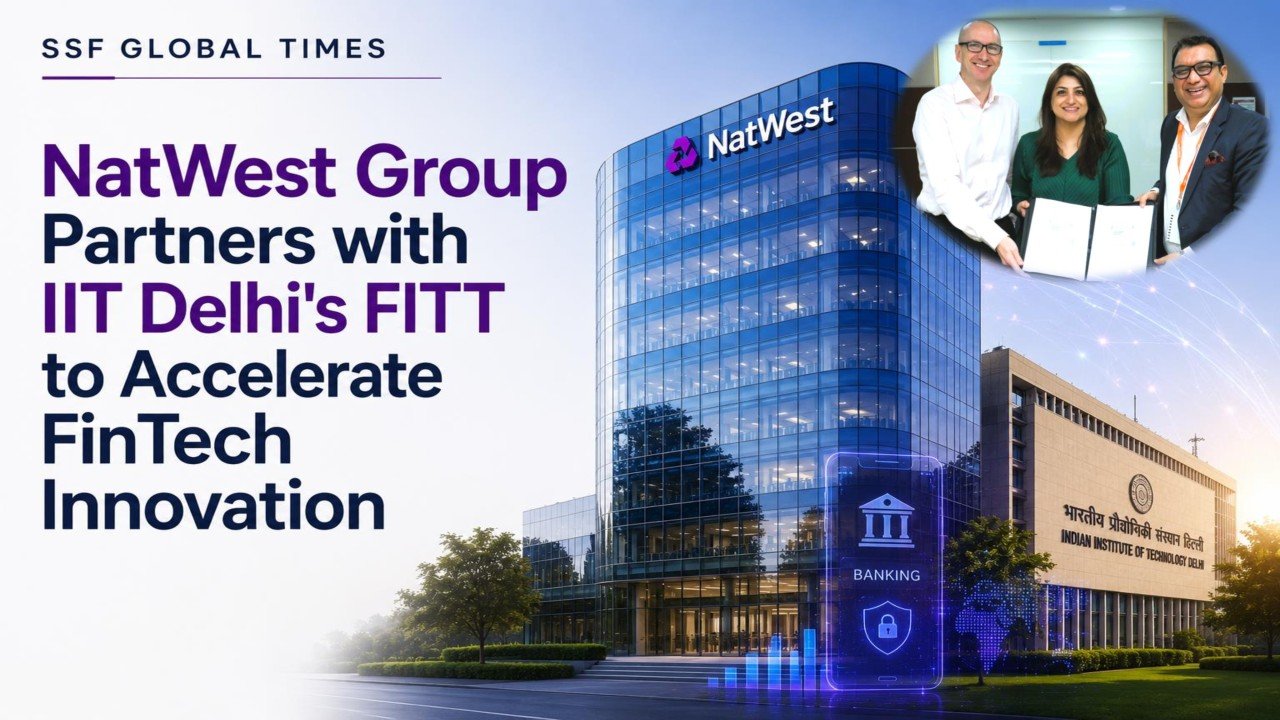
NEW DELHI| 19 July 2026: NatWest Group has partnered with the Foundation for Innovation and Technology Transfer (FITT) at the Indian Institute of Technology (IIT) Delhi to launch the NatWest FinTech Frontier Program (NFFP), an industry-academia initiative designed to accelerate research commercialization, startup collaboration and next-generation banking innovation.
Moving significantly beyond standard corporate social responsibility or theoretical research grants, this initiative functions as an aggressive commercial pipeline. By fusing IIT Delhi’s cognitive research bandwidth and mature deep-tech startups directly with NatWest’s enterprise architecture, the global bank is positioning India as an important innovation hub supporting the bank’s global technology agenda. The objective is clear – to fast-track advanced artificial intelligence, cybersecurity, and quantum computing deployments specifically engineered for the United Kingdom market.
KEY HIGHLIGHTS
- Flagship Industry-Academia Alliance: NatWest Group collaborates with IIT Delhi’s FITT to launch the NatWest FinTech Frontier Program (NFFP).
- Program Timeline: The program operates through February 2027, establishing a structured, multi-year incubation and co-creation timeline.
- Technology Focus Areas: Focuses heavily on high-impact domains including Agentic AI, Zero-Trust Cybersecurity, Open Banking, and Quantum Computing Readiness.
- Dual Incubator Framework: Features two distinct operational pathways: a 6-to-9 month Research Translation track for IIT faculty and a TRL 8+ Startup Track for pilot-ready fintech ventures.
- Direct UK Market Access: Selected startups and research pods gain direct commercial exposure, live testing opportunities, and pilot deployment pathways within NatWest’s primary UK operational environment.
NatWest Group Headquartered in Edinburgh, Scotland, NatWest Group plc operates as a UK-focused banking and financial services holding company. Serving a massive base of over 20 million customers, the enterprise manages a comprehensive portfolio spanning retail, commercial, institutional, and private banking markets. Driven by a core strategy to modernize traditional financial architecture, the institution is aggressively investing in digital transformation, utilizing global capability nodes to integrate next-generation algorithms, digital trust frameworks, and predictive analytics into its core operations.
Foundation for Innovation and Technology Transfer (FITT), IIT Delhi Established in 1992, FITT functions as the premier industry-academia interface for the Indian Institute of Technology (IIT) Delhi. Operating as a specialized techno-commercial organization, FITT is explicitly mandated to unlock the institute’s intellectual capital. By facilitating research translation, deep-tech startup incubation, technology commercialization, and intellectual property (IP) management, the foundation successfully bridges the gap between raw academic research and scalable enterprise solutions for global conglomerates.
THE FRONTIER: WHAT IS INSIDE THE PROGRAM
The NatWest FinTech Frontier Program is fundamentally wired to eliminate the friction between academic research and commercial viability. The technological core of the alliance heavily indexes on several critical domains:
- Algorithmic Workflows & AI: The program mandates the development of decision intelligence, large language model (LLM) powered operations, and intelligent automation that can be directly integrated into NatWest’s core service architecture.
- Next-Generation Financial Products: Innovators will design and deploy embedded finance mechanisms, advanced personalization engines, and highly resilient open banking APIs.
- Digital Trust & Cyber Resilience: A heavy emphasis is placed on architecting zero-trust security models, sophisticated fraud detection systems, and regulatory-grade digital identity frameworks to protect cross-border financial data.
- Post-Classical Computation: In preparation for the next era of infrastructure, the initiative targets quantum computing readiness, neuro-symbolic AI, and advanced algorithmic models capable of future-proofing the bank against emerging threats.
THE COMMERCIAL PIPELINE: A DUAL-TRACK ARCHITECTURE
To ensure high-velocity execution and tangible market integration, the NFFP operates on a highly structured dual-track model designed to bypass standard corporate procurement delays:
- The Research Translation Track: Targeting academic rigor, this track is exclusively available to full-time IIT faculty members and research groups. Rather than pursuing abstract theories, researchers will execute problem-led R&D utilizing NatWest Group’s real-world financial data. The strict mandate requires projects to demonstrate a clear deployment pathway within six to nine months, culminating in the creation of deployable intellectual property (IP), financial algorithms, and patents for the bank.
- The Startup Innovation Track: Calibrated for immediate enterprise impact, this pathway is strictly reserved for mature tech startups operating at Technology Readiness Level (TRL) 8 or higher. Participants must possess API-ready systems and live products. In exchange, startups gain financially backed pilot opportunities, direct access to the bank’s operational environment, and a structured commercial pathway directly into the UK FinTech market.
Validating the strategic weight of this structural shift, Ruchika Panesar, CIO at NatWest Group and Country Head, India, defined the operational mandate:
The future of banking will be built through ecosystems: where academia, startups and enterprises come together to solve real-world challenges. Through the NatWest FinTech Frontier Program, we are combining IIT-Delhi’s research excellence, startup ingenuity and NatWest Group’s enterprise expertise to accelerate innovation in areas that will define the next era of financial services.
Furthermore, Prof. Rangan Banerjee, Director of IIT Delhi and Chairman of FITT, emphasized that this unique engagement framework enables global corporations to collaborate seamlessly with both researchers and high-growth ventures to author real-world solutions for complex financial challenges.