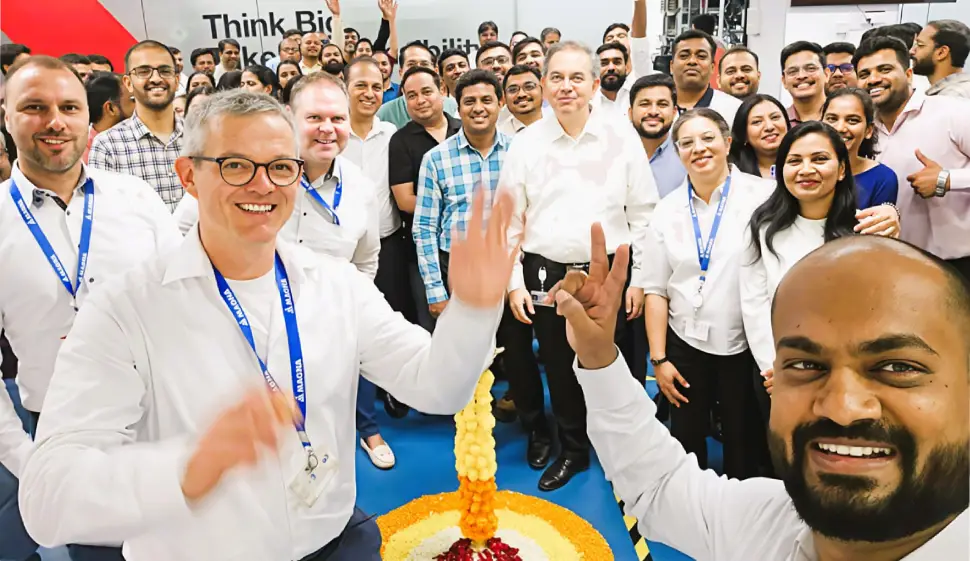




Pune | 18 March 2026: Magna Steyr India has inaugurated a new Electrical and Electronics (EE) laboratory at its Pune facility, marking a shift toward deepening engineering ownership in next-generation vehicle systems. The expansion positions Pune as a core development hub, supporting both domestic and European automotive programs.

Part of Magna International, one of the world’s largest automotive suppliers, Magna operates across the full vehicle stack, from complete vehicle engineering and powertrain systems to ADAS, connectivity, and electrification technologies. Its platforms underpin a wide range of global OEM programs, placing it at the center of the industry’s transition toward software-defined and electrified mobility.

Engineering Support to System-Level Development

This new facility was made operational in just three months, with advanced equipment and setups transferred from our Germany Engineering Center. The lab will play a key role in supporting both Domestic and European projects, strengthening our global collaboration”

– Nandu Rangnekar, Managing Director at Magna Steyr India

The Pune lab focuses on key areas that define this shift:

  • E-drive and thermal system integration for electrified platforms
  • Hardware-in-the-Loop (HiL) testing for real-time software validation
  • Embedded systems development across power electronics and chassis
  • UI/UX simulation environments for digital cockpit experiences

A defining feature of the lab is its direct integration with Magna’s global engineering network, particularly Europe.

By transferring equipment, processes, and validation frameworks from Germany, the Pune facility enables:

  • Seamless collaboration on shared vehicle platforms
  • Reduced development fragmentation across regions
  • Faster transition from concept to production readiness

This structure allows OEM programs to be executed across locations without compromising consistency, quality, or compliance.

The Real Shift: From Hardware Engineering to Software-Led Systems

Traditional differentiation, based on mechanical performance, is being replaced by:

  • Software-defined vehicle architectures
  • Integrated electronics and control systems
  • Continuous over-the-air updates and feature evolution

In this context, EE labs are no longer testing environments—they are core development environments where vehicle intelligence is engineered.

With additional presence in Bengaluru focused on ADAS and autonomous systems, Magna is building a distributed but integrated engineering model.

This reflects the industry-wide move toward global engineering networks anchored in specialized capability hubs.

Insight Box: Automotive Transformation— Electronics Is the New Control Layer

The automotive industry is undergoing a structural shift, from mechanical systems to software-defined platforms.

  1. From Hardware-Centric to Software-Defined VehiclesVehicle functionality is increasingly controlled by software layers running on electronic architectures, rather than mechanical systems alone.
  2. From Component Integration to System OrchestrationModern vehicles require tight coordination between powertrains, electronics, sensors, and software, making system-level integration critical.
  3. From Validation Cycles to Continuous TestingTools like Hardware-in-the-Loop (HiL) enable real-time validation, replacing static testing with continuous simulation-driven development.
  4. From Feature Delivery to Experience EngineeringUI/UX systems are becoming central, as digital interfaces define how users interact with vehicles

SSF Perspective

Magna’s Pune expansion underscores a structural shift in the automotive industry, from distributed engineering support to centralized, system-level capability ownership. As vehicles become increasingly software-defined, the ability to integrate electronics, validate complex systems, and align global development cycles will determine competitive advantage.

The future of mobility will not be defined by standalone components, but by how effectively organizations can engineer, control, and scale intelligence across the vehicle architecture.

Curated by SSF Global

Tracking the shifts shaping GCCs, enterprise ecosystems, and the future of global business.

Share on      

Exploring a GCC strategy or scaling an existing centre?

SSF Global partners with enterprises to design and operationalize future-ready Global Capability Centres, spanning location strategy, talent architecture, operating model design, AI integration, and infrastructure.

Connect with us to build a GCC that delivers long-term strategic value, not just operational efficiency.

About SSF Global
SSF Global is a Global Community for Enterprise Function Leaders and serves as a research & advisory platform focused on Global Business Services (GBS), Global Capability Centres (GCCs), and the evolution of enterprise innovation in India and beyond. We track, publish, and partner in narratives that shape how capability centres transform into hubs of trust, intelligence, and sustainable growth. We also evaluate, assess and benchmark the GCCs for their performance, maturity and other parameters using our proprietary tools built from the knowledge gained from direct interaction with our members (GCCs & GBS).