




 Ask an Expert

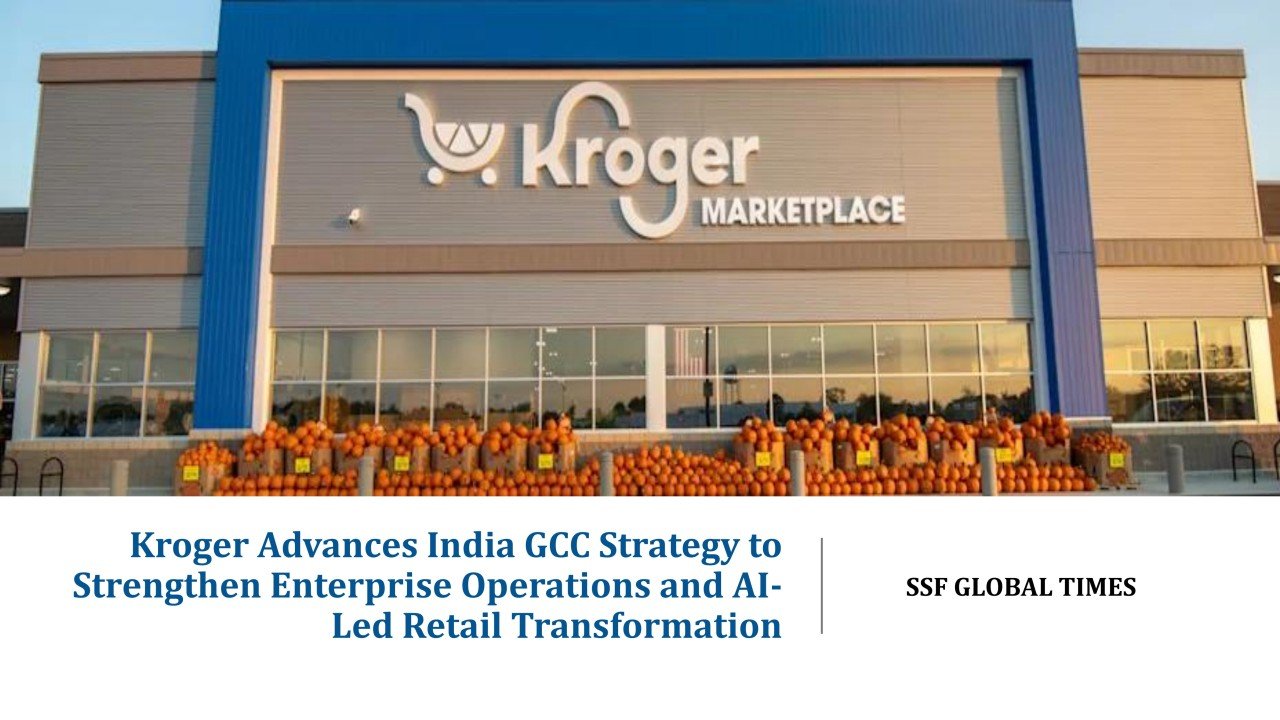
US & INDIA | 25 July 2026:. According to recent industry reports, The Kroger Co. is planning to establish a Global Capability Center (GCC) in India to consolidate a broad range of enterprise support functions into a dedicated facility, moving away from legacy, decentralized administrative processes.
This planned expansion highlights how major North American retail conglomerates are increasingly adopting offshore operating models to strengthen their administrative backbone. By centralizing operations and applying artificial intelligence across its business, Kroger is expected to strengthen operational efficiency, streamline organizational layers, and yield significant structural cost savings.
KEY HIGHLIGHTS
- Operational Consolidation: The proposed “Kroger Capability Center,” is expected to centralize critical corporate functions, reportedly including merchandising, supply chain management, procurement, marketing, finance, accounting, and human resources.
- Cost & Efficiency Mandate: According to industry analyst Brittain Ladd, shifting these numerous job functions to the new center is designed to save the retailer hundreds of millions of dollars.
- AI and Automation Integration: Beyond traditional shared services, the enterprise is actively focused on “applying AI across the business”. Reports indicate the strategy will integrate virtual workers and AI-driven automation to supplement historically manual back-office workflows.
Headquartered in Cincinnati, Ohio, The Kroger Co. operates as one of the largest food and drug retailers in the United States. Serving ~11 million customers daily across approximately 2,700 stores in 35 states, the enterprise manages a vast portfolio of retail banners and private-label brands. Led by newly appointed CEO Greg Foran, Kroger has increasingly invested in omnichannel fulfillment, digital operations, and retail media to sustain profitable growth in a highly competitive sector.
ARCHITECTING THE BLUEPRINT
Managing the complex supply chain dynamics and corporate operations of a national grocery chain requires a highly efficient administrative infrastructure. The reported capability center is expected to modernize these legacy workflows and establish a centralized hub for process automation.
The strategic framework focuses on three core functional areas:
- Supply Chain & Merchandising Optimization: Centralizing data analysis and category management to improve inventory tracking, localized buying strategies, and vendor relations.
- Financial & HR Shared Services: Transitioning payroll, accounting, and human resources into a unified global hub to standardize processes and eliminate redundant administrative workflows.
- Technology-Driven Execution: Partnering with technology integrators to deploy AI-driven platforms that supplement human operations, ensuring faster data processing and improved enterprise productivity.
The company confirmed its focus on adopting “smarter ways of working” by standing up the Kroger Capability Center. This involves transitioning siloed departments into a unified global hub to standardize processes. By pairing the new capability center with enterprise-wide AI applications, Kroger is positioning its offshore team to handle faster data processing and improved enterprise productivity.
Kroger’s planned entry into the Indian market aligns with a massive structural shift across the global retail and consumer goods sector. India has emerged as one of the world’s largest hubs for retail GCCs. According to a July 2026 report by TeamLease Digital, India now hosts 180 retail GCCs employing roughly 272,300 professionals.
Global retailers are now moving critical, margin-defining operations such as supply chain automation, dynamic pricing, and AI-led demand forecasting, directly into their Indian centers. These GCCs now also support – pricing science, supply chain AI, digital commerce, retail media, and customer analytics. The primary driver for this growth is the need to access specialized engineering and data analytics talent capable of building proprietary retail algorithms, allowing companies to transition from simply executing tasks in India to actively building and owning AI-led retail strategy there.
Kroger’s move mirrors the proven operational blueprints established by its largest global competitors, who have increasingly relied on Indian capability centers to remain competitive against e-commerce disruption:
- Target & Walmart: Operating some of the most complex, high-volume capability centers in the country, both retail giants utilize their India hubs to drive core merchandising decisions. Walmart relies on its India tech presence to power demand sensing and inventory replenishment algorithms, while Target’s Bengaluru GCC acts as a full-stack engine influencing assortment planning and global pricing strategies.
- Lowe’s: The home improvement retailer established its India capability center in 2014, heavily leveraging localized technology teams to power pricing intelligence, product discovery, and end-to-end supply chain visibility.
- Tesco & 7-Eleven: Both companies have anchored operations in India to drive innovation across omnichannel fulfillment, digital ordering systems, and customer loyalty platforms.