



There is nothing to show here!
Slider with alias invoice not found.

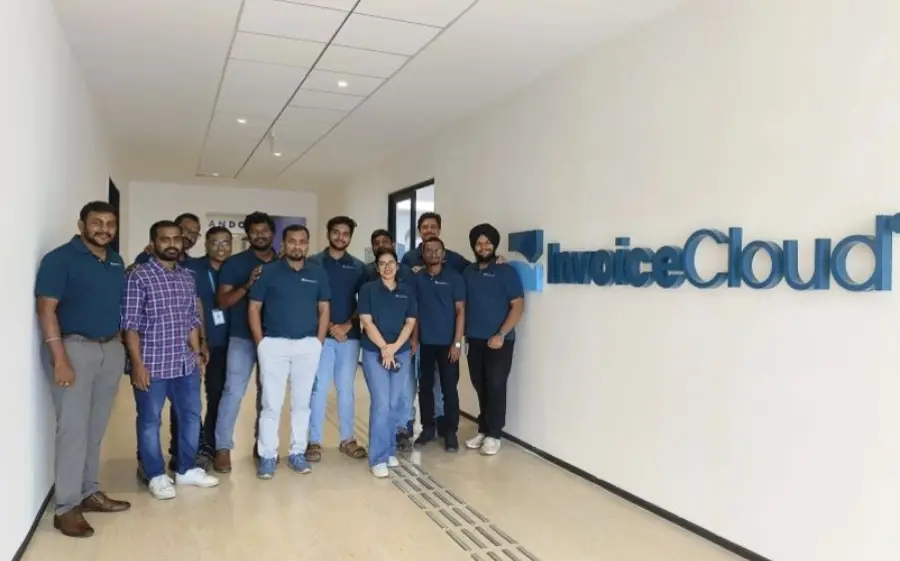
Hyderabad| 2 April 2026: InvoiceCloud’s expansion of Hyderabad GCC reflects a shift in how digital payment platforms are being engineered, moving from transaction processing to decision-enabled payment systems.

Headquarters in Boston, InvoiceCloud processes over 133 million transactions annually, serving sectors such as utilities, insurance, and local governments. Its platform is built around reducing friction in payments through omni-channel experiences-including one-click checkout, scheduled payments, and automated reminders, while leveraging AI-driven personalization rather than rule-based automation.

The Hyderabad expansion, with plans to hire 150 additional technology and product professionals by 2026, is aimed at strengthening the systems that sit behind these experiences, particularly where data, automation, and user behavior intersect.

From Transactions to Payment Behavior Systems

InvoiceCloud’s model is structured around influencing how and when people pay, not just enabling payments.

This is visible in outcomes such as:

  • Reduction in walk-in payments by ~50%
  • Savings of ~32 staff hours per month through automation
  • Integration across 160+ systems, enabling seamless data exchange

These results are driven by systems that continuously interpret user behavior and adjust interactions turning payments into a managed process rather than a one-time event.

Designing for Real-World Payment Complexity

Payment behavior varies significantly across sectors like utilities and government, where:

  • Payment cycles are recurring and time-sensitive
  • Users may switch between digital and offline channels
  • Delays can lead to operational and financial disruptions

This requires systems that can:

  • Adapt communication based on user patterns
  • Offer payment options aligned with context and urgency
  • Maintain consistency across channels and touchpoints

The Hyderabad centre is positioned to build these capabilities directly into the platform

Insight Box: What Makes Payment Platforms Work at Scale

Payment systems do not fail at transaction processing; they fail at user follow-through...

  1. Friction Is Behavioral, Not Technical – Users drop off not because payments are unavailable, but because timing, context, or prompts are misaligned.
  2. Reminders Need Context, Not Frequency – Generic notifications are ignored. Effective systems trigger based on user behavior and likelihood to act.
  3. Channel Consistency Drives Completion – Switching between app, web, and offline must feel seamless, otherwise users revert to manual methods.
  4. Data Must Translate Into Action – Insights are only useful if they directly influence what the system does next.

SSF Perspective

InvoiceCloud’s Hyderabad expansion reflects a shift in payments, from infrastructure-led systems to behavior-driven platforms.

As digital billing matures, the advantage will lie in the ability to connect data, timing, and interaction within the same system, ensuring that payments are not just possible, but consistently completed.

In that model, the platform’s role is not limited to processing transactions, it becomes responsible for guiding users through the entire payment lifecycle with minimal friction.

Curated by SSF Global

Tracking the shifts shaping GCCs, enterprise ecosystems, and the future of global business.

Share on      

Exploring a GCC strategy or scaling an existing centre?

SSF Global partners with enterprises to design and operationalize future-ready Global Capability Centres, spanning location strategy, talent architecture, operating model design, AI integration, and infrastructure.

Connect with us to build a GCC that delivers long-term strategic value, not just operational efficiency.

About SSF Global
SSF Global is a Global Community for Enterprise Function Leaders and serves as a research & advisory platform focused on Global Business Services (GBS), Global Capability Centres (GCCs), and the evolution of enterprise innovation in India and beyond. We track, publish, and partner in narratives that shape how capability centres transform into hubs of trust, intelligence, and sustainable growth. We also evaluate, assess and benchmark the GCCs for their performance, maturity and other parameters using our proprietary tools built from the knowledge gained from direct interaction with our members (GCCs & GBS).