




 Ask an Expert

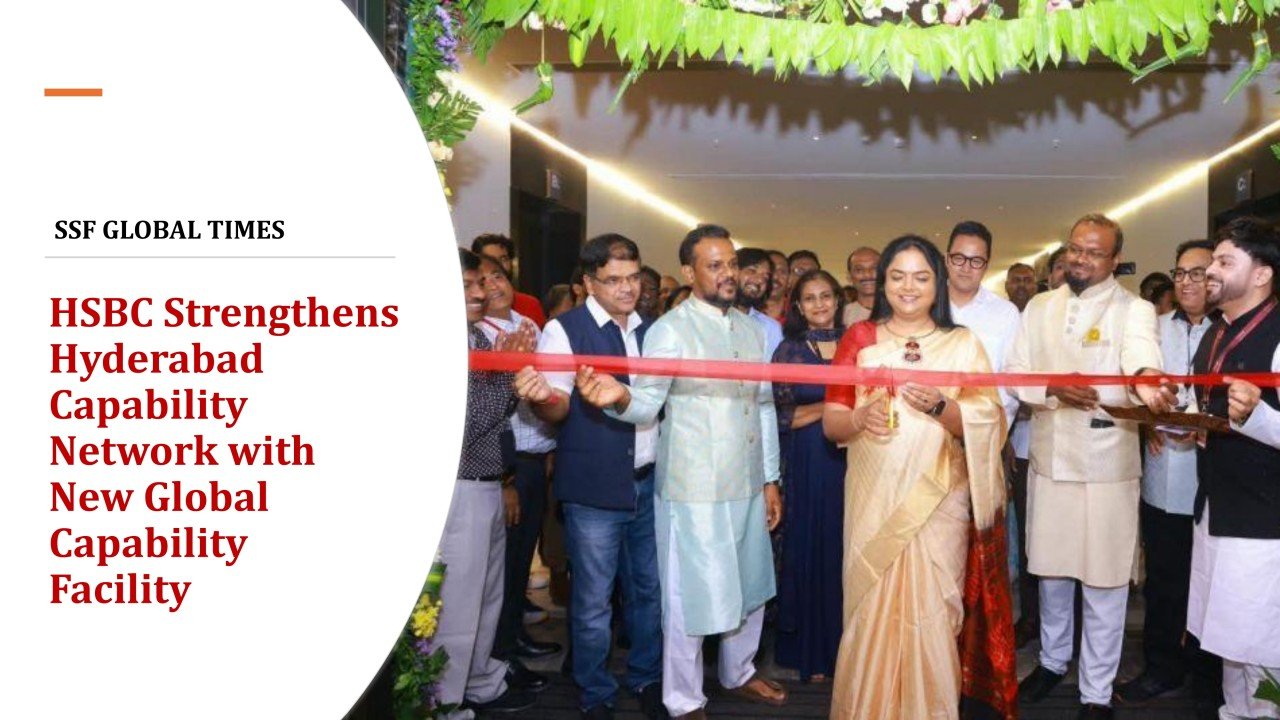
HYDERABAD | 20 August 2026: HSBC has inaugurated a new facility at Phoenix Avance H09 in HITEC City, Hyderabad, strengthening its long-standing Global Capability Network in India. The new workplace, which welcomed teams on 17 August, is designed around collaboration, flexibility and connectivity as HSBC continues to evolve its operating model in India.
The move marks another chapter in HSBC’s more than two-decade presence in Hyderabad. The bank opened its first global resourcing centre in the city in June 2000, followed by a second Hyderabad centre a year later and an operation in Bengaluru in June 2002. The new facility replaces a workplace that had been home to Hyderabad teams for 21 years, according to Mamatha Madireddy, MD and Head of HSBC Global Capability Network – India. She described the new environment as designed to bring colleagues together, encourage collaboration and innovation, and support a more flexible, connected and colleague-centric way of working.
KEY HIGHLIGHTS
- A New Hyderabad Workplace: HSBC has inaugurated Phoenix Avance H09, welcoming teams into the new facility as part of the continued evolution of its Hyderabad operations.
- 26-Year Capability Journey: HSBC’s India capability story dates back to 2000, when its first global resourcing centre opened in Hyderabad. The city subsequently became one of the bank’s key global delivery and technology locations.
- Colleague-Centric Design: The new facility is designed to support a flexible, connected and collaborative working environment, reflecting HSBC’s approach to the future of work.
- Part of a Larger India Network: HSBC’s India capability ecosystem today spans multiple cities and functions. Its Technology India organisation alone has more than 23,000 professionals across Pune, Hyderabad and Bengaluru, working across areas including AI, automation, data engineering, machine learning, biometrics and cloud computing.
Operating as the banking and financial services organizations, HSBC Holdings plc serves roughly 39 million customers across over 60 countries and territories. While headquartered in London, the institution commands a profoundly deep-rooted heritage in the subcontinent, maintaining a continuous retail and commercial presence in India for over 160 years.
Beyond its retail operations, HSBC was an absolute vanguard in the GCC movement. They have maintained a significant capability presence in India for more than two decades. Its current India ecosystem includes Global Service Centres and HSBC Technology India, with operations spanning Hyderabad, Bengaluru, Pune and other locations. HSBC describes its GSC India network as supporting global businesses through enterprise platforms, analytics and AI, risk and controls, and finance and trade operations. It opened its first global resourcing centre in Hyderabad in June 2000, rapidly following up with a second Hyderabad facility in 2001 and expanding into Bengaluru by 2002.
The evolution from the original global resourcing centres of the early 2000s to today’s technology and capability network reflects a broader transformation in how financial institutions use India.
In its early years, HSBC’s Hyderabad operations were focused substantially on global processing and back-office activities. HSBC’s own historical records describe the first Hyderabad centre as supporting data processing and back-office customer services. However, the operational demands for 2000 and 2026 are vastly different. Today, multinational banks are engaged in an arms race involving artificial intelligence, real-time cross-border payments, and zero-trust cybersecurity. Consequently, the physical spaces that house these operations must evolve from static processing floors into dynamic, agile incubation hubs. Today, the bank’s India technology organisation works across a substantially broader technology landscape, including artificial intelligence, automation, data engineering, machine learning, biometrics and cloud computing.
THE FUTURE-OF-WORK MANDATE: BUILDING FOR COLLABORATION
This is more than a new workplace. It is designed to bring our colleagues together in an environment that encourages collaboration, sparks innovation and enables us to deliver even greater outcomes for our customers globally.