




 Ask an Expert

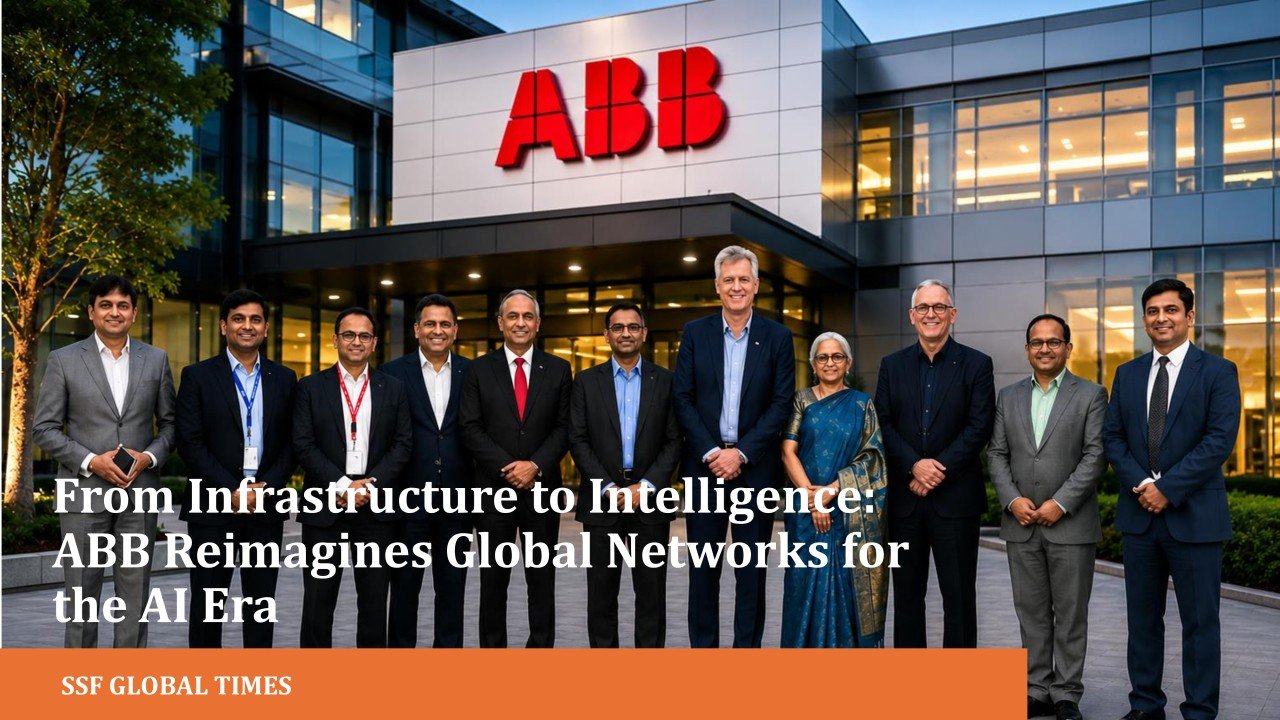
ZURICH & MUMBAI | 13 July 2026: ABB has announced a multi-year initiative to modernize its global communications infrastructure through an AI-enabled Network-as-a-Service (NaaS) model designed to support the company’s next generation of industrial and digital operations.
The initiative forms the foundation of ABB’s Future Network Model – an enterprise-wide program aimed at standardizing, simplifying and modernizing network infrastructure across its global footprint. The transformation will be delivered in partnership with TCS, extending a two-decade relationship between the organizations across infrastructure, enterprise applications and cloud transformation initiatives.
Moving beyond conventional network operations, ABB’s new architecture is designed to create an intelligent, resilient and highly automated digital backbone capable of supporting industrial IoT, cloud applications, digital engineering platforms and future AI-driven manufacturing environments across the company’s worldwide operations.
KEY HIGHLIGHTS
- Global Network Transformation: ABB is implementing an AI-enabled Network-as-a-Service model across its international operations to support the next generation of industrial and digital workloads.
- Future Network Model: The initiative aims to standardize and simplify network infrastructure across ABB’s global footprint, replacing fragmented legacy environments with an integrated architecture.
- Industrial AI Readiness: The modernized infrastructure is designed to support industrial IoT, edge computing, digital twins and automation platforms.
- Resilience and Security: The new model introduces centralized visibility, automated operations and enhanced cybersecurity capabilities across global operations.
- Long-Term Partnership: The deployment builds on more than two decades of collaboration between ABB and TCS across enterprise technology and infrastructure domains.
Headquartered in Zurich, Switzerland, ABB is an industrial technology company operating across electrification, motion, process automation and robotics businesses. The company serves customers in more than 100 countries and employs approximately 110,000 people globally. Managing operations of this scale increasingly requires digital infrastructure that can securely connect factories, production assets, engineering teams, suppliers and customers across multiple geographies while maintaining high levels of resilience and operational continuity.
DECODING ABB’S FUTURE NETWORK MODEL
Commenting on the initiative, ABB Group CIO, Alec Joannou, described the program as a critical milestone in strengthening the company’s long-term digital foundation.
The Future Network Model represents an important milestone in reinforcing the digital foundation of ABB’s global operations. As our business evolves, it is critical to have an ecosystem that is resilient, secure and aligned with long-term transformation goals. Our association with TCS reflects a shared focus on delivery excellence, continuous enhancement and building capabilities that can support our strategic priorities.
At its core, the initiative seeks to move enterprise networking beyond connectivity and toward intelligent infrastructure capable of continuously monitoring, optimizing and securing itself.
The architectural pillars of the transformation include:
- Service Integration and Management (SIAM): A unified governance model designed to orchestrate ABB’s multi-vendor technology ecosystem and ensure standardized service delivery across geographies.
- Global Network Operations Centre (GNOC): A centralized command environment providing real-time visibility, end-to-end monitoring and operational oversight across global network infrastructure.
- AI-Enabled SD-WAN and Modernized LAN: Software-defined networking capabilities will allow traffic flows to be dynamically optimized based on application requirements, user demand and business priorities.
- Integrated Cybersecurity Architecture: Security capabilities will be embedded directly into the network architecture to improve resilience and reduce exposure across industrial environments and enterprise applications.
THE INFRASTRUCTURE-TO-INTELLIGENCE SHIFT
The strategic philosophy underpinning the initiative was captured by Anupam Singhal, President – Manufacturing at TCS, who described the program as part of an “infrastructure to intelligence” journey.
With AI embedded into the network operations model, supported by secure digital infrastructure and deep domain expertise, we are building a resilient and intelligent network backbone that can sense, adapt and improve continuously while strengthening reliability, security, user experience and scalability.
The ability of enterprise infrastructure to monitor network conditions, predict failures and optimize performance in real time represents a significant departure from traditional operating models. Historically, enterprise networks functioned primarily as passive transport layers requiring manual intervention to resolve congestion, outages or configuration issues. AI-enabled infrastructure introduces automation and predictive capabilities that can reduce downtime, improve user experience and strengthen operational resilience.
For industrial organizations such as ABB, where manufacturing operations, engineering systems and customer environments increasingly depend on real-time data flows, network intelligence is rapidly becoming a strategic business capability rather than an IT optimization exercise.