




 Ask an Expert

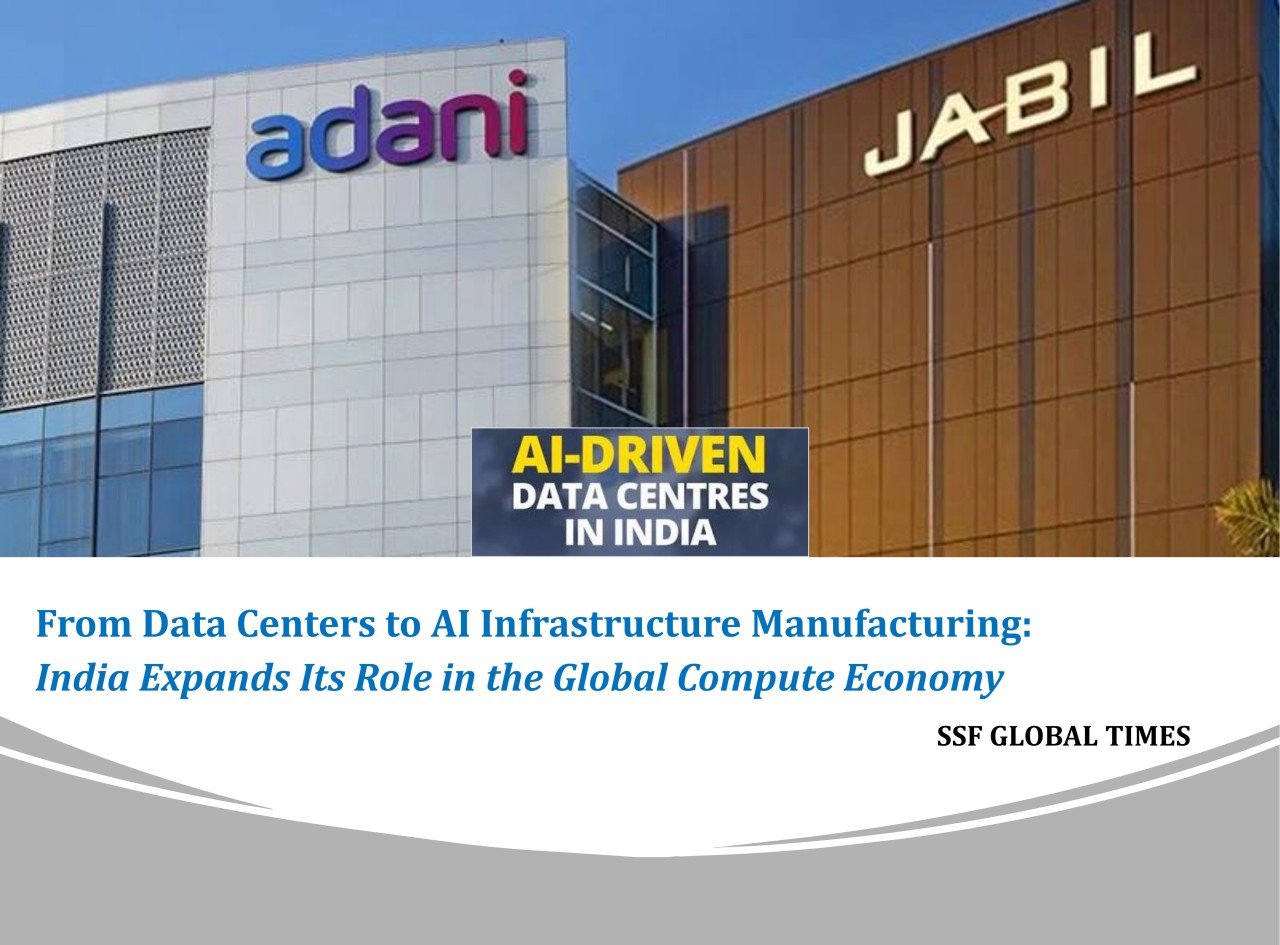
PETERSBURG & AHMEDABAD | 20 June 2026: As global investment in AI infrastructure accelerates, India is increasingly positioning itself beyond data center operations and into the manufacturing of the critical hardware that powers the digital economy. Against this backdrop, Adani Enterprises and manufacturing solutions provider Jabil Inc. have announced a strategic alliance to establish an integrated AI & Data Center Infrastructure Manufacturing Platform in India. , explicitly designed to service a global structural investment cycle estimated to exceed $3 trillion over the next seven years driven by increasing investments in artificial intelligence infrastructure.
The collaboration combines Jabil’s expertise in precision manufacturing and digital infrastructure systems with the Adani Group’s capabilities across energy, logistics, industrial infrastructure, and data centers. Together, the partners aim to strengthen India’s role in the global supply chain for AI and hyperscale data center infrastructure at a time when demand for compute capacity, power systems, cooling technologies, and advanced networking equipment continues to grow rapidly.
Functioning as the primary incubation engine for the Adani Group, Adani Enterprises has built a diversified portfolio spanning ports, airports, logistics, utilities, renewable energy, and digital infrastructure. In recent years, the Group has expanded its focus toward data centers, clean energy, and emerging technology infrastructure, positioning itself at the intersection of industrial and digital growth.
Headquartered in St. Petersburg, Florida, Jabil Inc. is a global manufacturing and supply chain solutions provider. Reporting approximately $29.8 billion in revenue in fiscal year 2025, the company engineers and manufactures complex hardware solutions across industries including healthcare, automotive, telecommunications, cloud infrastructure, and industrial systems. Jabil has also strengthened its presence in the digital infrastructure market through investments and acquisitions focused on power management, cooling technologies, and data center engineering capabilities.
The Engineering Blueprint: Building the Hardware Layer of the AI Economy
Moving beyond conventional electronics assembly, the alliance is focused on creating large-scale manufacturing capabilities for the physical infrastructure required to support AI and hyperscale computing environments.
The proposed platform is expected to address two critical domains within the digital infrastructure ecosystem:
- Next-Generation Compute Infrastructure: Utilizing advanced Surface Mount Technology (SMT) and precision manufacturing processes to support the production of high-density AI racks, servers, storage systems, and networking infrastructure required by hyperscalers and enterprise data centers.
- Power and Thermal Infrastructure: Manufacturing essential infrastructure components including Power Distribution Units (PDUs), Coolant Distribution Units (CDUs), transformers, switchgear systems, and bus bars that enable reliable and energy-efficient operation of large-scale AI facilities.
Commenting on the significance of the partnership, Adani Group Chairman Gautam Adani stated:
The world is entering an Intelligence Revolution more profound than any previous Industrial Revolution. Nations that master the symmetry between energy and compute will shape the next decade. India is uniquely positioned to lead. Our alliance with Jabil represents a decisive step in building India’s complete AI infrastructure stack… Together, we will ensure India is not merely a consumer in the AI age, but a creator, builder, and exporter of intelligence.
The Power and Infrastructure Advantage
Unlike traditional electronics manufacturing, AI infrastructure production is closely linked to power availability, cooling efficiency, and supply chain integration. The partnership seeks to leverage Jabil’s expertise in thermal and power management systems alongside Adani’s investments in renewable energy, industrial infrastructure, and data center development.
This combination reflects an emerging trend in the AI economy, where the ability to manufacture, power, and operate compute infrastructure is becoming increasingly interconnected. As AI workloads continue to increase in scale and complexity, the supporting infrastructure required to run these systems efficiently is becoming just as important as the compute hardware itself.
The collaboration also aligns with broader industry momentum around digital infrastructure expansion. Global investments in hyperscale data centers, AI clusters, cloud infrastructure, and associated power systems are expected to remain a major area of capital deployment over the coming decade, creating significant opportunities across the manufacturing value chain.
Strategic Ramifications: Strengthening the AI Infrastructure Supply Chain
One of the most significant constraints facing global AI expansion today is not simply semiconductor availability, but the supporting infrastructure required to deploy and operate AI workloads at scale. Power distribution systems, cooling technologies, server integration, and network infrastructure are increasingly becoming critical components of the broader AI value chain.
Against this backdrop, the Adani-Jabil platform creates an additional manufacturing and supply chain diversification option for global technology companies seeking resilient infrastructure sourcing models. By bringing together compute infrastructure, power systems, thermal engineering, and manufacturing capabilities within a single ecosystem, the partnership seeks to support both domestic and international demand for digital infrastructure.
The initiative also reflects a growing trend among global enterprises to diversify manufacturing footprints and build greater resilience into technology supply chains. As demand for AI infrastructure accelerates, access to reliable manufacturing capacity for critical components is becoming a strategic priority.
Confirming the company’s ability to support these complex infrastructure deployments globally, Jabil CEO Mike Dastoor emphasized:
This strategic collaboration with Adani Group is another step forward in our efforts to create long-term value for customers throughout the AI ecosystem by offering scalable solutions across the product lifecycle. By combining Jabil’s more than sixty years of engineering expertise and advanced manufacturing capabilities with Adani’s formidable infrastructure and energy platform, we can expect to execute down to the rack level for hyperscalers and enterprises here in India and across the globe.