




 Ask an Expert

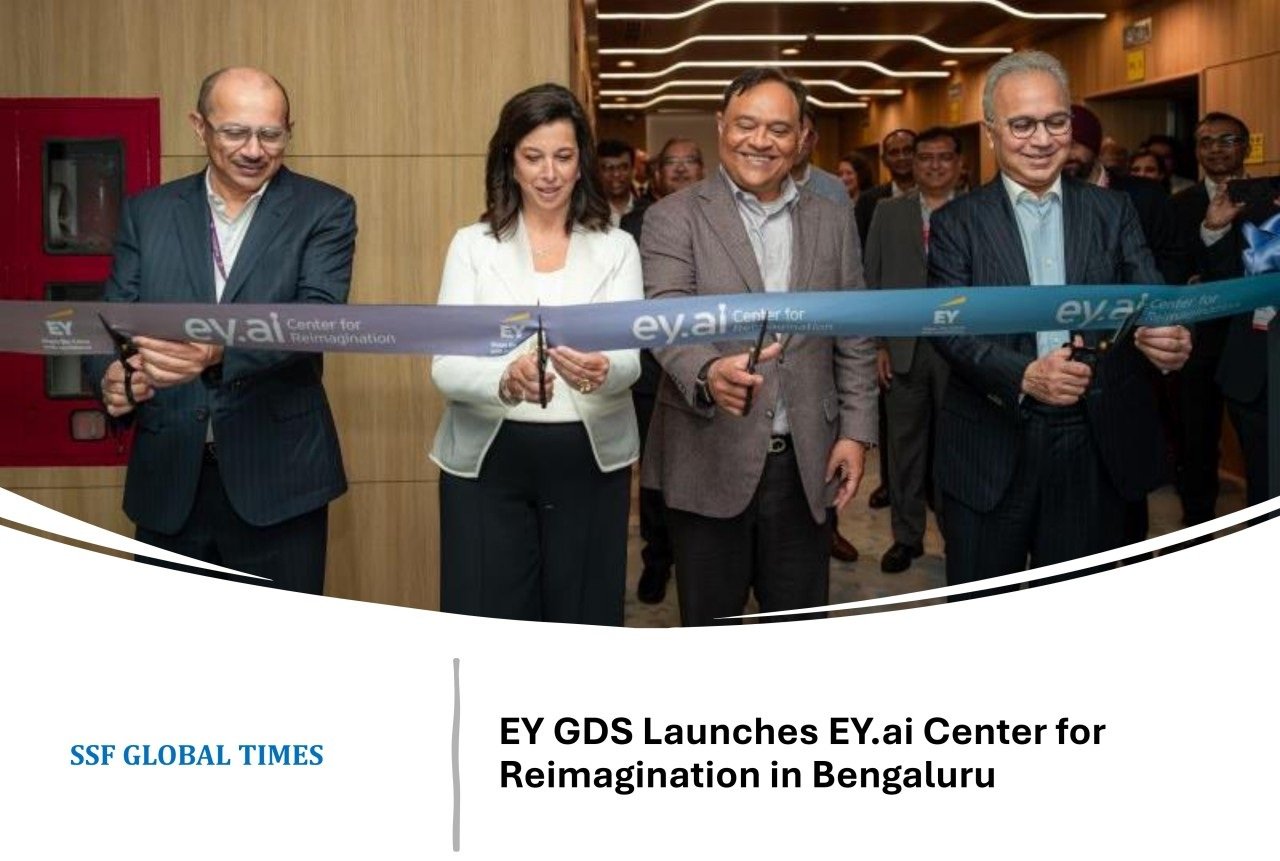
BENGALURU | 20 June 2026: Executing a definitive structural shift in how global professional services are delivered, the EY Global Delivery Services (GDS) network has officially inaugurated the EY.ai Center for Reimagination (CFR). Located within the firm’s sprawling Bengaluru campus, the massive 40,000-square-foot facility functions as an immersive enterprise testing ground.
The launch represents the physical anchor of the firm’s previously announced US$1.4 billion global investment in artificial intelligence. Moving distinctly away from the traditional, theoretical advisory frameworks that have historically defined “Big Four” consulting, the new capability node is engineered to force applied execution. It provides corporate boards and C-suite executives with a highly controlled environment to visualize, mathematically simulate, and scale complex technological deployments before integrating them into live corporate environments. The centre will also create highly skilled roles that combine AI engineering with experience design and sector transformation. Skills include AI engineering, immersive experience design, digital twins/simulation, human-centred design and sector transformation.
Operating globally across more than 150 countries, EY (Ernst & Young Global Limited) is a multidisciplinary professional services network specializing in assurance, consulting, strategy, transactions, and tax. As the foundational execution engine for the global firm, EY Global Delivery Services (GDS) provides complex technology, client service, and operational support across the enterprise. Operating from multiple international nodes, with its largest and most critical footprint anchored in India- EY GDS blends deep sector expertise with advanced digital capabilities. The newly launched ey.ai Center for Reimagination functions as the firm’s dedicated enterprise capability node, supporting the creation and scaling of artificial intelligence, robotics, and digital twin technology to drive measurable transformation for its international clients.
The Operating Mandate: Core Capabilities of the CFR
Under the direction of global leadership, the Bengaluru center fundamentally alters the delivery mechanism for EY’s multinational client base. The operational framework requires local engineering talent to take direct ownership over the following execution domains:
- Algorithmic Workflows & Automation: Developing and deploying agentic AI systems capable of executing multi-step corporate workflows without continuous human oversight, operating alongside traditional human capital.
- Sector-Specific AI Integration: Engineering proprietary AI frameworks tailored initially for highly regulated and structurally complex industries, specifically targeting Life Sciences, Banking & Capital Markets, Industrial Products, Retail, and Energy.
- Virtual Operations Modeling: Constructing precise digital twins of physical supply chains and financial architectures, allowing organizations to run high-fidelity simulations that stress-test strategic decisions against real-world disruption.
Addressing the intent behind the massive capital expenditure, Janet Truncale, EY Global Chair and CEO, stated:
The ey.ai Center for Reimagination is where strategy meets execution; a space where leaders can test ideas responsibly and define a clear path to scale. By piloting AI in controlled environments, we are helping leaders reimagine their organizations with confidence
The Simulation Imperative: De-risking Global Capital Deployments
A pervasive failure point in modern corporate transformation is the disconnect between boardroom AI ambition and actual IT execution. Global enterprises frequently suffer from a high attrition rate when moving machine learning projects from isolated pilot phases to enterprise-wide integration—an industry bottleneck often referred to as “pilot purgatory.”
The new Bengaluru facility is explicitly engineered to solve this architectural vulnerability. By utilizing immersive experience design and conversational AI, the CFR functions as a corporate wind tunnel. It allows enterprise leaders to simulate exact business scenarios and visualize granular financial outcomes before committing millions of dollars in capital expenditure to a live integration. By mathematically validating the impact of a new technological asset on an existing workforce or supply chain, EY GDS fundamentally de-risks large-scale technological modernization for its clients, transforming AI from a speculative investment into a predictable corporate utility.
AI is no longer a future ambition; it’s a present-day business imperative. Yet, many organizations are still grappling with what transformation truly looks like at scale. The ey.ai Center for Reimagination is designed to bridge that gap, helping leaders move from intent to execution and translate AI ambition into real business impact.