




 Ask an Expert

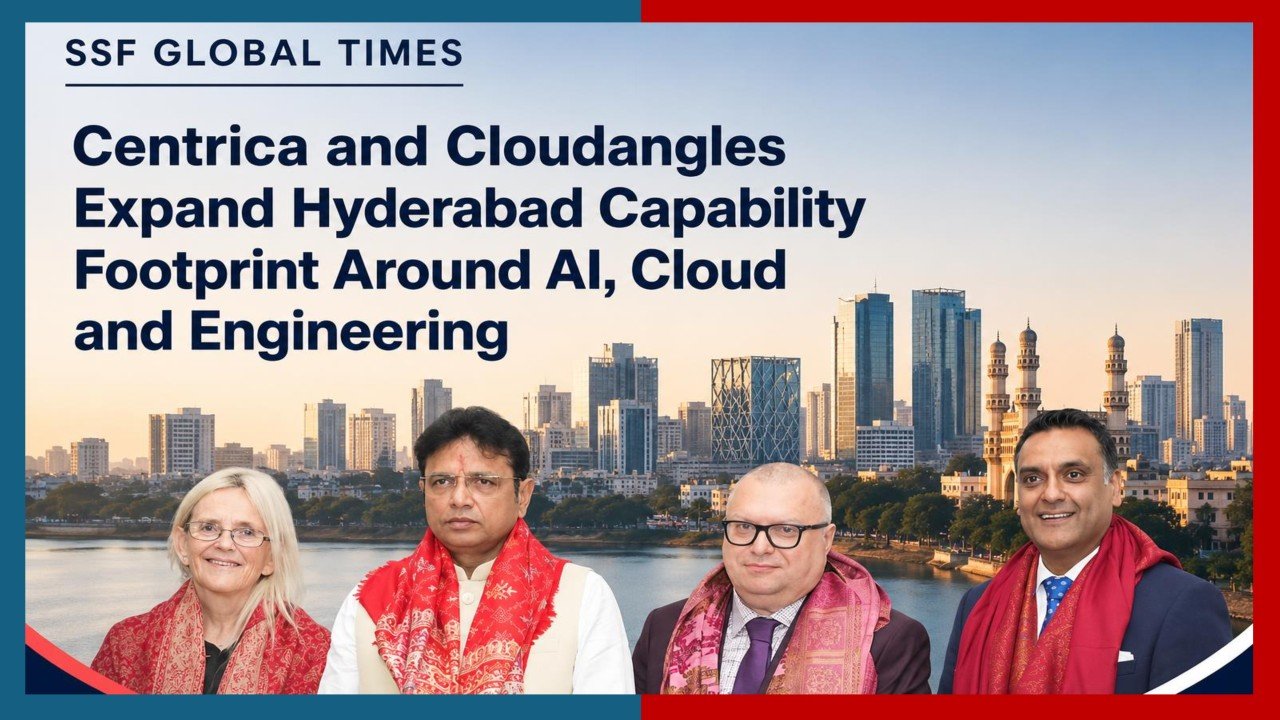
HYDERABAD | 11 August 2026: International energy and services company Centrica and digital transformation firm Cloudangles have expanded their technology and capability presence in Hyderabad, building on an established technology relationship and bringing together engineering, cloud, data and AI capabilities to support global business requirements.
The development reflects the growing use of India-based engineering and technology capabilities to support global enterprise operations. The significance lies less in the creation of another technology centre and more in the operating model it represents: the convergence of enterprise domain expertise, specialist technology capability and AI-enabled delivery within a shared value-creation framework.
KEY HIGHLIGHTS
- The Global Value Model: Cloudangles positions its Global Value Center (GVC) model as an evolution beyond traditional delivery-led GCCs, with emphasis on business impact, intelligence, AI-enabled operations and measurable value creation.
- Centrica–Cloudangles Technology Relationship: The Hyderabad capability base builds on an established technology engagement between the organisations, with Cloudangles teams in India working on Centrica technology environments including Dynamics 365 Field Service and related engineering capabilities.
- AI, Cloud & Engineering Focus: Cloudangles’ capability portfolio spans product engineering, agentic AI, data management, applied AI, cloud operations, FinOps and cloud migration, providing a broader technology foundation for enterprise transformation.
- Hyderabad Talent Advantage: The expansion further leverages Hyderabad’s established pool of software engineering, cloud, data and AI talent, particularly relevant to technology-intensive sectors such as energy and utilities.
Centrica plc is an international energy and services company whose businesses include British Gas, Bord Gáis Energy, Centrica Energy, Centrica Business Solutions and Hive. Its strategy is centred on supporting a greener, fairer energy future. Centrica has an established business-services presence in India, making the country an important component of its wider technology and operations ecosystem.
Cloudangles is a technology and digital transformation company with capabilities spanning AI, data, cloud, product engineering, intelligent automation and emerging technologies. Its GVC proposition is designed to help enterprises move from conventional delivery models towards AI-enabled, outcome-oriented global capability operations. This convergence is particularly relevant to the energy sector, where customer platforms, field operations, data systems, cloud infrastructure and intelligent automation are becoming increasingly interconnected.
ENGINEERING ENTERPRISE VALUE
The emerging capability model brings together several technology disciplines:
- Cloud & Data Modernisation: Cloudangles’ capability portfolio includes cloud migration, cloud operations, FinOps and data-management services, creating the technology foundation required to modernise enterprise platforms.
- AI-Enabled Engineering: The company’s offering includes engineering with agentic AI, testing with agents and applied AI, showing a clear movement of AI from experimentation into software engineering and delivery workflows.
- Enterprise Applications: Publicly available information on Cloudangles’ work with Centrica includes Dynamics 365 Field Service, including engineering and testing related to work-order management, scheduling and capacity planning.
The significance is less about any one technology and more about the convergence of enterprise applications, engineering, data, cloud and AI within the same delivery ecosystem.
TECHNOLOGY CONTEXT & CASE EXAMPLE: CENTRICA FIELD-SERVICE ENGINEERING
A useful real-world example of the Centrica-Cloudangles technology relationship is the work around Dynamics 365 Field Service. Publicly visible information on Cloudangles professionals working on Centrica programmes describes technology capabilities supporting electric and gas service work orders, engineer scheduling and appointment capacity, alongside functional testing, automation and end-to-end quality engineering.
Additional engineering work associated with the Centrica programme has included development around dynamic capacity planning and scheduling, highlighting the importance of intelligent workforce and field-service optimisation within energy operations.
This provides a useful illustration of how a global energy enterprise can use India-based engineering capability for operationally important technology, rather than limiting the relationship to generic IT support.
The broader value chain encompasses:
Field Operations + Enterprise Applications + Engineering + Data + Automation
For an energy business, this type of capability sits close to the operational experience of customers and field engineers, making it materially different from conventional back-office delivery. The case also demonstrates that the strategic value of an India-based capability centre increases when teams are embedded in the product and operational lifecycle and contribute to continuous platform evolution, not merely assigned a defined project scope.
THE EVOLVING GVC MODEL
Cloudangles’ GVC proposition provides a useful lens for examining how the capability-centre model is changing. The framework contrasts the traditional GCC emphasis on headcount, hours, output and cost with a value-oriented model centred on business impact, reusable intelligence, institutional knowledge and AI-enabled operations.
The important industry question is not whether every GCC should now be renamed a GVC.
The GVC proposition represents one possible next step in GCC evolution, not a replacement for the GCC model, but a shift in emphasis from delivery capacity towards measurable business value, capability ownership and reusable intelligence.
The test is whether the operating model can demonstrate a measurable shift:
From executing work → to owning capability → to generating business value.
For enterprises working with specialist providers, this also raises a second strategic question:
Who ultimately owns the IP, operating knowledge, decision rights and long-term capability?
That question will become increasingly important as AI reduces the relative value of pure execution and raises the premium on proprietary data, domain knowledge, architecture and enterprise context.