




 Ask an Expert

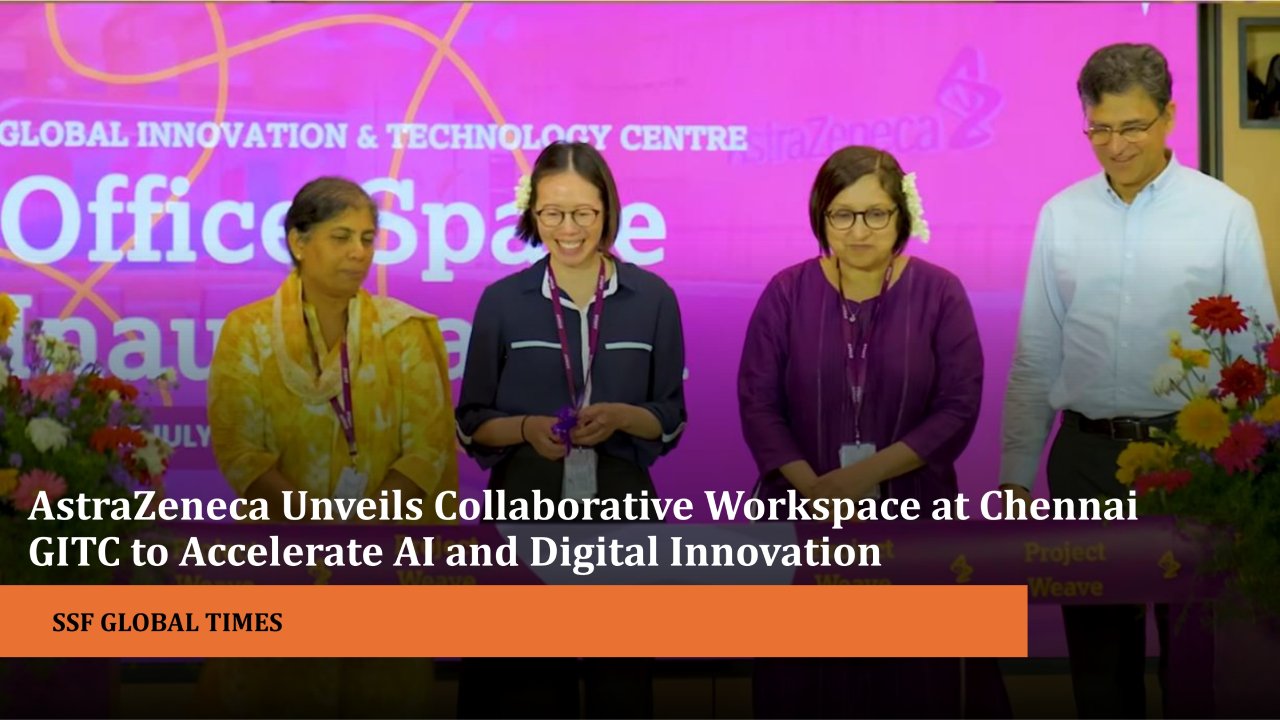
CHENNAI | 28 July 2026: AstraZeneca has inaugurated a newly designed collaborative workspace at its Global Innovation & Technology Centre (GITC) in Chennai, reinforcing its commitment to fostering innovation, cross-functional collaboration and agile technology delivery. The redesigned workplace reflects the company’s evolving approach to supporting AI, data, engineering and digital health teams through activity-based work environments.
KEY HIGHLIGHTS
- Activity-Based Workplace Design: The reimagined environment is structurally divided into five distinct operational zones-collaborate, converse, connect, concentrate, and celebrate, ensuring teams can fluidly shift between deep focus and open interaction.
- Cross-Functional Collaboration: By physically co-locating engineering, data science, and IT professionals, the facility is actively designed to harness the energy of side-by-side execution and dramatically reduce cross-team communication friction.
- Supporting Faster Innovation: The workspace is engineered to move beyond routine backend support, directly utilizing enhanced team collaboration to drive rapid business impact and faster technology deployment for the parent company.
Headquartered in the United Kingdom, AstraZeneca is a global biopharmaceutical company dedicated to discovering, developing, and commercializing advanced prescription therapeutics. Its Global Innovation & Technology Centre (GITC) in Chennai functions as strategic technology and innovation hub for the enterprise, providing critical support for global supply chains, data analytics, artificial intelligence initiatives, and digital health platforms that influence patient outcomes worldwide.
FACILITY MANDATE & DESIGN FRAMEWORK
Managing the robust digital infrastructure required for international drug development and global supply chain logistics demands rapid synchronization among technology teams. The newly inaugurated Chennai workspace acts as a collaborative workspace for this required speed, intentionally shifting away from isolated, traditional workstations toward a highly interactive model.
The architectural strategy focuses on specific operational levers:
- Accelerated Decision-Making: The layout emphasizes that physical proximity remains a critical component of complex problem-solving. By placing diverse technology pods in the same physical environment, AstraZeneca facilitates faster communication and decision-making.
- Activity-Based Zoning: Recognizing that software engineering and data analytics require varying levels of focus, the facility offers dedicated quiet areas for deep concentration, balanced with open spaces built specifically for informal collaboration and structured project collaboration.
THE FINANCIAL COMMITMENT: SCALING THE AI & DIGITAL PIPELINE
The inauguration of this collaborative workspace is a direct continuation of AstraZeneca’s aggressive multi-year capital deployment in Tamil Nadu. The collaborative workspace forms part of AstraZeneca’s broader investments in strengthening its digital and technology capabilities in Chennai, supporting a growing workforce and expanding responsibilities across AI, data analytics and global technology operations.
This spatial enhancement follows a major ₹176 crore capital injection announced in late 2025, which marked the company’s third major investment in India within a two-year period. This followed a previous ₹250 crore ($30 million) expansion in 2024 that added substantial square footage at Ramanujan IT City and created close to 1,300 specialized roles.
By continuously expanding the GITC infrastructure, AstraZeneca is equipping its workforce, which now exceeds 5,000 employees nationwide with the necessary resources to deploy artificial intelligence, machine learning, and advanced data analytics. Ultimately, these scaled teams are tasked with accelerating the delivery of next-generation medicines and shaping future-ready healthcare ecosystems.