




 Ask an Expert

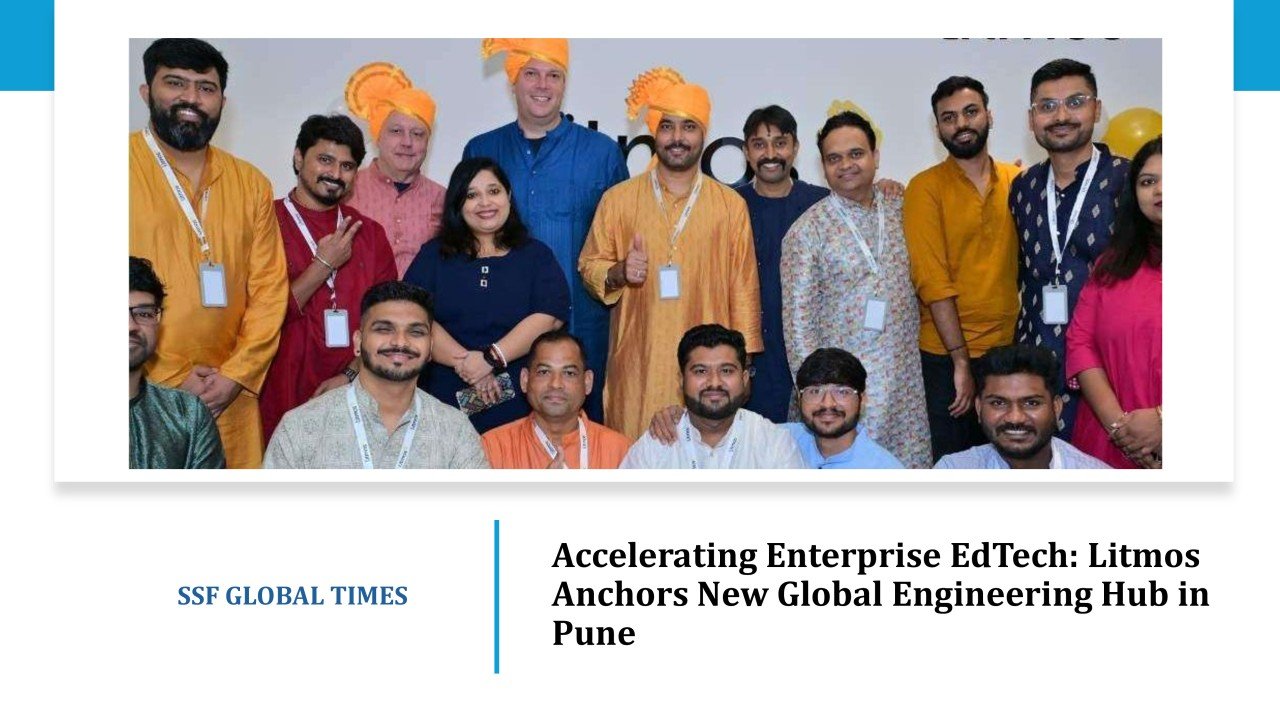
PUNE | 1 September 2026: Litmos has officially inaugurated its new global engineering hub in Pune. Designed to fundamentally scale the company’s sovereign technology operations, the strategic deployment aims to tap into Maharashtra’s specialized engineering talent pool. By anchoring this new facility, Litmos is expanding its worldwide developer network to architect next-generation, AI-enabled learning acceleration tools for a massive global clientele that currently spans over 11,000 organizations across 150 countries.
KEY HIGHLIGHTS
- The Strategic Capability Node: Bypassing traditional outsourced IT support, the Pune office is strictly mandated to function as a strategic engineering hub. It directly complements Litmos’ global developer ecosystem, operating as a primary engine for product innovation and software architecture.
- Engineering the AI Era: The expansion is structurally aligned with Litmos’ broader enterprise strategy: evolving legacy Learning Management Systems (LMS) into dynamic “Learning Acceleration Platforms”. The Pune squads will be heavily involved in embedding AI throughout the learning lifecycle to drastically compress the time required to upskill global workforces.
- The Return to Co-Location: Driving a deliberate culture shift, the facility is engineered to foster physical engineering synergy. The workspace explicitly prioritizes in-person mentorship, organic knowledge-sharing, and hands-on technological collaboration that remains difficult to replicate in highly distributed remote environments
Litmos is a specialized enterprise software provider focusing on Learning Management Systems (LMS) and learning acceleration technology. Established in 2007, the platform was engineered to centralize and deliver transformative training protocols for internal workforces, external partners, and customer networks.
The enterprise has undergone a significant structural evolution over the past decade. It was acquired by CallidusCloud in 2011, subsequently absorbed by German software giant SAP in 2018, and most recently spun out into an independent entity after being acquired by prominent technology investment firm Francisco Partners in 2022. Today, the company’s platforms are utilized by over 30 million users across 35 languages, helping heavily regulated organizations accelerate performance, revenue, and compliance tracking.
INFRASTRUCTURE & CAPABILITIES: INSIDE THE BENGALURU ITIR HUB
In the modern enterprise software sector, maintaining a competitive edge requires rapid deployment and seamless integration. To support Litmos’ transition toward AI-driven human capability building, the operational blueprint inside the Pune hub focuses on advanced software engineering and product resilience:
- Full-Stack Product Development: The localized talent pool will not operate on the periphery of the product lifecycle. Indian engineering teams are being integrated directly into the core development loops, tasked with building scalable cloud architecture that can seamlessly deliver learning modules in the flow of work for millions of enterprise end-users.
- Collaborative Innovation Labs: As articulated by Sarabjeet Singh, Director of India Operations, a primary driver behind establishing a physical hub was to “realize the very real benefits to being together in the same room”. The floorplate is heavily optimized for agile development frameworks, allowing cross-functional developer squads to rapidly iterate complex coding challenges and system integrations.
- AI & Data Engineering Pipelines: With artificial intelligence fundamentally compressing the half-life of professional skills, legacy learning platforms often struggle to keep pace. The Pune teams will focus on developing algorithmic tools that allow Litmos platforms to deploy faster, integrate deeply with existing enterprise tech stacks, and generate real-time analytics for Chief Learning Officers (CLOs).
The opening of our Pune office marks an important milestone in Litmos’ continued investment in our people, technology and global capabilities. India has one of the world’s deepest and most highly skilled technology talent pools, with exceptional engineering expertise… India adds deep experience to our existing global engineering talent, and we are excited about the possibilities this new chapter brings.