




 Ask an Expert

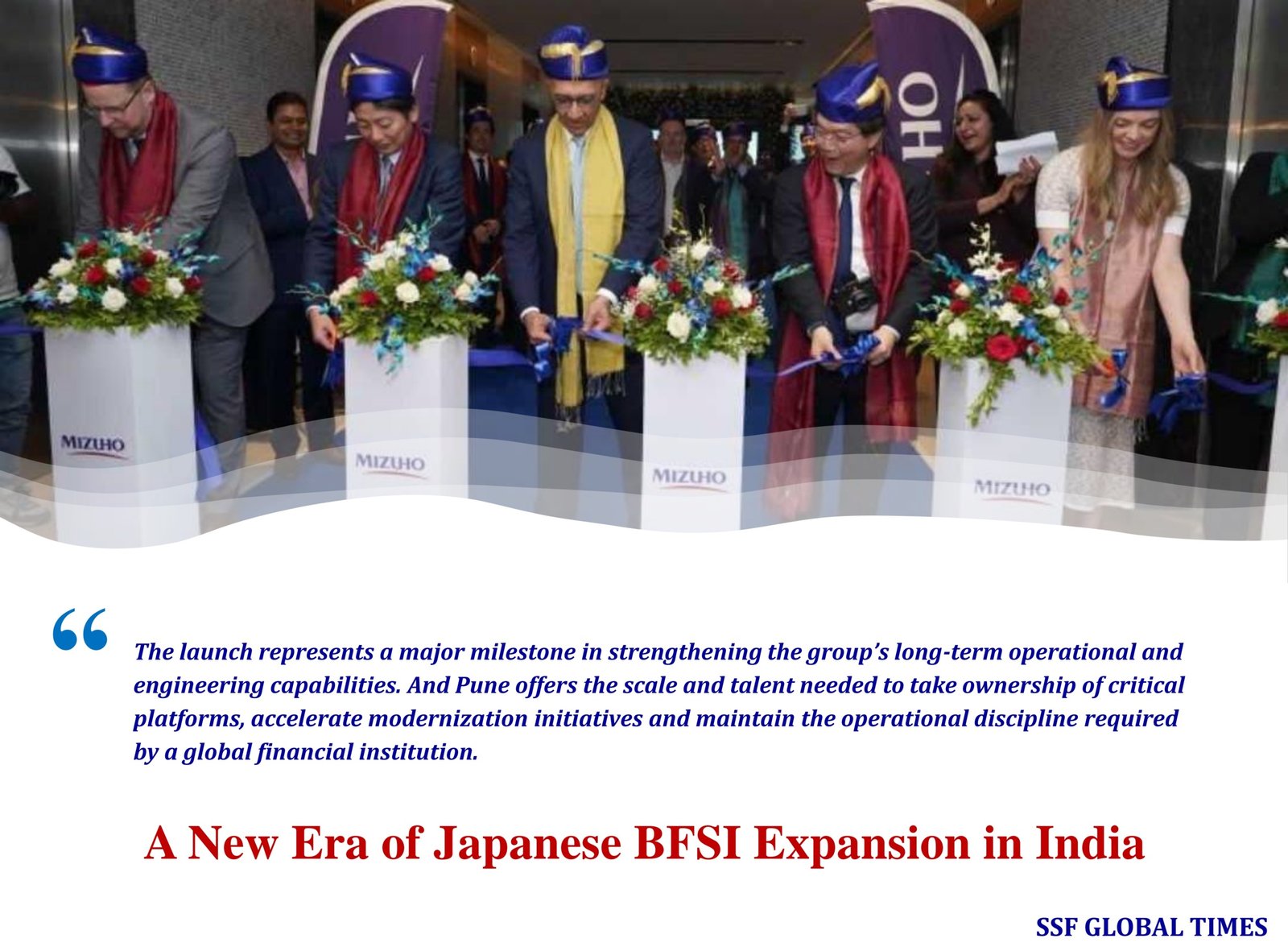
Pune | 25 May 2026: The significance of Mizuho Financial Group’s expanding India capability footprint extends far beyond the launch of another banking GCC. What is unfolding instead is a deeper structural shift in the global banking industry, one where India is increasingly becoming central to how multinational financial institutions build resilience, scale digital transformation, manage intelligent operations, and architect future-ready enterprise ecosystems.
For Japanese financial institutions in particular, this marks an especially important transition. Historically, Japanese enterprises approached India cautiously, often limiting operations to selective IT support, offshore services, or tightly controlled functional delivery models. That mindset is now changing rapidly. Increasingly, Japanese boardrooms are viewing India not as an outsourcing destination, but as a strategic capability geography capable of supporting enterprise-scale innovation, engineering depth, digital modernization, and globally integrated operations. Mizuho’s growing India presence reflects this broader evolution.
The banking sector globally is entering one of its most complex transformation cycles in decades. Financial institutions are simultaneously navigating AI disruption, cyber-risk escalation, real-time regulatory compliance requirements, cloud migration pressures, rising operational costs, digital customer expectations, and growing geopolitical uncertainty.
As a result, global banks are redesigning their operating models around technology-led resilience. This is precisely where India’s GCC ecosystem is becoming strategically important. The next generation of banking GCCs is no longer centered primarily around transaction processing or operational support. Instead, these centers are increasingly driving enterprise intelligence, AI-led decision-making, platform modernization, derivatives technology, digital risk management, cybersecurity operations, cloud-native engineering, and advanced analytics.
The launch represents a major milestone in strengthening the group’s long-term operational and engineering capabilities. And Pune offers the scale and talent needed to take ownership of critical platforms, accelerate modernization initiatives and maintain the operational discipline required by a global financial institution.
Institutions like Mizuho don’t just support high-value banking operations. They are actually expected to rapidly India-based teams can become embedded within the global decision-making and innovation architecture of the enterprise itself. This transition also explains why India’s role in BFSI transformation is moving steadily up the value chain.
Across global financial institutions, AI is rapidly becoming foundational to banking operations. Real-time fraud detection, predictive risk analytics, automated compliance monitoring, intelligent treasury systems, algorithmic operations, enterprise data governance, and digital customer intelligence are increasingly central to banking competitiveness. These capabilities require large-scale engineering depth, data science expertise, cloud infrastructure talent, and globally connected operating models, areas where India has developed considerable strength over the last decade.
Equally important is the changing role of GCCs themselves. Traditional banking GCCs were once measured largely through cost efficiency and process scalability. Today, leading enterprises increasingly evaluate their India centers based on innovation velocity, product ownership, resilience engineering, transformation capability, and enterprise-wide strategic contribution.
This evolution is especially visible in sectors such as capital markets, derivatives platforms, enterprise risk systems, digital banking architecture, and AI-enabled operations, all areas where global financial institutions are accelerating investment. The implications for India’s talent ecosystem are significant.
As BFSI GCCs become more engineering- and intelligence-intensive, demand is rapidly shifting toward professionals with expertise in AI, quantitative analytics, enterprise architecture, cloud-native banking systems, cybersecurity, derivatives engineering, and intelligent automation. This is creating a new category of high-value financial engineering roles within India’s enterprise ecosystem, blending banking domain expertise with advanced digital and AI capabilities.
Within this context, Pune’s emergence is also strategically noteworthy. Compared to traditional banking hubs, Pune offers a combination of engineering talent, financial services expertise, digital maturity, operational scalability, and comparatively sustainable expansion economics. As global financial institutions seek diversified and resilient operating models, cities capable of supporting integrated engineering and financial operations ecosystems are becoming increasingly attractive.
Mizuho’s continued investment therefore reflects more than geographic expansion. It highlights a broader recalibration underway across the global banking sector, one where India is evolving into a core layer of enterprise intelligence, operational resilience, AI-led banking modernization, and strategic technology transformation. The broader geopolitical dimension is equally important.
Japanese enterprises across banking, manufacturing, automotive, semiconductors, and industrial technology are steadily deepening India engagements amid shifting global supply chains, demographic pressures, digital transformation demands, and regional economic realignment. India’s combination of engineering scale, digital public infrastructure, AI talent, regulatory maturity, and long-term growth potential is increasingly positioning the country as a strategic partner in Japan’s next phase of global expansion.