



 Ask an Expert


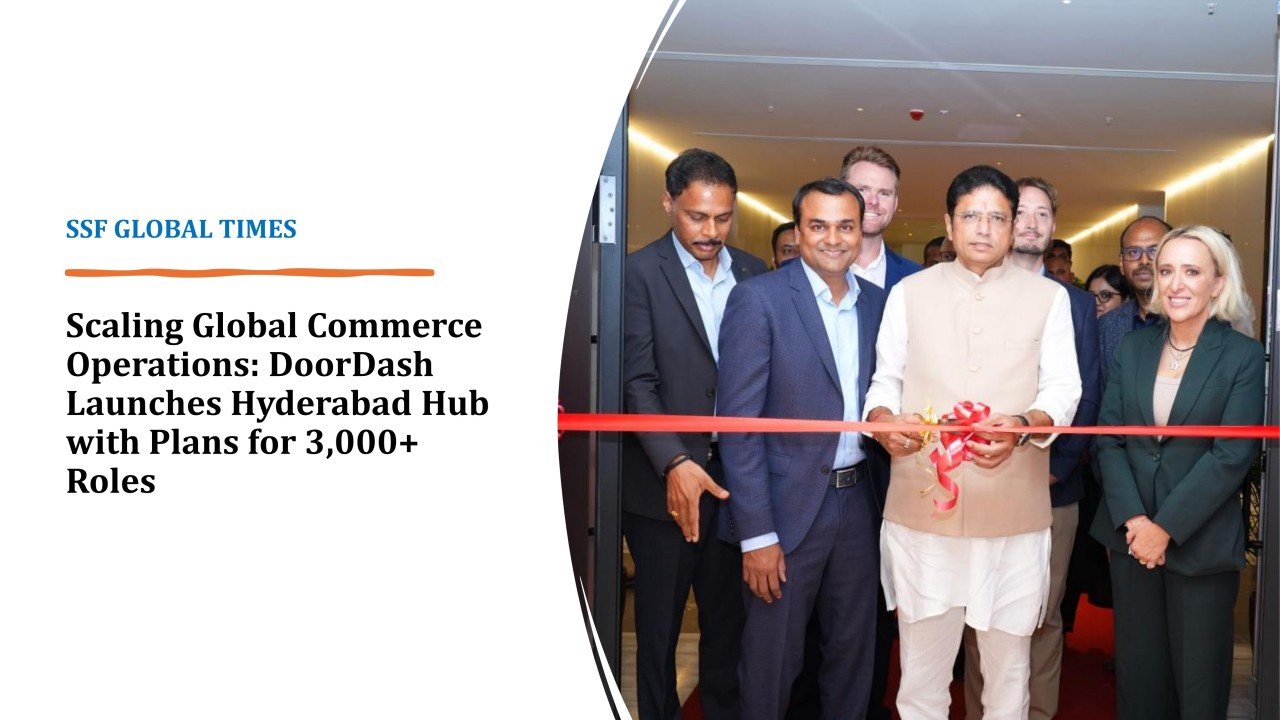
HYDERABAD | 29 September 2026: Expanding its internal operational infrastructure into South Asia, DoorDash (NASDAQ: DASH) has inaugurated its first large-scale Indian talent hub in HITEC City, Hyderabad. Rather than relying solely on third-party business process vendors to manage platform trust and user operations, the company is establishing an internal capability centre designed to house more than 3,000 professionals over the next two years.
Inaugurated by Telangana IT and Industries Minister D. Sridhar Babu alongside DoorDash CFO Ravi Inukonda, Senior Director of Workforce Strategy Jenna Kohnke, and State IT Adviser Sai Krishna, the Hyderabad facility anchors a dual-city Indian footprint that complements the company’s existing software and data team in Pune.
KEY HIGHLIGHTS
- Phased Workforce Scaling: Operations in HITEC City are commencing with an initial cohort of 500 specialists, with a two-year hiring roadmap to scale past 3,000 employees across operational, corporate, and technical tracks.
- Global Tri-Hub Architecture: The Hyderabad centre functions as one of only three wholly owned Customer Experience and Integrity (CXI) hubs operated by DoorDash worldwide operating alongside Tempe, Arizona, and Mexico City to provide continuous global coverage.
- The Pune-Hyderabad Dual Footprint: While Hyderabad marks DoorDash’s first large-scale operational hub in India, it builds upon an existing engineering outpost in Pune, where software, data, and analytics teams were integrated following DoorDash’s 2021 acquisition of robotics startup Chowbotics.
- Executive Governance: The launch brings together global financial and workforce leadership, spearheaded by CFO Ravi Inukonda and Jenna Kohnke, Senior Director of Workforce Strategy and Talent Acquisition Operations, who pointed to Hyderabad’s existing GCC ecosystem and technical talent density as central to the site selection.
Headquartered in San Francisco, California, DoorDash is a local commerce and on-demand logistics platforms. Operating across more than 40 countries (bolstered by its international subsidiaries such as Wolt), the platform serves over 56 million monthly active consumers across regions with a combined population exceeding one billion people.
In 2025, DoorDash recorded more than $100 billion in marketplace Gross Order Value (GOV). Having expanded beyond restaurant delivery into grocery, convenience retail, autonomous delivery hardware, and merchant software, the enterprise relies on automated logistics routing and high-volume operational centers to maintain delivery reliability and unit economics.
OPERATIONAL SCOPE: INSIDE THE HYDERABAD HUB
Supporting a three-sided logistics marketplace connecting consumers, merchants, and delivery couriers (“Dashers”) requires real-time issue resolution, fraud prevention, and corporate governance. The Hyderabad hub is structured around four primary functional pillars:
- Customer Experience & Marketplace Integrity (CXI): Functioning as an extended arm of the global CXI organization, local teams will own and manage support workflows, platform safety, and transaction integrity across DoorDash’s international markets.
- General & Administrative (G&A) Functions: The centre embodies core corporate capabilities, with active recruitment spanning workforce planning, real-time forecasting, international tax and transfer pricing, HR systems (Workday integration), and workplace operations.
- Autonomy Operations & Mapping: Beyond support and corporate administration, hiring data indicates specialized roles in Autonomy Operations, including mapping specialists and QA/triage analysts supporting ‘DoorDash Dot’, the company’s autonomous delivery initiative.
- Data Engineering: Select data engineering and analytics roles are also being stationed in Hyderabad to work alongside the existing backend software teams in Pune.