




 Ask an Expert

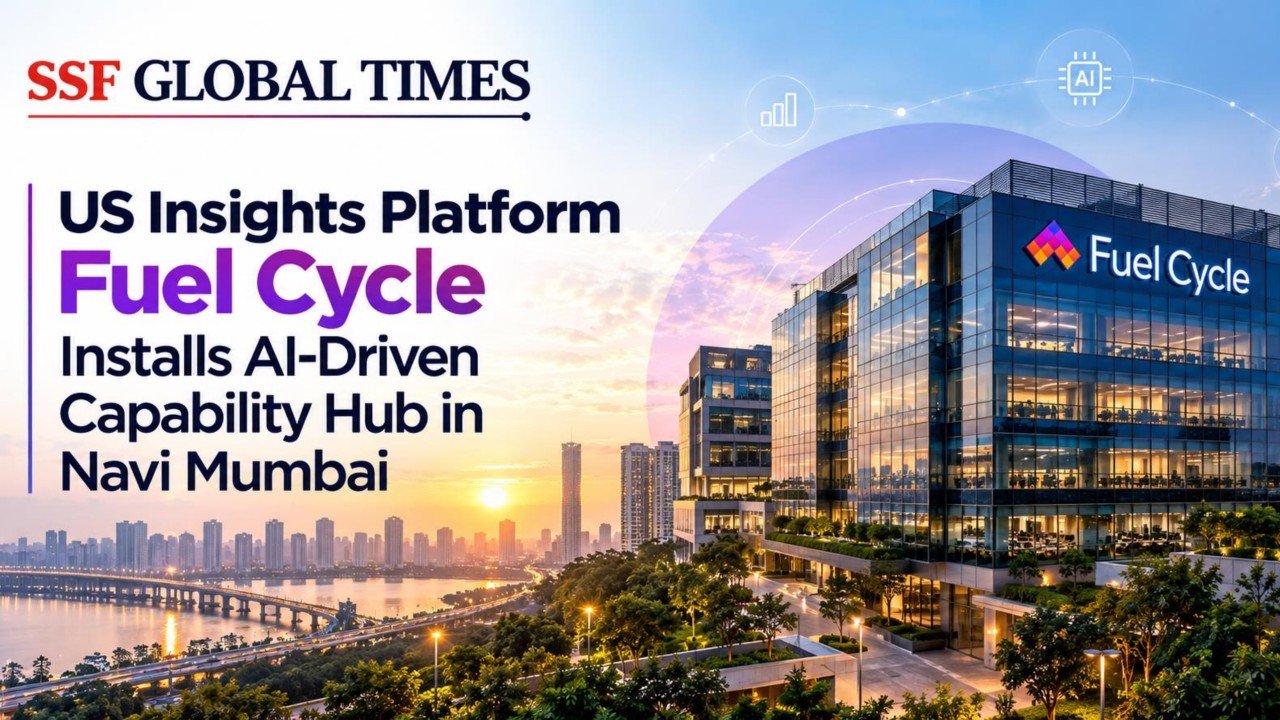
BENGALURU | 22 September 2026: Fuel Cycle has formally announced the launch of its Global Capability Center (GCC) in India. Situated in Vashi, Navi Mumbai, the newly minted technology node represents a calculated infrastructure expansion designed to accelerate the enterprise’s software engineering and artificial intelligence frameworks.
By passing legacy IT support structures, this facility is explicitly positioned as a sovereign engineering engine, tasked with advancing the company’s autonomous market research platforms and data analytics capabilities.
KEY HIGHLIGHTS
- The Vashi Tech Node: By anchoring the center in Navi Mumbai—specifically Vashi—the company taps into a rapidly maturing micro-market that offers premium commercial infrastructure and access to elite data science talent, distinct from the heavily saturated corridors of Bengaluru or Pune.
- Calibrated Talent Scaling: The facility is launching with a highly targeted initial capacity of 50 specialized roles, indicating a focus on senior, high-impact technical hires. The corporate roadmap includes provisions to systematically scale this headcount over the coming quarters as integration deepens.
- Core Operational Pillars: The center is officially designated as a strategic hub for three critical domains: Engineering, Artificial Intelligence, and Product Development.
- Enterprise Integration: The Navi Mumbai workforce is not executing peripheral tasks; leadership has confirmed the center is expected to operate as a foundational pillar of Fuel Cycle’s global product and technology organization.
Headquartered in the United States, Fuel Cycle operates as an AI-native consumer insights and market research platform. The enterprise specializes in decision intelligence, providing software infrastructure that allows Fortune 500 brands to build proprietary online communities, launch rapid market testing, and capture deep behavioral data.
Recently gaining industry traction for its “Autonomous Insights” suite, Fuel Cycle leverages intelligent automation to compress traditional research timelines. By replacing fragmented, manual research cycles with an always-on insight engine, the company enables global organizations to validate product designs, identify market gaps, and execute confident corporate strategies at an accelerated pace
CAPABILITY BLUEPRINT: INSIDE THE BENGALURU HUB
The demand for real-time consumer sentiment is forcing market research to evolve from manual survey analysis to predictive, AI-driven intelligence. The localized squads in Navi Mumbai are mandated to build and scale the underlying architecture that powers this transition:
- Agentic AI & Machine Learning: The hub’s specialized data scientists will drive the development of “agentic AI” autonomous algorithms capable of independently scoping research parameters, deploying consumer surveys, and distilling complex, unstructured market feedback into executive-level strategy.
- Product Engineering: Localized software developers are taking direct ownership of core platform modules. They are tasked with optimizing the firm’s proprietary “Curiosity OS,” enhancing backend latency, and building seamless data collection tools that integrate verified consumer audiences with enterprise analytics dashboards.
- Decision Intelligence Infrastructure: The engineering teams will fortify the cloud infrastructure required to process massive, multi-modal datasets, ensuring that global brands receive rapid, unbiased, and highly accurate consumer insights without operational bottlenecks.