



 Ask an Expert

JAMMU | 19 August 2026: The next phase of India’s Global Capability Centre (GCC) growth will no longer be defined only by the expansion of Bengaluru, Hyderabad, Chennai, Pune, Mumbai and Delhi-NCR. It will increasingly be shaped by emerging cities that can build specialised talent, enterprise-ready infrastructure and focused capability propositions.
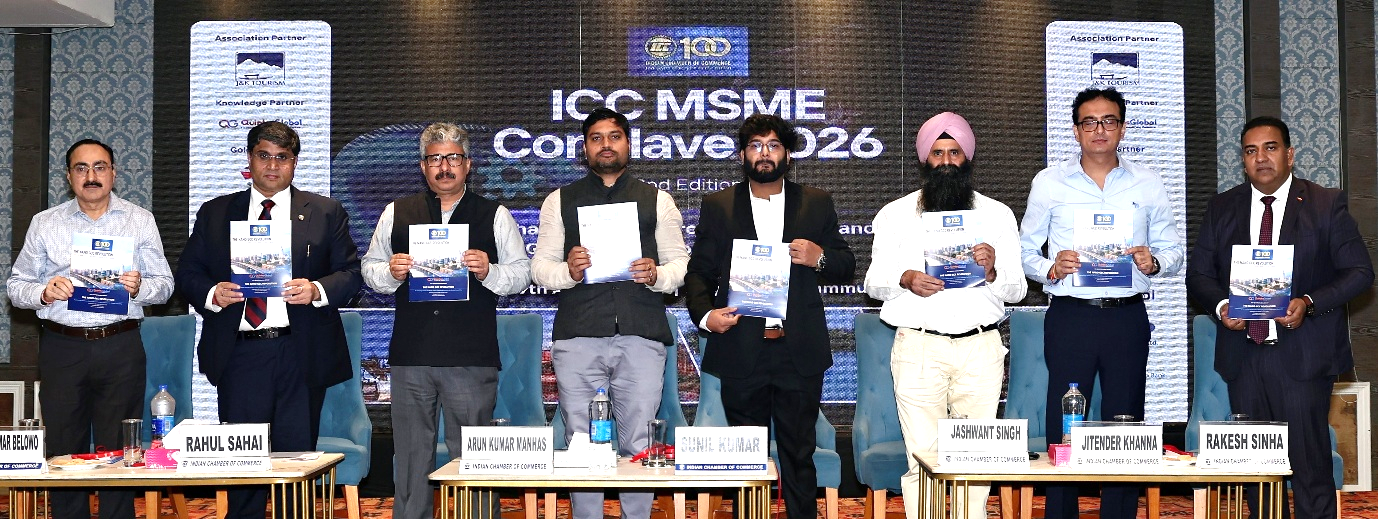
Taking this shift from strategy to execution, Quintes Global, Knowledge Partner to the Indian Chamber of Commerce (ICC)’s 2nd ICC MSME Conclave 2026, held in Jammu on 19 August 2026, unveiled The Nano GCC Revolution: How Emerging Cities Can Capture the Next $100 Billion Wave of Global Capability Investments – a report that builds on the broader GCC geographic rebalancing thesis articulated through SSF Global’s The Great GCC Rebalancing – North India’s Moment, and translates that thesis into a practical playbook for emerging locations.
While the earlier research established why the GCC map needs to expand beyond traditional hubs, the Nano GCC model addresses the more immediate question: how can an emerging city become capable of attracting, launching and scaling global capability operations?
The proposition is particularly relevant at a time when more than 94% of India’s GCC footprint remains concentrated across six Tier-1 cities, creating increasing pressure around talent competition, wage escalation, infrastructure, real estate and operational resilience. At the same time, emerging Tier-2 locations are gaining relevance as enterprises adopt distributed, multi-hub models and use smaller teams to establish specialist capabilities before scaling.
From GCC Concentration to GCC Rebalancing
SSF Global’s The Great GCC Rebalancing – North India’s Moment identifies a structural shift underway in India’s GCC landscape. The next wave of expansion is not expected to displace the established hubs; rather, it is creating a distributed architecture in which Tier-1 cities continue to anchor global operations while emerging locations take on specialised technology, engineering, analytics and other capability mandates. The rationale goes beyond cost.
Enterprises are increasingly looking at emerging cities for talent diversification, workforce continuity, business resilience, lower attrition and access to specialised capability pools. SSF research indicates that risk diversification and business continuity are a substantially stronger driver for Tier-2 expansion than real-estate arbitrage alone. Emerging cities also offer meaningful operating-cost and real estate advantages, while North India has a large annual pool of STEM and management graduates.
This creates the strategic opening for the Nano GCC. Instead of requiring a global enterprise to make a large scale commitment from day one, a Nano GCC enables an organisation to establish a small, specialised capability unit – typically 25-100 professionals – validate the talent and operating environment, demonstrate business value and then scale progressively. The model therefore converts geographic diversification from a long-term aspiration into a lower-risk entry and scale mechanism.
From Identifying the Shift to Enabling It
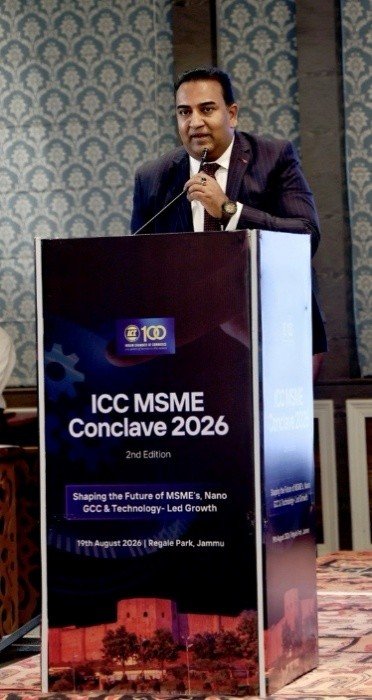
For Rakesh Sinha, Founder & CEO, Quintes Global, the opportunity is not simply to identify the next set of GCC locations. It is to help build the conditions under which those locations can actually win global mandates. Rakesh has been closely associated with the evolution of India’s GCC and enterprise services ecosystem and has consistently advocated a shift from conventional scale-led delivery models towards capability-led, technology-enabled and geographically distributed operating models.
The Nano GCC proposition extends that thinking.
Rakesh’s central argument is that an emerging city should not attempt to compete with Bengaluru or Hyderabad by replicating their scale. Instead, it must establish a right-to-win proposition around specific capabilities and then build the ecosystem around those capabilities. For any Tier-2 city like Jammu, that means moving the conversation from “we have graduates” to “we can deliver globally relevant capability.”
“The GCC opportunity for emerging cities is not about replicating the Tier-1 model at a smaller scale. It is about identifying the capabilities for which a city can develop a genuine competitive advantage, creating the ecosystem around them, and giving global enterprises a low-risk pathway to enter and scale… The Nano GCC is that entry mechanism. It allows an enterprise to test a capability, build confidence, demonstrate value and then scale. For the city, it creates a practical pathway from talent availability to participation in global value chains,” – said Rakesh Sinha.
Jammu: A Potential Capability Node, Not Just a New GCC Location
The report – The Nano GCC Revolution – identifies Jammu’s opportunity through a capability-first lens. Rather than positioning Jammu as a generic low-cost alternative, the report identifies potential specialist domains including:
- Data & AI Operations
- BFSI Technology
- Software Engineering
- AgriTech
- Climate & Sustainability Intelligence
The city also has a significant institutional foundation through IIT Jammu, IIM Jammu and the University of Jammu. But Rakesh emphasised that institutional presence and graduate supply must translate into GCC-ready capability. This requires stronger employer-academia alignment, industry-led programs, applied internships, On-the-job trainings (OJTs) and curricula designed around the requirements of global enterprises – particularly across AI, data, software engineering and digital operations. The report therefore treats talent readiness as an ecosystem-building exercise, rather than simply a recruitment question.
The LG’s Agenda Aligns with the Nano GCC Opportunity
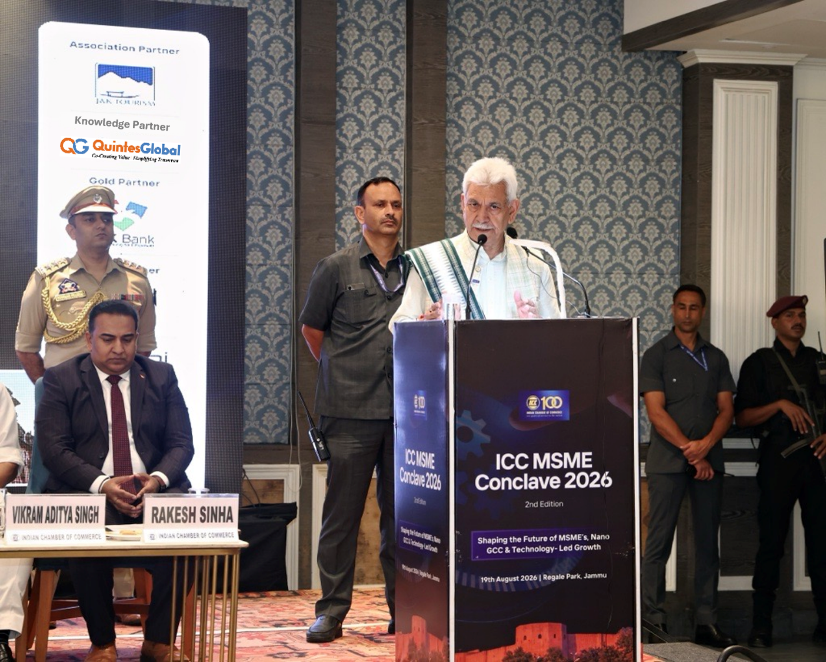
The launch took place against a broader technology and economic-development agenda articulated by Hon’ble Lieutenant Governor of Jammu & Kashmir, Shri Manoj Sinha, in his keynote address at the conclave. The Lieutenant Governor described MSMEs as critical to India’s employment, exports, entrepreneurship and economic resilience, noting their contribution of 31.3% to GDP and nearly half of India’s exports.
He also highlighted the growing importance of Nano GCCs, describing the model as an opportunity for smaller, specialised teams to deliver high-value capabilities and for enterprises in Tier-2 cities to build and scale world-class technology capabilities.
He placed this opportunity within a much broader technology-led transformation. According to the Lieutenant Governor, AI, automation and digital infrastructure are compressing timelines and lowering barriers to enterprise, creating new opportunities for cities such as Jammu and Srinagar. He described the Nano GCC model as a potential pathway for MSMEs and enterprises in emerging cities to gain global relevance.
Importantly, his agenda for MSME growth went beyond technology adoption. He identified key priorities including:
- improving affordable access to credit;
- accelerating technology upgradation;
- strengthening supply-chain integration and market access;
- reducing administrative friction and improving the ease of doing business;
- encouraging green technologies and renewable energy;
- increasing the formalisation of micro enterprises to improve access to institutional credit;
- strengthening education-industry partnerships;
- establishing incubation centres and design studios within industrial clusters;
and - improving export competitiveness and global market access.
He specifically highlighted the opportunity for Jammu & Kashmir to leverage its distinctive cultural and traditional production chains and called for the large-scale promotion of the ‘One District, One Export Hub’ initiative to strengthen the region’s export competitiveness. This broader agenda creates an important convergence with the Nano GCC proposition.
MSMEs can become technology adopters and suppliers; universities can become talent engines; incubation centres can become innovation nodes; export hubs can connect local capabilities to global markets; and Nano GCCs can provide an additional channel through which global enterprises bring capability mandates into the region. Together, these elements can create an ecosystem rather than isolated investments.
Introducing the Nano GCC Blueprint
The Quintes-ICC report introduces the “Nano GCC” as a transformative pathway for emerging locations to attract high-value global capability mandates. Rather than competing on sheer scale with established tier-1 metros, Jammu’s strategic advantage lies in agility and specialization.
Key pillars of the report include:
- Agile Entry Architecture: The Nano GCC model allows global enterprises to start with lean, highly specialized capability units comprising 25 to 100 professionals. This enables firms to prove business value, test local talent, and scale progressively, significantly lowering the barrier to entry.
- Specialized Capability Clusters: The report identifies distinct, future-ready domains suited for Jammu, including Data & AI Operations, BFSI Technology, Software Engineering, AgriTech, and Climate & Sustainability Intelligence.
- Structured Launch Roadmap: The report details a rigorous 30-90-180-day operational blueprint designed to accelerate enterprise setup, minimize launch friction, and stabilize global operations.
- The 5P Readiness Framework: To operationalise this approach, the Quintes Global report introduces its 5P Readiness Framework, assessing an emerging location across five dimensions:
- Place – talent, infrastructure, quality of life and operating environment;
- Policy – government support, incentives and ease of doing business;
- Performance – the ability to deliver consistent, enterprise-grade capability;
- Positioning – the differentiated proposition presented to global enterprises; and
- Partner Ecosystems – academia, industry, infrastructure providers, technology partners and other stakeholders required to support sustained GCC growth.
The framework is intended to move location discussions away from broad attractiveness scores towards enterprise readiness and capability-market fit. The report complements this with a 30-90-180-day roadmap, providing a phased approach from location and capability assessment through ecosystem mobilisation, launch and operational stabilisation.
From Talent Pool to Capability Ecosystem
This is where Quintes Global sees its role extending beyond conventional GCC advisory. Rakesh argues that emerging locations need a GCC catalyst, an entity capable of bringing together enterprise demand, location strategy, talent development, infrastructure, technology and ecosystem partnerships.
“A city does not become a GCC destination because it has office space or graduates. It becomes a GCC destination when those assets are connected into an enterprise-ready ecosystem… Our objective through the Nano GCC model is to help create that bridge, right from talent to capability, from capability to enterprise adoption, and ultimately from a first 50-person team to a scalable global delivery footprint,” – in the words of Rakesh Sinha.
This also creates a potential multiplier effect beyond the GCC itself. As global capability operations establish a presence, they can stimulate demand for Grade-A commercial infrastructure, managed workspaces, hospitality, housing, professional services, technology vendors and local startups. More importantly, they can create high-value employment pathways that connect educated local talent to global work.
Jammu as the Case for the Next GCC Geography
The Jammu proposition is therefore larger than attracting a few new technology centres.
It represents a test of whether an emerging city can build a specialised capability ecosystem that participates in India’s wider GCC growth without having to replicate the scale or structure of a Tier-1 technology hub.
The SSF Global research establishes the macro direction: India’s GCC geography is beginning to rebalance. Quintes Global’s Nano GCC framework seeks to provide the operating mechanism for that rebalancing, allowing enterprises to enter emerging cities incrementally while giving those cities a structured pathway to become GCC-ready.
For Jammu and Kashmir, the opportunity is to connect its MSME, education, technology, entrepreneurship and export agendas with this emerging global capability economy. For Quintes Global, it represents a more active role in the GCC ecosystem: not simply advising enterprises where to locate, but helping emerging locations become capable of attracting, launching and scaling global capability.
The Next Wave Will Be Built Through Smaller, Smarter and More Distributed GCCs
The Economic Multiplier Effect: The introduction of specialized Nano GCCs has the potential to trigger massive macroeconomic multipliers across the Union Territory. The report highlights that successful capability investments will drive rapid absorption of Grade-A commercial real estate, stimulate demand in premium housing and hospitality, and naturally incubate local tech startups. Most critically, this ecosystem will address the region’s demographic paradox by absorbing highly educated youth into the formal, high-value technology sector, shifting them from job seekers to opportunity creators.
India’s GCC story began with scale and cost arbitrage. It evolved towards digital transformation, engineering, R&D and global business ownership. The next phase is likely to be characterised by geographic diversification, specialised capability clusters, distributed operating models and faster pathways to value. The Nano GCC is positioned at the intersection of these shifts.
As Rakesh concluded: “The next GCC frontier will not be defined by the biggest building or the largest initial headcount. It will be defined by how quickly a location can develop a capability that a global enterprise values. That is the opportunity emerging cities need to capture.”
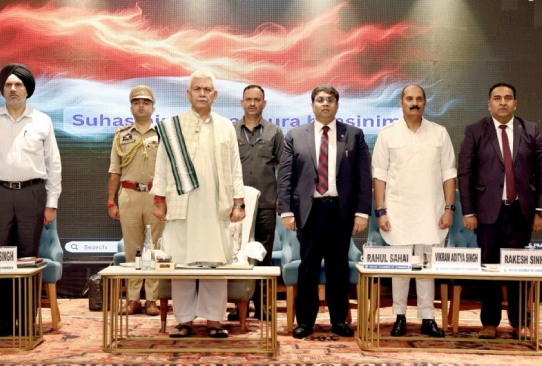
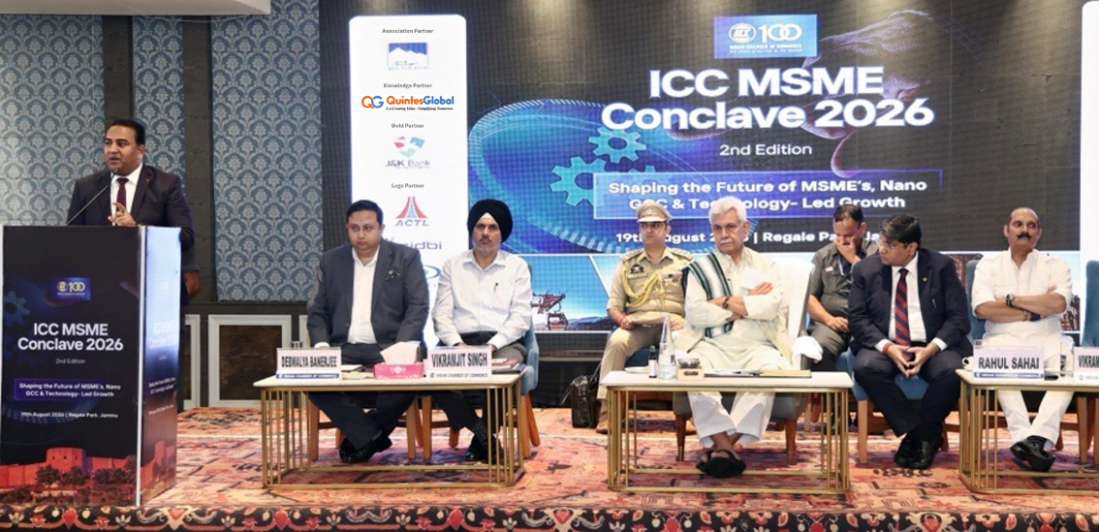
The 2nd ICC MSME Conclave 2026 brought together senior government officials, industry leaders, financial institutions, investors and representatives of trade and business organisations. Among those present were Shri Vikramjit Singh, Commissioner Secretary, Industries & Commerce Department, J&K; Shri Rahul Sahai, Chairman, ICC Jammu Chapter; Shri Vikramaditya Singh, Trustee, Dharmarth Trust; Dr. Arun Kumar Manhas, Director, Industries & Commerce Department, Jammu; Shri Rakesh Sinha, CEO, Quintes Global, along with senior civil and police administration officials, industry leaders and experts.
About Indian Chamber of Commerce
The Indian Chamber of Commerce (ICC) is a premier non-governmental trade association and advocacy group headquartered in Kolkata, India. Founded in December 1925 by pioneering industrialists like Ghanshyam Das Birla with guidance from Mahatma Gandhi, it served as an early indigenous voice during the Indian Freedom Movement. Key Functions and Focus Areas of ICC:
- Policy Advocacy: Interacts closely with central and state governments to provide budget recommendations, policy inputs, and economic research.
- Business Services: Offers B2B matchmaking, the ICC Council of Arbitration, Certificate of Origin issuance, and visa recommendations.
- Global and Regional Reach: Operates multiple regional offices across India alongside numerous international representative offices worldwide.
About Quintes Global
Quintes Global is an enterprise services transformation company and GCC catalyst, working across GCC strategy and expansion, location strategy, operating-model design, technology and AI-led transformation, talent architecture and ecosystem development. The company works with enterprises and ecosystem stakeholders to establish, scale and transform global capability operations. Rakesh Sinha is the Founder & CEO of Quintes Global and a GCC and enterprise services practitioner and thought leader. His work spans GCC strategy and expansion, location strategy, operating-model transformation, technology-enabled enterprise services, talent and capability development, and the evolution of distributed global delivery models. Through Quintes Global, he is focused on helping enterprises and emerging locations participate in the next phase of India’s GCC growth.