




 Ask an Expert

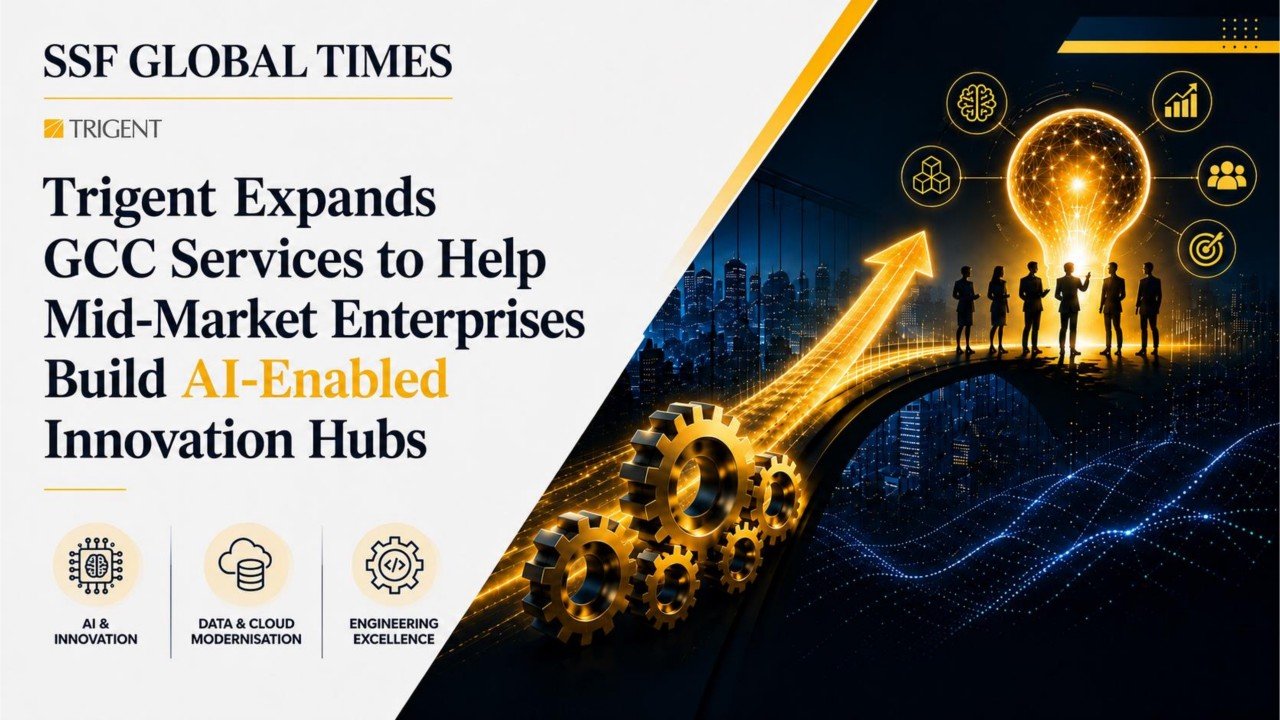
SOUTHBOROUGH & BENGALURU | 13 August 2026: US-based technology services company Trigent Software has announced the expansion of its Global Capability Center (GCC) services, strengthening its focus on helping enterprises establish and scale India-based technology capabilities.
The expanded offering is aimed particularly at mid-market enterprises, Independent Software Vendors (ISVs) and growing technology businesses seeking to build global engineering and innovation capabilities without developing the entire operating infrastructure independently. Trigent’s model combines GCC setup and operations with AI-enabled engineering, talent, governance and scalable delivery structures. The development echoes the growing demand for faster, lower-complexity pathways to establish specialised technology capabilities, particularly among organisations for which building a large captive operation from the outset may not be the preferred model.
KEY HIGHLIGHTS
- Expanded GCC Services: Trigent is expanding its GCC offering to support enterprises across the lifecycle of establishing and scaling global technology capabilities.
- Focus on Mid-Market Enterprises: The model is designed for mid-market companies, ISVs and other growing enterprises that require access to engineering and digital talent without the complexity of building a large operating footprint from day one.
- GCC-in-a-Box Approach: Trigent’s framework brings together elements such as operating models, governance, talent, infrastructure and delivery structures to accelerate GCC setup and time-to-value.
- AI-Enabled Capability Development: The offering places AI alongside product engineering and digital transformation, reflecting the increasing integration of AI into how global technology teams are structured and scaled.
- Flexible Infrastructure Model: Trigent’s partnership with WeWork India adds a workspace component to its GCC ecosystem, potentially enabling enterprises to establish and scale physical operations with greater flexibility.
Trigent Software is a technology services and digital transformation company with more than three decades of experience across software engineering, cloud, data and emerging technologies. With operations spanning the US and India, the company works with enterprises and technology businesses on product development and digital transformation initiatives.
The expansion of its GCC services represents an extension of this engineering heritage into the growing market for GCC setup, operations and capability development.
FROM DELIVERY CAPACITY TO CAPABILITY BUILDING
The significance of Trigent’s expanded proposition lies in the operating challenge it seeks to address. For many mid-sized enterprises, the decision to establish a GCC is no longer simply about accessing lower-cost talent. The more complex challenge is determining which capabilities should be owned internally, how quickly they can be established, and how the centre can evolve beyond an extended delivery team.
Trigent’s model addresses several elements of this journey:
- GCC Setup & Operating Model: Establishing the foundational governance, talent and delivery structures required to launch and stabilise a new capability centre.
- Product & Engineering Capability: Building specialised teams that can support product development, software engineering and technology modernisation.
- AI Integration: Incorporating AI into engineering and delivery environments rather than treating it as a standalone innovation initiative.
- Scalable Talent Structures: Using flexible team and delivery models that allow organisations to expand capabilities in line with demonstrated business requirements.
This is particularly relevant for enterprises that do not require a large GCC from the outset. A smaller, specialised capability can be established around a defined product, technology or business requirement and subsequently expanded as the mandate matures.
Mid-sized companies are reimagining offshore operations not just to save costs, but to lead innovation through AI-powered capabilities. At Trigent, we enable this shift by partnering with organizations at every stage-setup, stabilization, expansion, and continuous improvement-ensuring their centers evolve into high-performance hubs that support product acceleration and global transformation.
THE MID-MARKET GCC OPPORTUNITY
A notable aspect of Trigent’s expansion is its focus on the mid-market segment. The GCC conversation in India has traditionally been dominated by large multinational enterprises with the resources to establish substantial captive operations. However, a growing range of mid-sized companies and technology businesses are now evaluating similar models. Their requirements are often different. They may need:
A faster setup + specialised talent + lower initial complexity + the flexibility to scale
This creates an opportunity for provider-supported GCC models that reduce the initial burden of entity setup, infrastructure, talent acquisition and operating-model design. The strategic consideration, however, remains important: enterprises must clearly define the capabilities they intend to own, the governance model they require and the transition path as the centre grows.
TECHNOLOGY CONTEXT: THE POD-BASED DELIVERY MODEL
Trigent’s approach also reflects the increasing use of POD-based and modular engineering teams to build technology capabilities. Rather than scaling primarily through large functional teams, enterprises can organise smaller, cross-functional units around specific products, platforms or transformation priorities.
A typical capability structure can bring together:
Product + Engineering + Data + AI + Quality Engineering
The advantage of this model is not simply workforce flexibility. When effectively designed, it creates closer alignment between technology teams and the products or business outcomes they support. For GCCs, this can provide a practical pathway to move from resource deployment towards capability ownership.