




 Ask an Expert

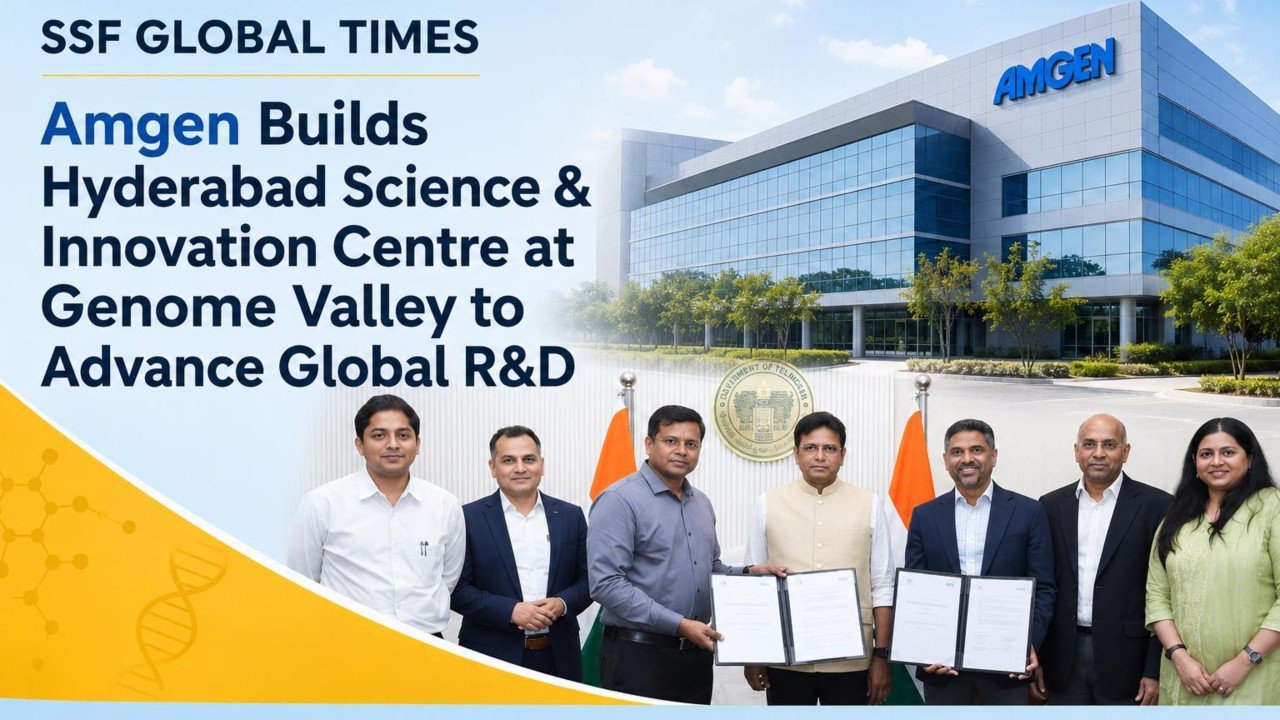
HYDERABAD | 11 August 2026: US-based biotechnology company Amgen has announced plans to establish a new Science & Innovation Center in Genome Valley, Hyderabad, expanding its global research and development footprint in India. Expected to become operational in 2027, the new facility will form part of Amgen’s global R&D network of seven research laboratories and will bring together experimental science, data and technology capabilities. The centre will complement Amgen’s existing technology and innovation presence in Hyderabad, strengthening the integration of scientific and digital capabilities within the company’s global R&D model.
KEY HIGHLIGHTS
- The 2027 R&D Expansion: The Hyderabad facility is expected to become operational in 2027 and will join Amgen’s global network of seven research laboratories.
- Science + Technology Convergence: The centre is designed to bring together experimental science, data and technology, creating closer integration between laboratory-based research and digital capabilities.
- Next-Generation R&D Capabilities: The facility will bring together scientists and technologists working across discovery chemistry, drug metabolism and pharmacokinetics (DMPK), and precision medicine.
- Hyderabad’s Expanding Role: The Science & Innovation Center will complement Amgen’s existing technology and innovation site in Hyderabad, creating a broader scientific and technology ecosystem within the city.
- Government Partnership: The investment is being formalised through an MoU with the Government of Telangana, further strengthening Hyderabad’s positioning as a location for high-value life sciences and research capabilities.
Amgen is a biotechnology company that discovers, develops, manufactures and delivers medicines across areas including oncology, cardiovascular disease, inflammation, rare diseases and general medicine. Amgen has nearly 27,000 employees and a presence in approximately 100 countries and regions.
As the biopharmaceutical industry becomes increasingly data-intensive, the boundaries between traditional laboratory science and computational science are also becoming less distinct. Amgen itself describes its research model as increasingly combining AI, generative biology and human data with advanced scientific capabilities. By establishing a new scientific facility in Genome Valley alongside its existing technology presence, Amgen is building greater proximity between experimental science and digital capability in Hyderabad.
THE INNOVATION MANDATE: ENGINEERING THE FUTURE OF DRUG DISCOVERY
The new center in Genome Valley expands the way we integrate experimental science with data and technology across our global research capabilities and complements our strong US-based Research and Development footprint. By connecting these capabilities, we can learn faster and translate those insights into innovative medicines for patients.
The capability mix reveals a targeted expansion across core areas of therapeutic discovery:
- Advanced Discovery Chemistry: The Genome Valley centre will support discovery chemistry, enabling scientists to design, evaluate and refine potential therapeutic compounds as part of Amgen’s broader R&D network.
- Drug Metabolism & Pharmacokinetics: DMPK capabilities will form part of the centre’s scientific mandate, supporting the evaluation of how potential therapies behave within the body and informing decisions during drug discovery and development.
- Precision Medicine: The centre will also contribute to precision medicine capabilities, bringing together scientific, data and technology expertise to support more targeted approaches to drug development.
Genome Valley offers strong scientific expertise and infrastructure, and the new facility will complement Amgen’s existing technology and innovation site in Hyderabad. Together, the sites will enable closer integration of wet-laboratory science with innovative technology, advancing how we develop medicines.
TECHNOLOGY CONTEXT: CONNECTING EXPERIMENTAL SCIENCE WITH DIGITAL INNOVATION
The establishment of the Science & Innovation Center represents the scientific counterpart to Amgen’s existing technology and innovation presence in Hyderabad. The strategic opportunity is not simply to colocate scientific and technology teams, but to create stronger connections between experimental data, computational analysis, AI and scientific decision-making.
Amgen’s broader research model already demonstrates this direction. Its next-generation laboratories bring chemistry, biology, protein science, assay expertise, automation and data science together, with a focus on accelerating the continuous Design-Make-Test-Analyze (DMTA) cycle.
The same convergence is visible in Amgen’s expanding Hyderabad talent base. Current research hiring includes capabilities in NGS bioinformatics, algorithm development, biomarker analysis, precision medicine, biostatistics and data science, illustrating the increasingly multidisciplinary nature of its India R&D ecosystem.