




 Ask an Expert

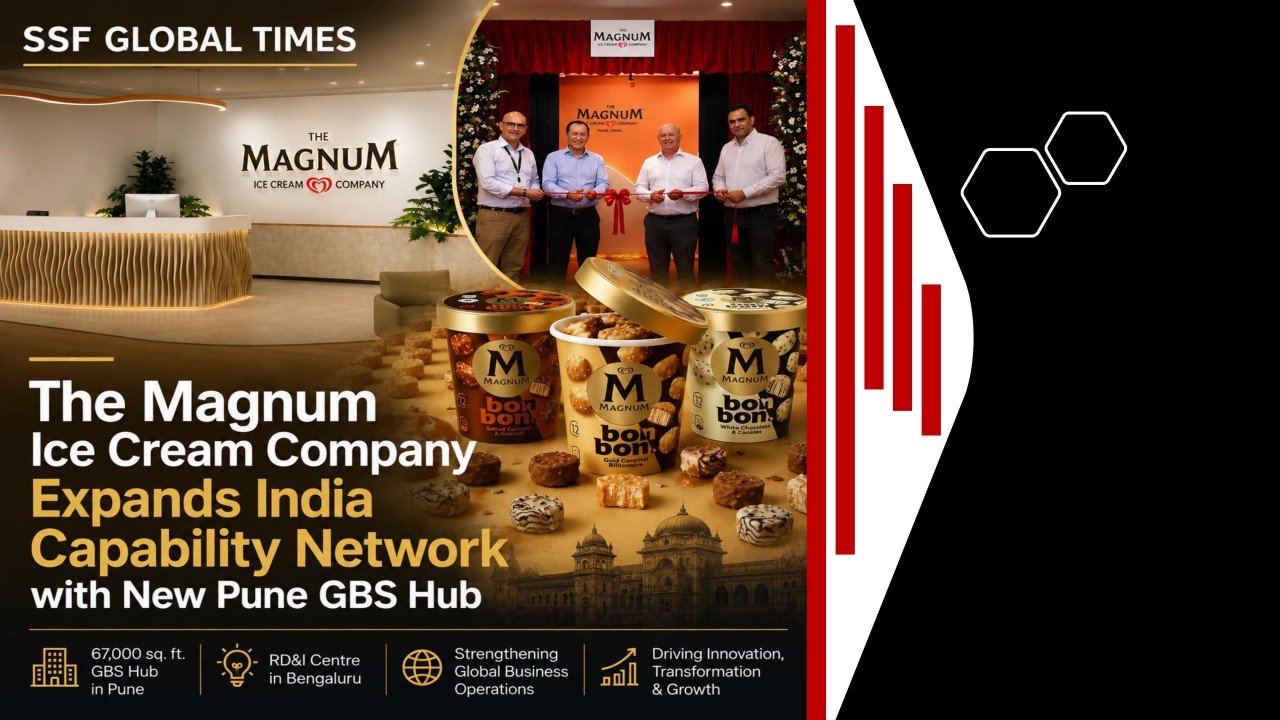
PUNE | 3 August 2026: The Magnum Ice Cream Company (TMICC) has announced a sprawling 67,000 sq. ft. Global Business Solutions (GBS) office in Pune. The new facility marks the next phase of TMICC’s India capability strategy, expanding beyond its initial GCC setup to establish a dedicated GBS organisation supporting enterprise-wide operations.
Pune as a location to house the new facility has been chosen for its strong and growing talent pool, the city’s emergence as a major GCC destination, and the opportunity to build world-class team to support its business globally. Together with its recently established Research, Design & Innovation (RD&I) centre in Bengaluru, the company is developing a complementary operating model that combines global business operations, digital capabilities, and product innovation from India.
KEY HIGHLIGHTS
- The Pune GBS Hub: The new 67,000 sq. ft. facility will deliver global business solutions across finance, supply chain, HR, enterprise technology, analytics and other business functions, strengthening TMICC’s independent global operating model.
- The Bengaluru Innovation Anchor: Complementing its digital expansion in Pune, TMICC recently inaugurated a 13,000 sq. ft. RD&I Centre in Whitefield, Bengaluru. Outfitted with a digitally enabled pilot plant and a state-of-the-art laboratory, this facility drives consumer-led product and packaging innovation including 3D packaging prototyping and climate-stress testing for its global and Indian portfolios.
- The Subcontinent Ecosystem: These twin capability centers are the core pillars of a massive ₹900 crore operational investment strategy in Maharashtra, which also includes designating Mumbai as the strategic regional headquarters for TMICC’s massive Middle East, Turkey, and South Asia (METSA) markets.
Headquartered in Amsterdam, The Magnum Ice Cream Company (TMICC) operates as the world’s largest ice cream manufacturer, commanding ~21% of the global market share. The enterprise officially became an independent entity on July 1, 2025, following a demerger from its parent conglomerate, Unilever. Now an independent global ice cream company on the Euronext and NYSE, TMICC manages a global portfolio of leading ice cream brands that includes Magnum, Kwality Wall’s, Ben & Jerry’s, Cornetto, and Breyers.
The separation allows TMICC to build dedicated operating capabilities tailored to the unique requirements of the global ice cream business, including seasonal demand planning, cold-chain logistics, product innovation and supply chain management. It demands hyper-seasonal agility, highly capital-intensive manufacturing, and strict, algorithmically managed cold-chain logistics-capabilities TMICC is now actively building out of India.
BUILDING A GLOBAL CAPABILITY NETWORK
Together, the Pune GBS Hub and the Bengaluru RD&I Centre illustrate how TMICC is building an integrated India capability network spanning business operations, digital transformation and product innovation. The combined investments in Pune and Bengaluru demonstrate a capability model that integrates business operations, digital transformation, and innovation within India. Rather than operating as independent centres, the two facilities complement one another by combining enterprise execution with consumer-led product development. For TMICC, the combination of these two centers creates an integrated capability network where operations, technology, and innovation can evolve together, enabling faster decision-making and stronger business agility.
- Digitally Enabled Supply Chain Operations: Managing global ice cream operations requires highly coordinated forecasting, inventory planning, cold-chain visibility, and logistics management. By centralising these capabilities within its Pune GBS hub, TMICC can strengthen operational visibility, improve planning accuracy, and support more responsive global supply chain decision-making.
- Localized Innovation for Real-World Markets: The RD&I Centre in Bengaluru complements operational capabilities by accelerating consumer-centric product development, packaging innovation, and product testing. Its pilot manufacturing and laboratory infrastructure enables faster experimentation before products are commercialised across international markets
The expansion illustrates how newly independent global enterprises are increasingly establishing GBS in India at an early stage of their transformation journey. Rather than limiting India to transactional support, companies are positioning their Indian centres to manage enterprise operations, digital transformation, analytics, and business process excellence across global markets.
ENTERPRISE CAPABILITY TRENDS
Increasingly, leading consumer goods companies are building India’s Emerging Consumer Goods Capability Model:
- Global Business Services
- Digital & Data Analytics
- Enterprise Supply Chain Operations
- Research, Design & Innovation
Rather than operating as isolated shared services, these capabilities are becoming interconnected platforms supporting global business performance, innovation, and enterprise transformation.
- India Is Emerging as the Preferred Destination for Greenfield GBS Organisations
Unlike traditional shared services built through decades of expansion, newly independent enterprises such as TMICC are designing their Global Business Services organisations from the ground up in India, embedding transformation, digital capabilities and enterprise governance from inception. - Integrated Capability Networks Are Replacing Standalone Centres
TMICC’s Pune GBS Hub and Bengaluru RD&I Centre illustrate a broader shift towards interconnected capability networks, where business operations, technology and innovation function as complementary pillars of a unified enterprise model.
Corporate Carve-Outs Are Creating a New Wave of GCC and GBS Investments
As global enterprises separate business units into independent organisations, India is increasingly becoming the destination of choice for establishing technology, finance, supply chain, analytics and innovation capabilities that support standalone global operations.