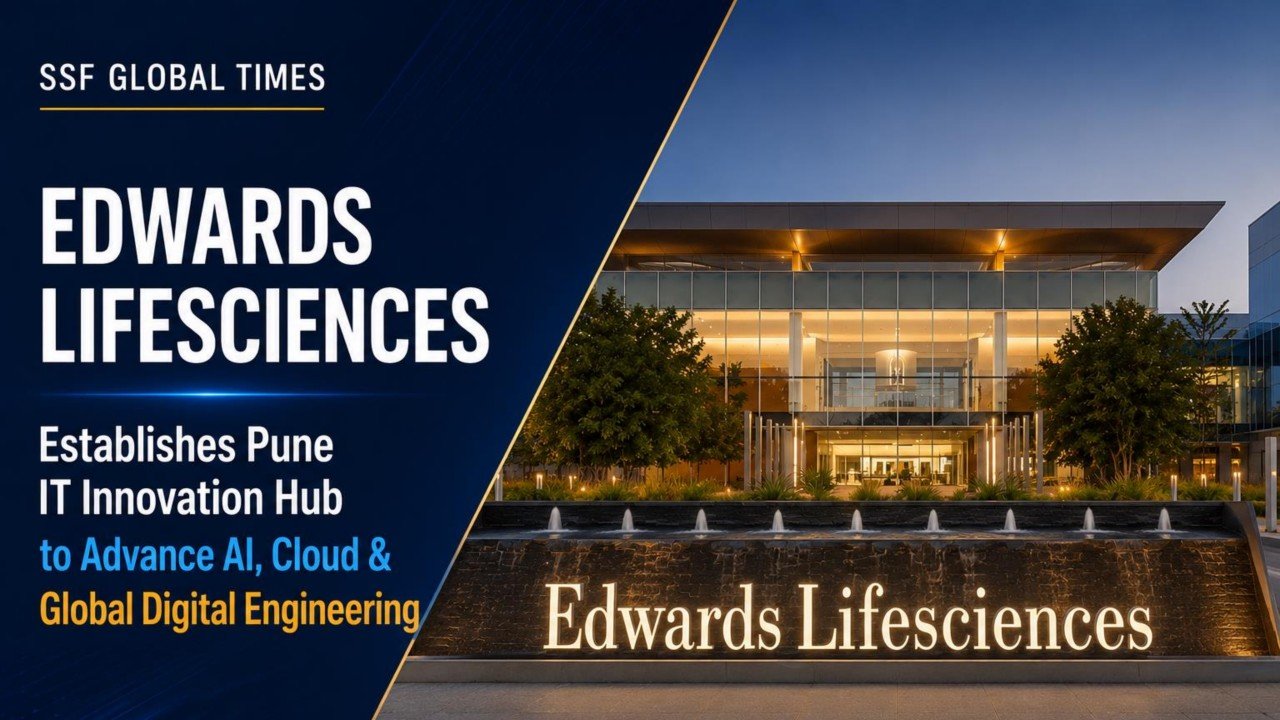




MUMBAI | 28 July 2026: Edwards Lifesciences has launched a new IT Innovation Hub in Pune to strengthen the digital capabilities supporting its global operations. The facility will focus on AI, cloud engineering, automation, cybersecurity and enterprise applications, reinforcing the company’s long-term investment in scalable technology platforms for the MedTech sector.

By centralizing specialized engineering and data talent within India’s growing technology corridors, the enterprise aims to accelerate its digital modernization. The investment reflects the company’s continued focus on modernizing enterprise technology while leveraging India’s engineering talent to support global digital transformation and operational excellence.

KEY HIGHLIGHTS

  • AI, Cloud & Digital Engineering: The Pune facility is heavily focused on scaling newer technological capabilities, specifically targeting automation, data analytics, artificial intelligence (AI), and cloud architecture.
  • Enterprise Technology Capabilities: Moving beyond routine backend IT support, the hub incorporates specialized roles spanning cybersecurity, end-user services, advanced application development, and enterprise platform integration.
  • Global Technology Delivery: The innovation center operates in close partnership with teams across regions, ensuring the delivery of reliable, high-quality technology solutions at scale.

Headquartered in the United States, Edwards Lifesciences operates as a global structural heart innovation company. Driven by a deeply patient-focused culture, the enterprise specializes in breakthrough medical technologies, cardiovascular disease management, and partnerships with clinical stakeholders to deliver life-changing innovations to high-risk patients. The company is recognized globally for its leadership in structural heart therapies and critical care technologies.

THE CAPABILITY BLUEPRINT

To support its global mission, the Pune IT Innovation Hub functions as a strategic technology hub. The facility’s operational blueprint focuses on designing, building, and operating scalable cloud platforms and enterprise infrastructure that optimize the company’s complex technology ecosystem.

By establishing a technology-first approach, the localized engineering teams are tasked with solving complex business challenges across three core operational pillars:

  • Enterprise Infrastructure & Cloud Engineering: Designing and managing scalable, secure cloud platforms and enterprise architectures to support a high-performance global technology ecosystem.
  • Advanced Digital Solutions: Integrating artificial intelligence (AI) frameworks, automation pipelines, data analytics, and robust mobile applications directly into core business systems.
  • Process Optimization & Innovation: Empowering cross-functional teams to drive enterprise efficiency, ensuring the company can operate more effectively globally and accelerate continuous innovation in cardiovascular patient care.

Industry Insights

  1. The MedTech Shift to Digital Capability: Historically, healthcare capability centers in India were heavily dominated by pharmaceutical companies running clinical trials or hospital networks handling revenue cycle management. The entry of a structural heart leader into Pune highlights a broader evolution: specialized medical device companies are now building dedicated engineering hubs to power their digital health and connected-device ecosystems.
  2. Cloud and AI as Healthcare Infrastructure: The explicit focus on AI, data engineering, and secure cloud platforms validates that modern medical technology requires immense computational power and data architecture to scale successfully, indicating that they infrastructure are becoming foundational capabilities for modern medical technology, supporting connected devices, digital health platforms and enterprise-wide innovation.
  3. Engineering GCCs Are Becoming Strategic Enablers of Healthcare Innovation:
    As MedTech companies expand their digital capabilities, engineering GCCs are increasingly contributing to enterprise platforms, AI-enabled healthcare solutions, cybersecurity, cloud infrastructure and connected medical technologies. This reflects a broader shift from operational support to innovation-led engineering within the healthcare ecosystem.
  4. Pune’s Maturing Deep-Tech Ecosystem: The selection of Pune reinforces the city’s status as a premium destination for complex technology engineering. It provides global healthcare leaders with direct access to a mature talent pool capable of bridging the gap between highly regulated medical environments and agile software development.

INDIA’S GROWING MEDTECH INNOVATION ECOSYSTEM

Edwards Lifesciences’ capability deployment in Pune aligns with a massive structural rotation across the broader medical technology (MedTech) landscape. Global device manufacturers are rapidly upgrading their Indian footprints from backend testing facilities into core innovation engines responsible for primary product development.

Validating this sectoral shift, several industry heavyweights have recently executed major capability expansions across India’s premium digital corridors:

  • Stryker‘s Multi-City Innovation Footprint: In late 2025, medical technology giant Stryker launched a new 140,000-square-foot R&D facility in Bengaluru, specifically focused on robotics, AI, and product security. This builds upon its massive 220,000-square-foot Global Technology Center (SGTC) in Gurugram, which recently expanded its highly specialized life-cycle testing and pre-clinical microbiology capabilities.
  • Medtronic‘s Capital Surge in Hyderabad: Highlighting the sheer financial scale of these capability hubs, Medtronic has committed a massive ₹3,000 crore (roughly $350 million) to expand its Medtronic Engineering & Innovation Centre (MEIC) in Hyderabad. Operating as the company’s largest R&D center outside the United States, the facility is rapidly scaling its engineering workforce to drive breakthroughs in surgical robotics, implantable technologies, and advanced imaging navigation.

By anchoring its IT Innovation Hub in Pune, Edwards Lifesciences is securing the same strategic advantage as its largest peers, ensuring direct access to the specialized talent necessary to scale AI and connected-device architectures on a global level.

THE STRATEGIC OUTLOOK

The establishment of Edwards Lifesciences’ IT Innovation Hub in Pune reflects the growing importance of digital engineering in the future of medical technology. As healthcare organizations increasingly integrate AI, cloud computing, cybersecurity and data-driven decision-making into their operations, technology hubs are becoming essential to delivering scalable, secure and innovation-led healthcare solutions.

For India, the investment further reinforces the country’s expanding role as a strategic destination for MedTech engineering and enterprise technology. Beyond supporting global operations, such centers are expected to drive the next generation of AI-enabled healthcare platforms, connected medical devices and digital innovation. This evolution also creates significant opportunities for engineering-focused GCCs, which are increasingly becoming integral to product development, enterprise platforms, cloud engineering and intelligent healthcare transformation across global MedTech organizations.

Curated by SSF Global

Tracking the shifts shaping GCCs, enterprise ecosystems, and the future of global business.

Share on      

SSF Global is a Global Community for Enterprise Function Leaders and serves as a research & advisory platform focused on Global Business Services (GBS), Global Capability Centres (GCCs), and the evolution of enterprise innovation in India and beyond. We track, publish, and partner in narratives that shape how capability centres transform into hubs of trust, intelligence, and sustainable growth. We also evaluate, assess and benchmark the GCCs for their performance, maturity and other parameters using our proprietary tools built from the knowledge gained from direct interaction with our members (GCCs & GBS).