




 Ask an Expert

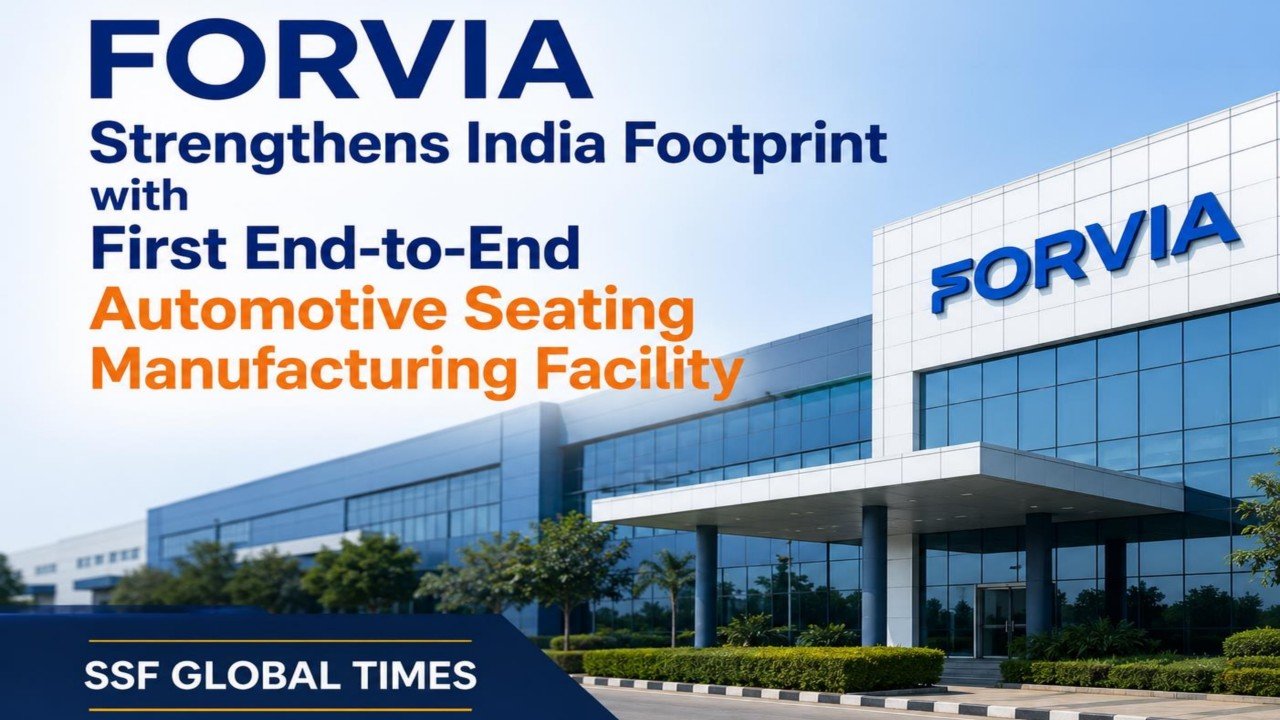
PUNE & BENGALURU | 28 July 2026: Automotive technology company FORVIA has announced plans to establish a new manufacturing facility in India dedicated to completing automotive seat assembly. Scheduled to begin production in 2027, the plant will become the company’s 10th manufacturing facility in the country and its first designed to deliver fully integrated seating systems.
The investment supports FORVIA’s IGNITE strategic plan, announced in February 2026, which emphasizes localization and growth in high-potential markets. By expanding from component manufacturing to integrated seat assembly, the company aims to strengthen local manufacturing capabilities while supporting the evolving requirements of India’s automotive industry.
KEY HIGHLIGHTS
- Integrated Seat Manufacturing: The 2027 facility will provide comprehensive end-to-end production capabilities encompassing seat structures, mechanisms, foam, covers, and final integration for both first- and second-row vehicle seats.
- Proprietary Innovation Integration: The new plant will act as the launchpad for FORVIA’s proprietary Cover Carving Technology, a highly specialized polyurethane-based engineering solution designed to optimize seat geometry, maximize rear cabin space without altering vehicle packaging, and elevate perceived surface finish.
- Expanding India’s Manufacturing Footprint: The addition of this dedicated assembly hub scales the FORVIA Group’s localized operational network to 10 manufacturing facilities spread across critical Indian automotive corridors, including Pune, Chennai, Bengaluru, Gurugram, and Mehsana.
Headquartered in France, operating as the automotive technology supplier, FORVIA was formed through the strategic combination of Faurecia and HELLA. The European multinational specializes in sustainable mobility solutions, focusing heavily on seating, interiors, clean mobility, electronics, and lighting. The group leverages its global R&D ecosystem to develop automated, and customized cockpit experiences, serving as a Tier-1 partner to the world’s largest Original Equipment Manufacturers (OEMs).
As global automakers demand faster go-to-market cycles and cost efficiencies, the reliance on fragmented tier-two component suppliers is shifting. FORVIA’s new plant is explicitly designed to eliminate this fragmentation by delivering vertically integrated manufacturing capabilities under one roof.
This new plant reinforces our positioning in India, a market expected to represent around €4 billion by 2030 for automotive seating. It reflects our commitment to expanding complete seat system capabilities in India, with locally developed and manufactured solutions, and bringing advanced seating technologies to high-growth markets.
ADVANCED ENGINEERING & LOCAL INNOVATION
Beyond pure manufacturing scale, the new facility will act as the localized launchpad for highly advanced, proprietary mobility architectures.
- Proprietary Spatial Engineering: The project will introduce FORVIA’s Cover Carving Technology to the Indian market. This highly specialized, polyurethane-based engineering solution is specifically designed to optimize seat geometry, maximize rear cabin passenger space without altering the vehicle’s structural packaging, and deliver an elevated, cleaner surface finish.
- India as a Deep-Tech Epicenter: The transition goes far beyond physical assembly. India has rapidly matured into a core engineering node for FORVIA, currently housing over 2,400 technical experts and engineers supporting electronics, clean mobility, and seating design. To date, this localized R&D ecosystem has filed 61 patent applications, highlighting a shift from regional execution to indigenous engineering and product innovation.
- The AI and Electronics Convergence: Validating that modern automotive seating is inextricably linked to digital systems, FORVIA HELLA India serves as a Global AI Center of Competence. The localized engineering grid is pioneering AI-enabled technologies for occupant monitoring, predictive anomaly detection, and child presence detection-intelligent technologies that natively integrate into the advanced seating architectures produced at these local facilities.
FORVIA’s capability expansion operates against a backdrop of massive sectoral rotation. Global Tier-1 automotive suppliers are rapidly upgrading their Indian operations from isolated component hubs into highly advanced, self-sustaining innovation ecosystems.
The urgency to localize full-seat manufacturing is directly correlated to market velocity. In the first half of 2026, the Indian automotive market recorded a staggering 22% year-on-year growth, pushing vehicle sales to a record 2.6 million units. To service this sheer volume without succumbing to global logistics bottlenecks, global suppliers must build integrated hubs immediately adjacent to domestic OEM manufacturing lines.
India is becoming one of the world’s most dynamic automotive markets and a strategic pillar of FORVIA’s growth trajectory. Beyond this new Seating investment, we continue to expand our industrial footprint, strengthen localization, invest in advanced technologies and develop world-class engineering and AI capabilities across the county.