




 Ask an Expert

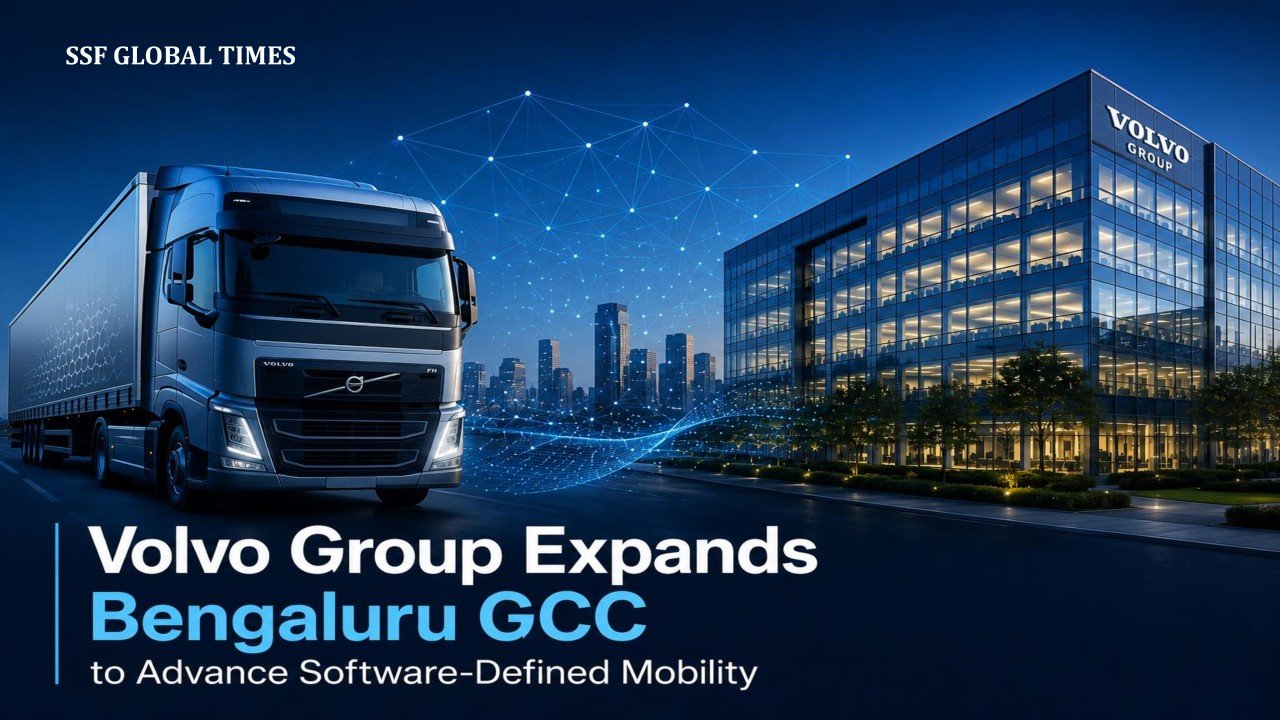
BENGALURU | 18 July 2026: Volvo Group has signed a lease for approximately 600,000 sq. ft. of office space at Bagmane Capital South in Bengaluru, marking one of the largest commercial office transactions in India this year. The expansion reinforces the company’s long-term commitment to strengthening its global engineering, digital technology and software development capabilities in India.
This spatial acquisition transcends a standard corporate expansion; it represents a profound structural shift in the Global Capability Centre (GCC) ecosystem. By locking down a massive footprint in a prime technology park, Volvo is physically moving away from traditional, isolated industrial zones and embedding itself directly within the epicenter of India’s IT infrastructure. For the broader macroeconomic landscape, this transaction validates a critical sectoral convergence: global automotive and industrial manufacturers are now fiercely competing against tier-one software conglomerates for the same deep-tech, artificial intelligence, and cloud engineering talent pools.
KEY HIGHLIGHTS
- Strategic Expansion: Volvo Group has formalized an agreement for 600,000 sq. ft. of premium Grade-A commercial space, signaling a multi-decade structural bet on local capability scaling.
- The IT Corridor Positioning: By selecting Bagmane Capital South, the enterprise intentionally clusters its operations within Bengaluru’s elite tech zones, prioritizing proximity to established engineering talent over traditional manufacturing logistics.
- Record Market Absorption: This specific deal served as a major anchor during a historic quarter for Indian commercial real estate, where gross office leasing touched an unprecedented all-time high of 6 million square feet in Q2 2026.
- Automotive Digital Transformation: The transaction underscores a broader industry reality: non-tech heavyweights (manufacturing, industrial, and automotive players) are aggressively expanding their digital innovation mandates in India.
Headquartered in Gothenburg, Sweden, Volvo Group operates as a global manufacturer of heavy-duty trucks, buses, construction equipment, and marine and industrial engines. Driven by a vision to pioneer sustainable transport and infrastructure solutions, the enterprise is undergoing a radical operational transformation. As global logistics networks shift aggressively toward electrification, zero-emission standards, and autonomous navigation, Volvo is heavily augmenting its legacy mechanical expertise with advanced software-defined architectures, utilizing its specialized global engineering hubs to retain its premier industry standing.
ARCHITECTING SOFTWARE-DEFINED MOBILITY: THE “WHY”
Managing the lifecycle of modern heavy-duty trucks, electric transit buses, and autonomous construction equipment requires an immense cognitive backbone. The modern commercial vehicle is no longer just a feat of mechanical engineering; it is effectively a highly complex, rolling data center.
To support the transition toward intelligent transport systems, the Bengaluru facility is structured to deliver critical technological bandwidth. The specific workflows demanding this massive real estate expansion include:
- Telematics & Fleet Analytics: Specialized engineering pods are building real-time data pipelines that monitor global fleet health, optimizing fuel consumption and predicting mechanical failures before they disrupt supply chains.
- Autonomous Navigation Systems: As the industrial sector pushes toward self-driving logistics, advanced R&D teams are required to train complex machine learning algorithms, process sensor data, and run high-fidelity simulations.
- Enterprise Digitization & Cloud Architecture: Supporting a massive global manufacturing network demands resilient, cloud-native enterprise resource planning (ERP) systems and stringent cybersecurity protocols to protect proprietary vehicle data.
THE AUTOMOTIVE SECTOR’S COGNITIVE PIVOT
Why are legacy carmakers and heavy industrial manufacturers suddenly executing real estate strategies identical to Silicon Valley tech giants? The answer lies in the structural evolution of the vehicle itself. The global automotive industry has permanently transitioned from a mechanical manufacturing paradigm to a “software-defined” mobility framework. Modern vehicles demand continuous over-the-air (OTA) updates, predictive battery management for EV fleets, and complex autonomous driving algorithms.
Building and securing these architectures requires a massive concentration of artificial intelligence, cybersecurity, and cloud engineering bandwidth talent that traditional manufacturing strongholds in Europe and North America simply cannot supply at scale.
This critical talent deficit is driving a massive wave of automotive GCC expansions across India’s tech corridors. A definitive parallel is Ford Business Solutions (FBS). While the American automaker wound down its legacy vehicle manufacturing for the domestic Indian market, it simultaneously accelerated its Indian cognitive footprint.
Complementing its massive Chennai technology headquarters and a specialized AI and DevSecOps hub in Bengaluru, Ford recently inaugurated its third Indian GCC in Coimbatore. Spanning 82,000 square feet, the new facility operates as a dedicated business continuity and global operations hub. Operating with over 12,000 professionals nationwide, Ford’s aggressive capability expansion perfectly mirrors Volvo’s strategy: for global mobility leaders, India’s primary utility has completely shifted from the physical factory floor to the digital cloud.