




 Ask an Expert

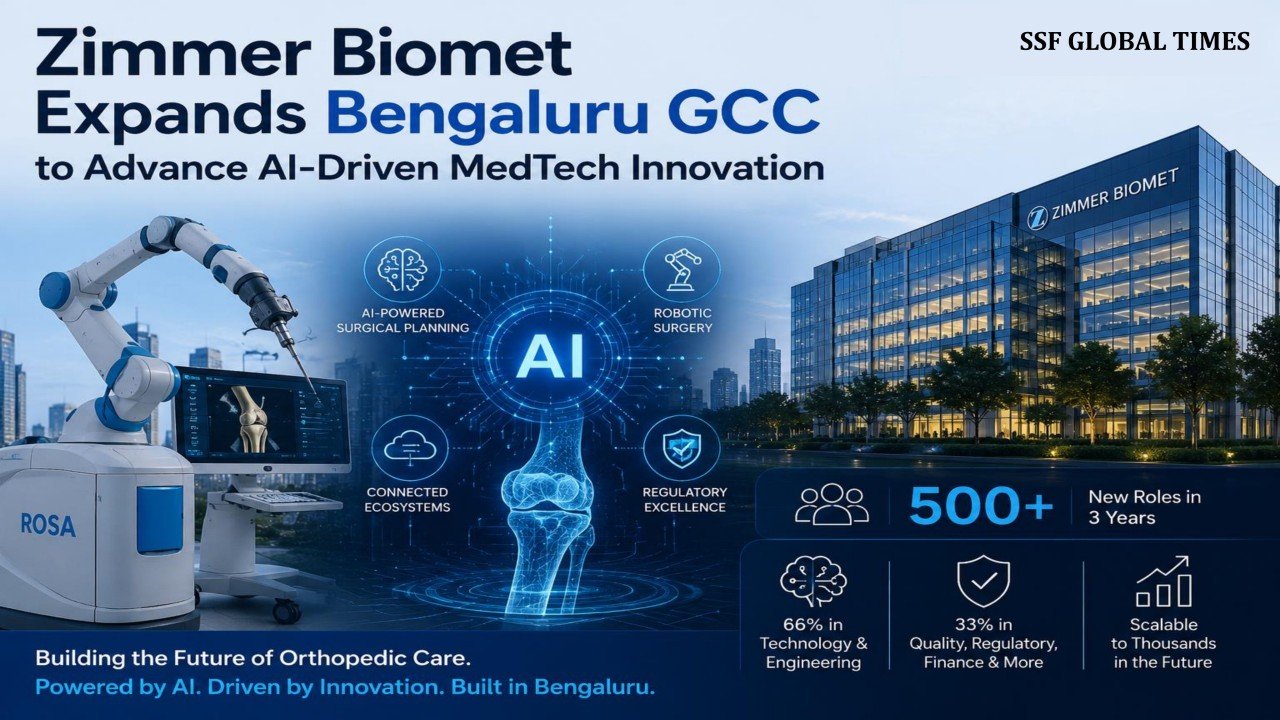
BENGALURU | 18 July 2026: Zimmer Biomet has announced a massive scale-up of its newly opened Bengaluru technology centre. The enterprise is actively recruiting 500 specialized professionals over the next three years, cementing the facility’s role as a primary engine for global product innovation.
The planned expansion reinforces the growing role of Zimmer Biomet’s Bengaluru centre in global product engineering, software development and digital healthcare innovation, highlighting the trend of MedTech companies assigning increasingly strategic mandates to their India capability centres. Rather than relying on India for peripheral IT maintenance, Zimmer Biomet is actively anchoring its core intellectual property (IP) creation within the subcontinent. This confirms that tier-one MedTech conglomerates now view sovereign capability centers as essential assets to build software-defined surgical ecosystems.
KEY HIGHLIGHTS
- Capability Scaling: The enterprise plans to recruit 500 highly specialized employees across the next three years to rapidly scale its newly inaugurated Bengaluru hub.
- Long-Term Growth Potential: Approximately two-thirds of the new hires will be strictly allocated to high-value technology and engineering functions.
- Cross-Functional Integration: The remaining workforce will fortify critical, highly regulated operations, bridging the gap between coding and healthcare via quality assurance, medical regulatory compliance, and finance.
Operating as a publicly traded global powerhouse, Zimmer Biomet is at the forefront of the musculoskeletal healthcare market. The enterprise designs, manufactures, and markets an elite portfolio of orthopedic reconstructive products, spanning advanced knee, hip, and shoulder joint replacements. Serving critical medical demographics across the United States, Europe, and Japan, the corporation is actively redefining its identity. By seamlessly fusing its world-class physical implants with robotic technologies, AI-driven data platforms, and connected clinical software, Zimmer Biomet aims to maximize patient mobility while streamlining the operational efficiency of global healthcare providers.
BUILDING THE NEXT GENERATION MEDTECH WORKFORCE
The architectural composition of this expansion reveals a highly targeted strategy aimed at securing premium cognitive bandwidth. Corporate leadership has outlined a precise demographic structure for the incoming workforce:
- Deep-Tech Dominance: An estimated 66% of the 500 new hires will be strictly allocated to high-value technology and engineering functions, focusing on complex software architecture rather than administrative support.
- Cross-Functional Integration: The remaining 33% of the workforce will fortify critical, highly regulated clinical operations, bridging the gap between coding and healthcare via quality assurance, medical regulatory compliance, and finance.
- Uncapped Scalability: Jehanzeb Noor, the firm’s Chief Strategy, Business Development, Innovation and Transformation Officer, confirmed that the organization is not bound by rigid headcount ceilings. Should the Bengaluru hub continue to yield high-impact innovations, leadership is prepared to scale the facility to thousands of personnel in the coming years.
The fundamental driver behind this expansion is the rapid digitalization of the modern surgical suite. Orthopedic treatments once defined exclusively by the mechanical perfection of titanium and polymer implants are now inextricably linked to predictive data models and robotic assistance.
To maintain its competitive moat, the Bengaluru technology centre is tasked with several advanced operational mandates:
- Artificial Intelligence in Planning: Engineering cohorts will develop sophisticated AI algorithms designed to optimize preoperative surgical planning, ensuring highly personalized and precise patient outcomes.
- Robotic Ecosystem Maturation: The facility will serve as a continuous development hub for connected medical devices and robotic surgery platforms, accelerating the R&D cycles that power technologies like the company’s flagship ROSA robotics suite.
- Cohesive Product Design: By housing technologists alongside regulatory experts, the center ensures that new software iterations instantly comply with stringent, global patient safety standards.
Highlighting this unified approach, Shaun Braun, Chief Information and Technology Officer, noted the importance of operational proximity.
We want to make sure that we have a centre that has all the appropriate functions running together so we can drive innovation and bring that back to our surgeons, care teams and patients.