




 Ask an Expert

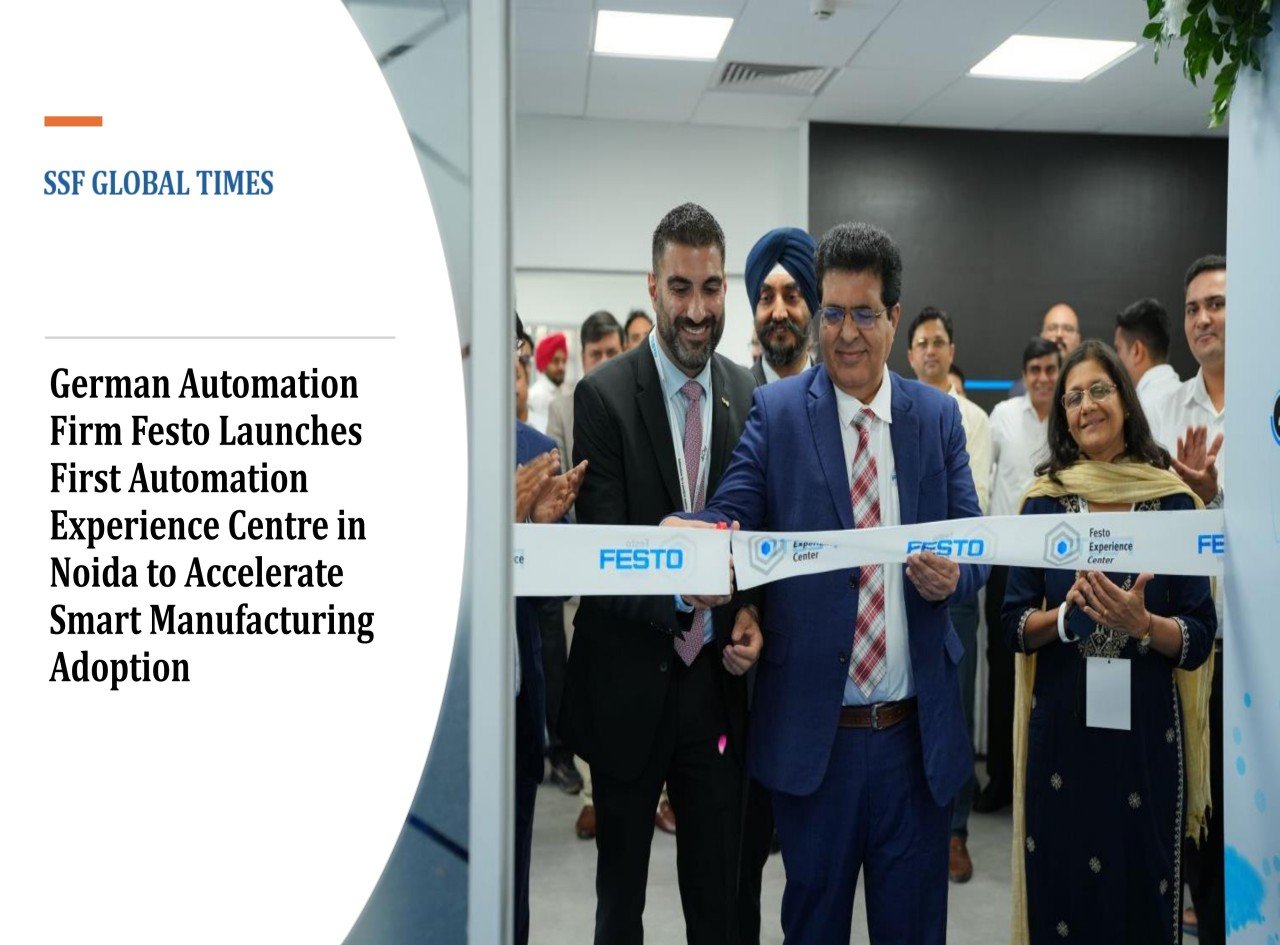
NOIDA | 12 July 2026: Marking 40 years of operations in India, German industrial automation company Festo has inaugurated its first Automation Experience Centre (FEC) in Noida, Uttar Pradesh. Designed as an innovation and collaboration hub, the facility reflects the company’s evolving strategy to support manufacturers, OEMs, and system integrators as they navigate the transition toward smarter, more connected production environments.
Located in Noida’s Phase-II industrial corridor, the centre provides customers with an opportunity to experience, evaluate, and validate advanced automation technologies and Industry 4.0 applications before large-scale deployment, helping reduce implementation risk and accelerate industrial digitization initiatives. The launch represents an important milestone in Festo India’s four-decade journey and establishes the growing importance of customer co-innovation, workforce development, and experiential technology adoption in modern manufacturing ecosystems.
KEY HIGHLIGHTS
- Celebrating four decades in India: The launch of the Noida facility coincides with Festo India’s 40th anniversary, reinforcing the company’s long-term commitment to India’s manufacturing and industrial landscape.
- An experiential approach to automation adoption: The Automation Experience Centre enables manufacturers to test, simulate, and evaluate advanced automation solutions within practical industrial use cases before implementation.
- Supporting India’s smart manufacturing ambitions: The facility is designed to help manufacturers accelerate their Industry 4.0 journeys through collaboration, experimentation, and technology validation.
- Strategic location advantage: Situated in Noida’s growing industrial ecosystem, the centre provides easier access to customers across automotive, electronics, industrial equipment, and manufacturing sectors across Northern India.
- Addressing the manufacturing skills challenge: Through Festo Didactic, the company’s technical education and workforce development division, the facility will support upskilling initiatives focused on advanced manufacturing technologies and automation capabilities.
A Four-Decade Commitment to Indian Industry
Celebrating its 40th year in India, Festo has established a strong presence across manufacturing, industrial automation, technical education, and customer support services. The company continues to support Indian manufacturers across multiple sectors while contributing to the country’s broader industrial modernization agenda.
Headquartered in Esslingen, Germany, Festo SE & Co. KG is a global automation technology and technical education company. Operating in approximately 176 countries with a workforce of more than 20,000 professionals, the company serves over 300,000 customers worldwide across industries including automotive, electronics, food processing, pharmaceuticals, life sciences, and industrial manufacturing. Festo is widely recognized for its expertise in pneumatic and electric automation technologies, industrial control systems, and technical education solutions that bridge mechanical engineering and digital manufacturing.
Inside the Noida Automation Experience Centre
Unlike traditional product demonstration centres, the Noida facility has been designed as an application-driven environment where customers can explore the practical implications of smart manufacturing technologies within realistic industrial scenarios.
The facility showcases a range of technologies and use cases, including:
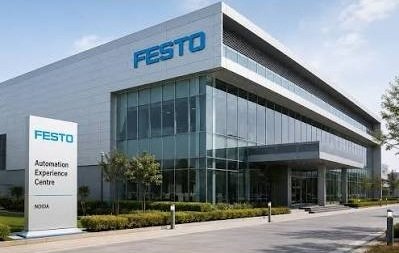
- Electric Automation and Motion Technologies: Customers can evaluate advanced motion control systems and electric automation technologies designed to improve precision, productivity, and manufacturing flexibility.
- Pneumatics and Energy Efficiency Solutions: The centre highlights energy-efficient pneumatic systems and fluid control technologies aimed at supporting more sustainable manufacturing operations and reducing energy consumption.
- Industry 4.0 Applications and Digital Manufacturing: Visitors can explore technologies associated with connected manufacturing, Industrial IoT, predictive maintenance, and digital engineering applications that are increasingly shaping modern production environments.
- Workforce Development through Festo Didactic: Recognizing that technology adoption requires parallel investment in human capability, the facility integrates Festo Didactic programs focused on upskilling engineers, technicians, and manufacturing professionals in areas such as automation, robotics, and digital manufacturing systems.
The opening of the FEC in Noida reflects our commitment to staying close to our customers and supporting their transformation towards smarter and more sustainable manufacturing. By creating a space where innovation can be experienced firsthand, we are enabling meaningful collaboration and accelerating the adoption of future-ready automation solutions.
Experience Centres Are Reshaping Industrial Technology Adoption
As manufacturing systems become increasingly complex and interconnected, organizations are seeking opportunities to validate technologies, test business cases, and understand implementation implications before making significant capital investments. Experience Centres are increasingly emerging as collaborative environments where manufacturers, technology providers, and system integrators can jointly develop, evaluate, and refine automation strategies before deployment.
This approach reduces adoption risk while accelerating the transition toward digitally enabled manufacturing operations.