




 Ask an Expert

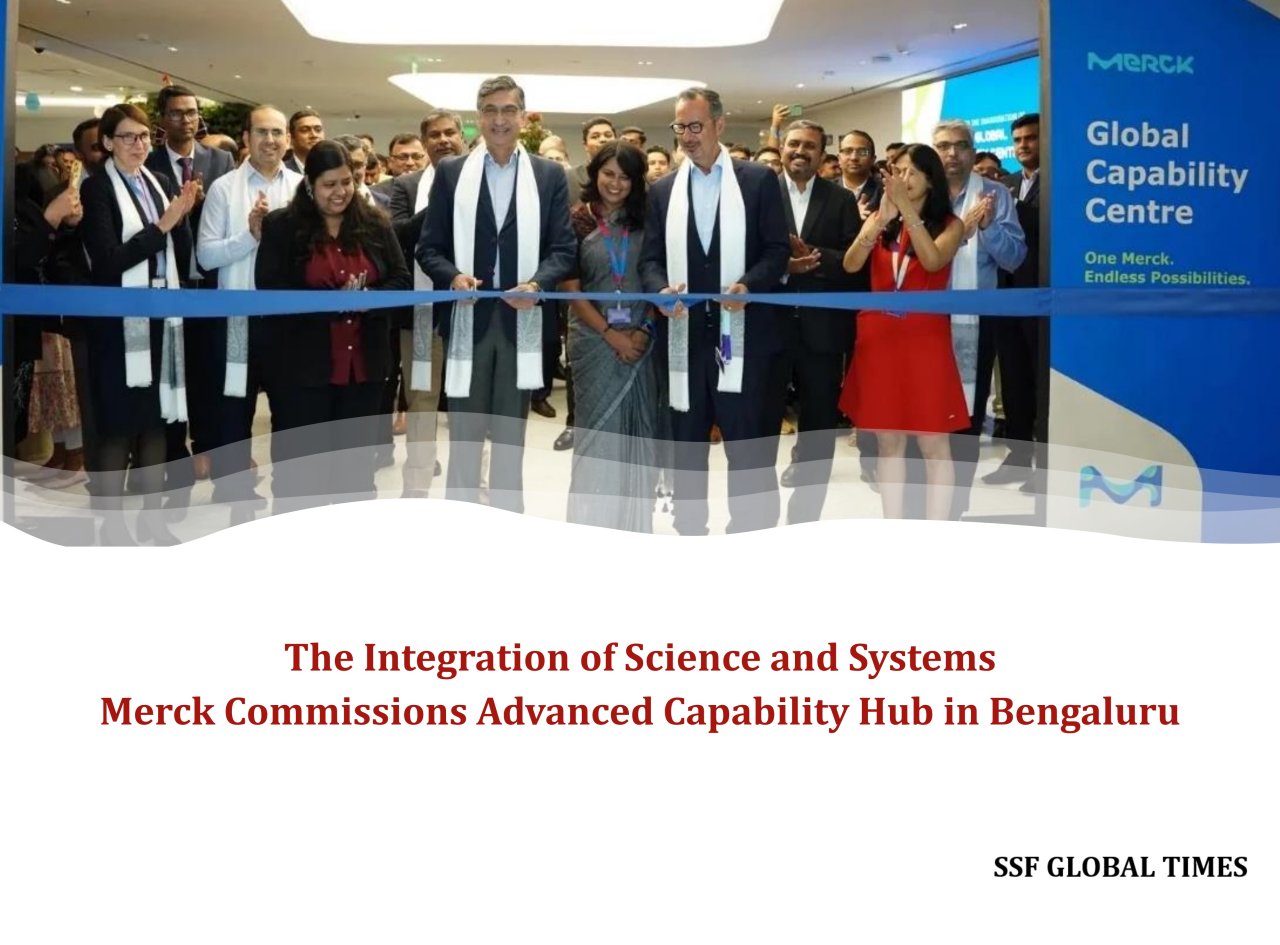
BENGALURU | 29 June 2026: Executing a definitive structural consolidation of its Indian technology and services operations, German science and technology Merck Group has officially inaugurated its integrated Global Capability Centre (GCC) in Bengaluru’s Electronic City. Spanning a purpose-built 17,000-square-meter facility, the deployment explicitly eliminates fragmented offshore support models by physically centralizing 3,300 professionals across data, digital, process, and technology domains. This high-density integration is engineered to collapse development lifecycles and enforce rapid enterprise-wide innovation under a single collaborative roof.
KEY HIGHLIGHTS
- Integrated Global Capability Centre: Merck has inaugurated a 17,000 sq. m. GCC in Bengaluru, bringing together approximately 3,300 professionals across digital, data, technology, and business functions.
- Digital Enterprise Hub: The facility will serve as a key center for Merck’s Digital Enterprise Solutions (DES), supporting enterprise-wide AI, automation, analytics, and digital transformation initiatives.
- Cross-Functional Collaboration: The GCC integrates capabilities across Merck’s Life Science, Healthcare, and Electronics businesses, enabling closer collaboration between technology and domain teams.
- AI and Data-Led Innovation: The center strengthens Merck’s focus on enterprise AI, advanced analytics, hyper automation, and data-driven decision-making.
- Industry Significance: The investment reflects the evolution of GCCs—from shared services organizations to integrated innovation hubs driving enterprise transformation and business value.
Headquartered in Darmstadt, Germany, Merck Group is a global science and technology conglomerate operating across Life Science, Healthcare, and Electronics. Functioning as a critical innovation engine, the enterprise employs over 62,000 professionals globally, specializing in breakthrough therapeutic treatments, pharmaceutical manufacturing architecture, and advanced specialty chemicals. The firm continuously scales its global operational footprint, actively utilizing its integrated Indian capability nodes to power enterprise-wide digital transformation, secure complex data architecture, and execute advanced research initiatives.
Consolidating the Tech Footprint: Merck’s Bengaluru Hubs
Merck operates multiple major facilities in Bengaluru across its business units. The key hubs and their primary functions include:
- Global Capability Centre (GCC) (Electronic City): Consolidates Merck’s India technology, data, and shared service operations. The integrated campus houses roughly 3,300 professionals operating as a cross-functional hub of excellence in AI, analytics, automation, and enterprise technologies.
- Healthcare R&D India Hub (Bagmane Solarium City, Whitefield): Serves as Merck’s flagship Healthcare R&D site in India, supporting global operations including drug safety, clinical operations, medical writing, and biostatistics.
- Life Science Manufacturing & Innovation Hub (Peenya Industrial Area): Handles specialized manufacturing and houses an MLab™ Collaboration Center for interactive drug development, bioprocess testing, and validation.
- Speciality & Fine Chemicals Site (Jigani): Spanning 10 acres, this facility supports R&D and fully automated large-scale manufacturing of specialty chemicals.
The 17,000 sq. m. GCC acts as the unified core for Merck’s data, automation, and enterprise technologies, marking a shift from operational support to global innovation. The facility stands out due to several key factors:
- Platform Ownership: It centrally houses the Digital Enterprise Solutions (DES) organization, engineering global advancements in Artificial Intelligence, hyperautomation, big data analytics, and cloud infrastructure.
- Unified Cross-Functional Ecosystem: By bringing 3,300 experts under one roof, the facility breaks down corporate silos and acts as a collaborative accelerator across Healthcare, Life Science, and Electronics.
- Global Scale & Prominence: The launch of this campus elevates India to Merck’s fourth-largest workforce hub globally, following Germany, the United States, and China.
- Neuroinclusive Infrastructure: The facility is purpose-built with dedicated neurodiversity zones alongside innovation labs to attract and accommodate specialized technical minds.
The fundamental differentiator of the new hub is its structural alignment as the global nerve center for the DES organization. Rather than operating as a legacy back-office IT center, the Bengaluru hub is explicitly mandated to scale advanced compute and automated workflows across the global enterprise. As the division responsible for technology infrastructure and process excellence, DES ensures the Indian capability node functions as a connected digital engine rather than a collection of siloed business support functions. The facility focuses heavily on DES, deploying artificial intelligence across active project domains:
- Generative AI for Clinical Documentation: Building internal large language model (LLM) platforms that automate drafts of clinical study reports (CSRs), reducing drafting times from weeks to days while minimizing terminology errors.
- Hyperautomation & Enterprise Workflows: Designing AI-driven automation pipelines to standardize global finance, procurement, and HR supply chain logistics.
- Smart Manufacturing (Smartfacturing): Implementing machine learning models and IoT sensors to track equipment wear, reduce downtime, and monitor live metrics across chemical and drug manufacturing lines.
- Big Data Analytics for Molecule Analysis: Leveraging AI algorithms to cross-verify patterns in clinical and health data, assisting scientists in determining ideal molecular pairings.
Addressing the strategic intent behind the consolidated facility, Alessandro De Luca, Head of Digital Enterprise Solutions and Group CIO at Merck KGaA, stated:
The Merck Global Capability Centre is much more than an operational hub, it is a strategic engine for our digital enterprise. By bringing data, technology and process teams under one roof here, we are strengthening the foundation needed to scale innovation faster, improve agility and deliver greater impact across Merck’s global businesses.
Bridging Life Science and Compute
A critical collapse point for generalized IT capability centers attempting to service the biopharmaceutical and specialty materials sectors is the lack of domain-specific scientific context. Managing multi-omics data, securing clinical trial pipelines, and optimizing semiconductor chemical manufacturing requires deep vertical expertise.
The MGCC resolves this friction by operating as a domain-specific computational engine. By physically co-locating data scientists directly alongside healthcare regulatory experts and pharmacovigilance teams, Merck enables the rapid deployment of domain-trained AI models. This proximity allows algorithms to be trained securely on proprietary clinical and supply chain data within a highly compliant environment. Consequently, this drastically accelerates the time-to-market for therapeutic treatments and advanced semiconductor materials without violating global data sovereignty mandates.
This is supported by a peer-to-peer strategic partnership with headquarters in Darmstadt, Germany. The center maps directly to global executive oversight, spearheaded by Alessandro De Luca (Head of Digital Enterprise Solutions and Group CIO). Addressing the strategic intent behind the consolidated facility, De Luca noted that the center is a strategic engine for the digital enterprise, and that by bringing teams together, Merck strengthens the foundation needed to scale innovation and improve agility across its global businesses. Product teams operate in cross-continental units following shared global engineering standards, ensuring strict adherence to compliance and data safety