




 Ask an Expert

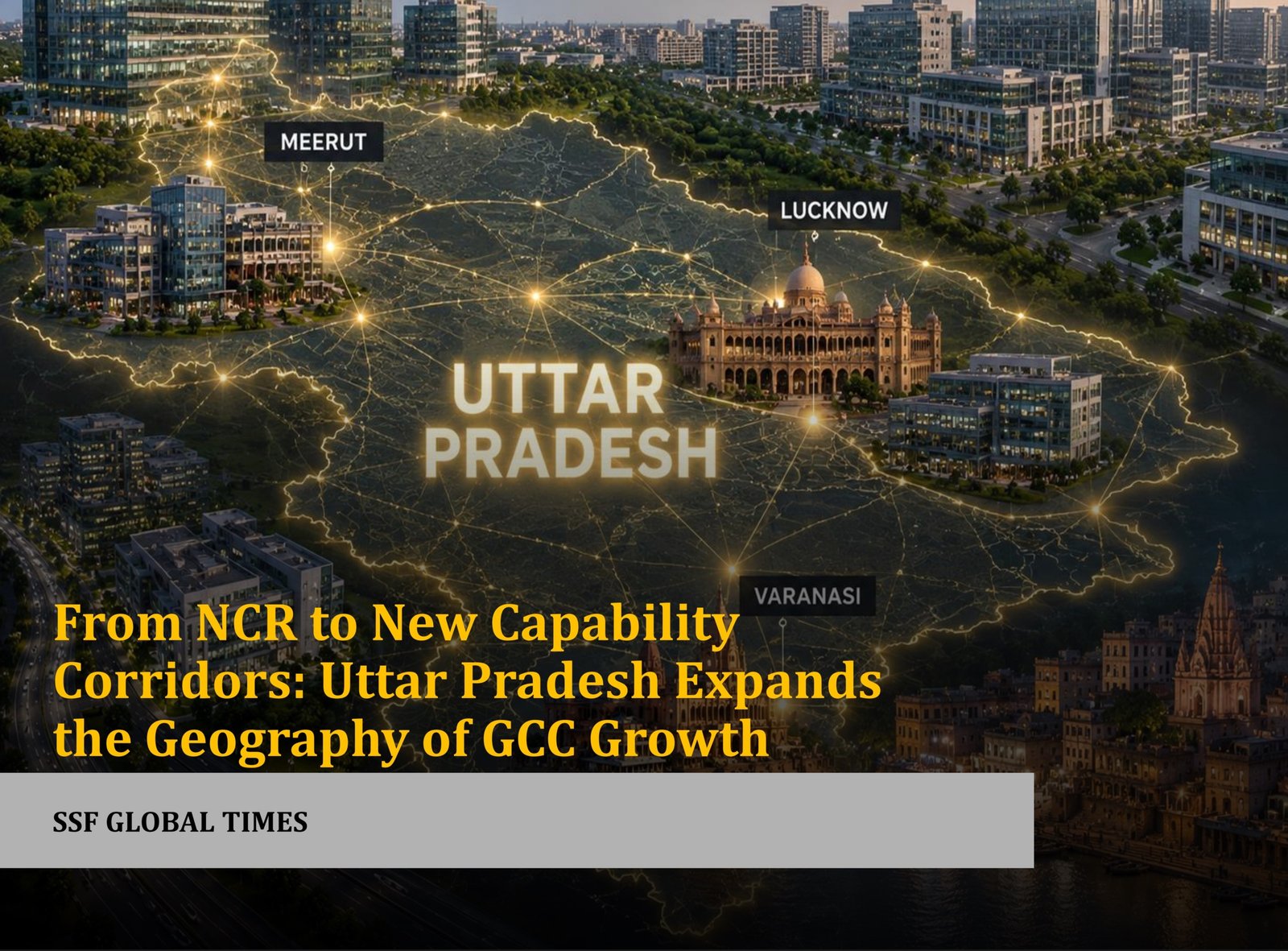
BENGALURU & LUCKNOW | 21 June 2026: As India’s GCC ecosystem enters a new phase of geographic diversification, Uttar Pradesh is actively positioning cities beyond the NCR corridor as emerging destinations for Global Capability Centre (GCC) expansion. The state’s efforts focus on developing Lucknow, Kanpur, Varanasi and other urban centres as part of a broader distributed capability network that complements traditional GCC hubs.
The initiative is anchored by Uttar Pradesh’s GCC Policy 2024, which targets the establishment of more than 100 new capability centres by the end of 2026. Historically, the state’s technology identity has been concentrated around the Noida-Greater Noida region. The current strategy reflects a broader effort to extend high-value technology and knowledge-based investments into emerging urban centres with strong talent and academic ecosystems.
The development is consistent with findings from SSF Global’s March 2026 research paper, “From Clusters to Corridors: Why North India Will Shape India’s Next GCC Growth Wave,” which identified North India as a potential GCC expansion frontier driven by talent availability, infrastructure investments, cost competitiveness, and the growing enterprise need for geographic diversification. The report highlighted the emergence of distributed capability networks connecting Delhi NCR with cities such as Lucknow, Chandigarh, Jaipur, and Ahmedabad as a likely evolution of India’s next GCC growth phase.
This shift aligns with a larger industry trend. As GCCs evolve from cost and delivery centres into capability, innovation, and engineering hubs, enterprises are increasingly evaluating multi-city operating models that provide access to new talent pools, reduce concentration risk, and support long-term scalability.
Subsidizing Greenfield Expansion
To attract global enterprises beyond established technology hubs, Uttar Pradesh has introduced a range of policy incentives designed to lower both capital expenditure (CapEx) and operating expenditure (OpEx) for incoming organizations. Under the state’s incentive framework, companies establishing operations in designated Tier-2 and Tier-3 cities receive preferential support compared to those choosing the NCR region. Key provisions include:
- Capital Subsidization: Tiered land cost subsidies ranging from 30% to 50%, particularly focused on encouraging investments in regions such as Purvanchal and Bundelkhand.
- Operational Incentives: A 20% operational subsidy covering lease rentals, bandwidth, and cloud-related costs, along with payroll-linked incentives for eligible employees.
- Frictionless Setup: Stamp duty exemptions and single-window approval mechanisms designed to accelerate project implementation timelines.
The policy framework has also attracted significant interest from developers and infrastructure investors looking to support future GCC growth through the development of Grade-A office space and technology infrastructure.
The Structural Advantage of Distributed GCC Networks
Beyond cost considerations, cities such as Lucknow, Kanpur, and Varanasi offer enterprises an opportunity to establish greenfield capability centres designed around emerging business requirements rather than legacy operating structures.
Many established GCC locations continue to perform a critical role in India’s capability ecosystem. However, enterprises are increasingly supplementing these hubs with additional locations that provide greater flexibility, business continuity, and access to untapped talent pools. By establishing new operations in emerging cities, organizations can design capability centres around digital engineering, AI, analytics, cybersecurity, product development, and global business services from the outset. These centres can be integrated into broader enterprise networks while benefiting from improving infrastructure, expanding digital connectivity, and access to regional academic institutions.
This trend mirrors a broader evolution visible across India’s GCC landscape. Enterprises are increasingly evaluating multi-city operating models that balance access to talent, business continuity, cost efficiency, and scalability. Rather than concentrating all capabilities within a single metropolitan location, organizations are building distributed capability networks across multiple cities to reduce operational concentration risk while accessing new talent pools.
Improving connectivity through infrastructure investments, including airports, highways, industrial corridors, and digital networks, further strengthens the viability of these emerging locations as part of enterprise expansion strategies.