




 Ask an Expert

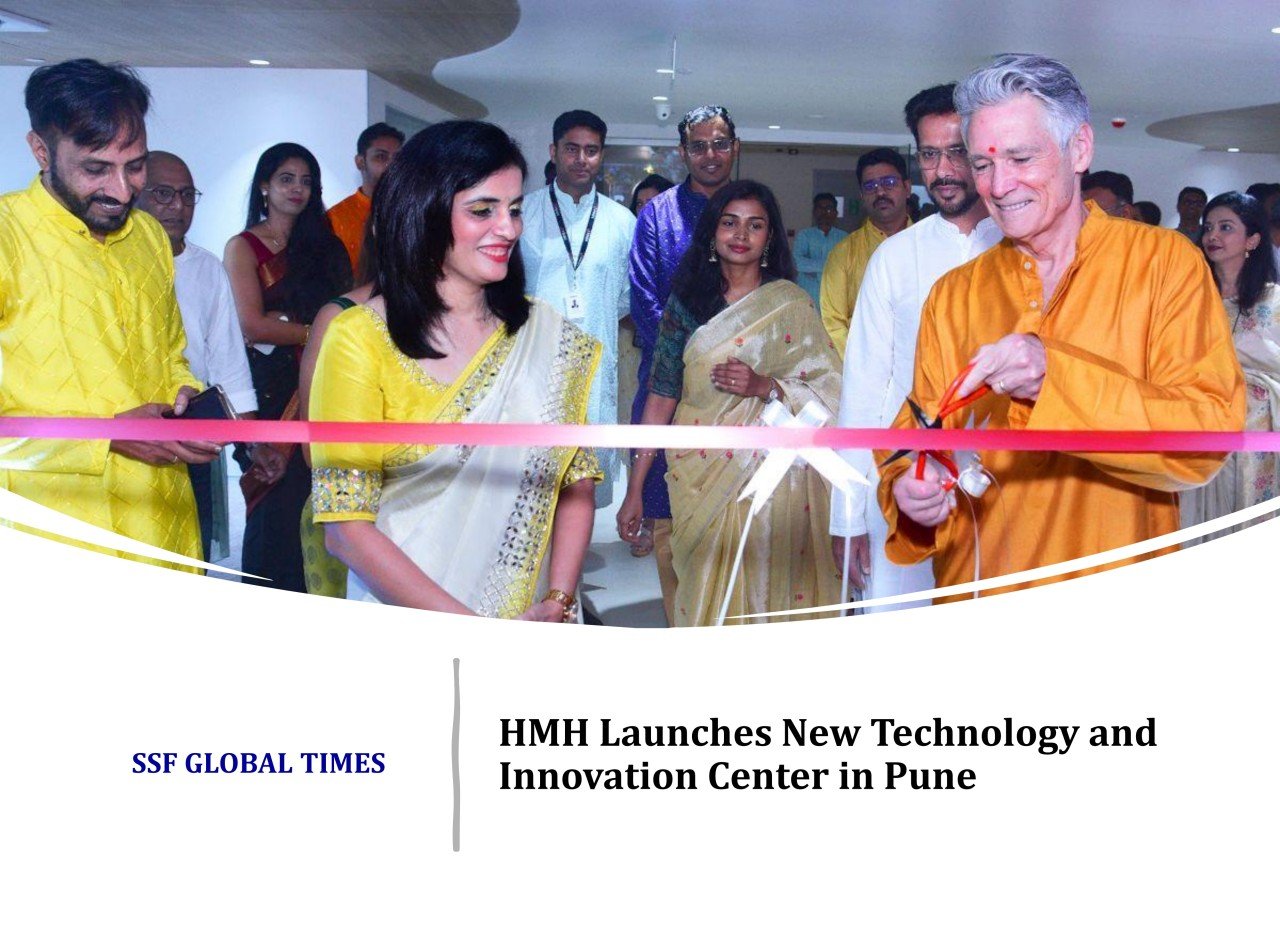
PUNE | 17 June 2026: As the global education sector fundamentally transitions toward AI-augmented, personalized learning, the underlying technology infrastructure required to support it has become highly complex. Addressing this structural demand, HMH Tech India, the technology and innovation arm of Houghton Mifflin Harcourt (HMH), has officially inaugurated its new office in Pune, marking a critical milestone in the company’s growth journey in India
HMH operates not at the margins of education, but at its structural core. The enterprise is a leading adaptive learning company whose solutions are embedded in 90% of U.S. K-12 schools. To sustain its footprint across 150 countries, the new Global Capability Center (GCC) functions as the central engine for building software, platforms, and AI-driven solutions designed to improve student outcomes globally.
The inauguration was attended by Jack Lynch, CEO of HMH, and Jaya Wadhwani, SVP of Engineering and Country Manager for HMH Tech India, signaling the strategic gravity of the geographic deployment.
HMH, headquartered in the United States, is an adaptive learning enterprise dedicated to delivering connected, engaging, and highly effective educational solutions. Serving 90% of U.S. K-12 schools and supporting more than 50 million students across 150 countries, the company integrates core curriculum, supplemental instruction, intervention solutions, and professional learning services. Through its robust digital platforms, HMH empowers educators to deliver personalized learning experiences that drive measurable student outcomes and inspire a lifelong love of learning.
HMH Tech India, established as the strategic technology and innovation division of HMH, operates as a captive Global Capability Center in Pune. The entity focuses on deep product engineering, data science, and AI deployment, functioning as the digital backbone that designs, builds, and scales the enterprise’s global educational offerings.
Pune Hub: The Core Focus
Managing an educational ecosystem of this magnitude requires an operational backbone that can scale dynamically. The new Pune facility is explicitly tasked with driving this mandate, focusing entirely on product engineering rather than legacy IT maintenance. The core operational domains driven directly from the Indian node include:
- EdTech Software Development: Architecting digital-first classrooms, large-scale learning management systems, and interactive professional development platforms designed specifically for modern educators.
- Personalized Learning Architecture: Utilizing advanced data science, artificial intelligence, and machine learning to construct intelligent analytics that dynamically adapt curricula and generate highly customized learning paths for individual students.
- Global Infrastructure Operations: Securing and scaling the massive technological infrastructure required to stream learning solutions continuously to millions of global users without latency or service disruption.
The EdTech “Data Mesh” and the Captive Imperative
The establishment of HMH Tech India highlights a significant structural shift in how global EdTech giants manage their software capabilities. The deployment reflects the reality of the GCC 3.0 era-where multinational hubs transition from outsourced back-office support to full-scale, captive innovation engines.
This transition is uniquely critical for the education sector for three specific reasons:
-
- The Publishing-to-Platform Transition: HMH’s investment in Pune underscores its broader corporate evolution. Once recognized primarily as a traditional legacy textbook publisher, the enterprise is now operating as a massive digital SaaS (Software-as-a-Service) ecosystem. The Pune hub is the software engine executing this transition, developing the underlying microservices that turn static curricula into interactive, real-time adaptive learning experiences.
- K-12 Data Governance and Compliance: Integrating Generative AI into primary education is arguably the most sensitive domain for machine learning. The Pune engineering hub must build AI models that personalize learning while maintaining strict compliance with global student data privacy regulations (such as FERPA in the US and GDPR in Europe). Internalizing this architecture through a fully captive GCC ensures HMH retains absolute, unified governance over its proprietary student data mesh, mitigating the severe risks of third-party vendor leaks.
- Augmenting the Educator: The strategic narrative emerging from the Pune center focuses on empowering educators, not replacing them. By automating administrative friction and utilizing machine learning to track student proficiency in real-time, the platforms engineered in India allow teachers to dedicate their core bandwidth to direct human instruction, intervention, and mentorship.