




 Ask an Expert

GURUGRAM | June 9, 2026: The geography of global technology is undergoing a structural realignment. As enterprises accelerate investments in AI, cloud computing, digital platforms, and next-generation product development, the demand for concentrated innovation ecosystems is reshaping where critical capabilities are built and scaled. India is increasingly emerging as a strategic hub within these global operating models, attracting long-term investments in engineering, innovation, and enterprise transformation.
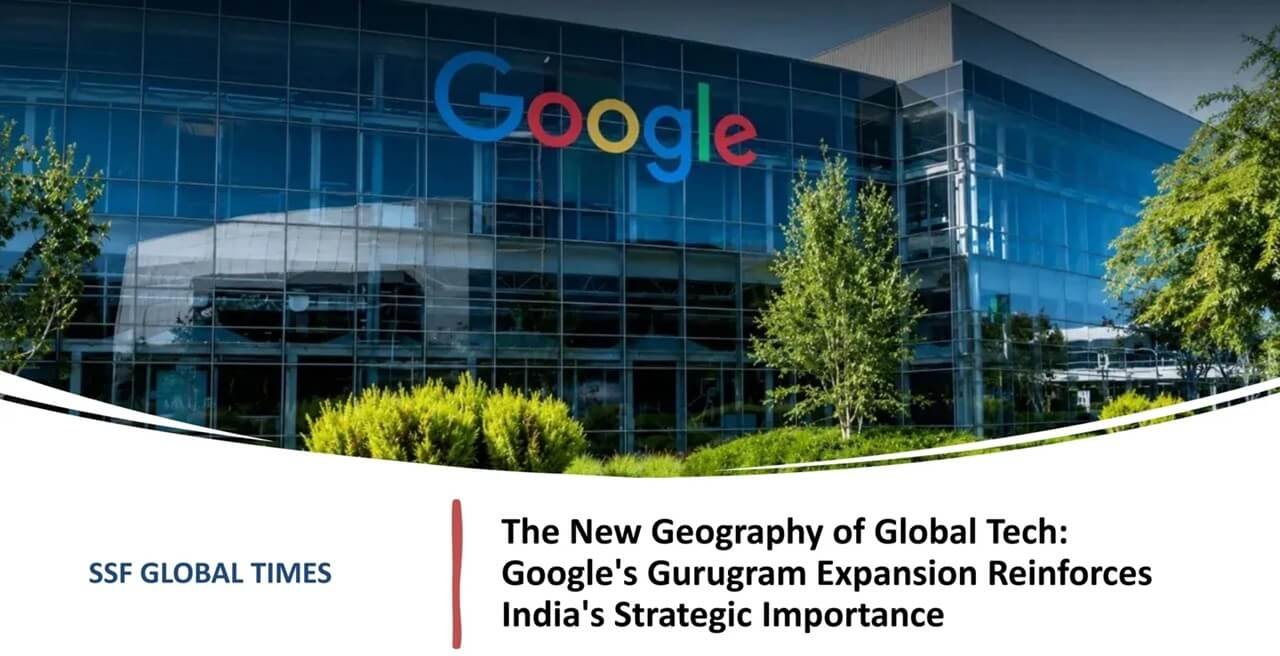
Reinforcing this shift, Google has announced a major expansion in Gurugram, leasing 6.2 lakh square feet at DLF Atrium Place in a transaction valued at approximately ₹671 crore. One of the largest office transactions in India’s technology sector, the move signals far more than an expansion of physical space. It reflects Google’s growing confidence in India’s role as a global center for engineering excellence, AI-led innovation, product development, and digital transformation, while further strengthening Gurugram’s position as a critical node in the evolving geography of global technology.
Google India Private Limited operates as a subsidiary of Alphabet Inc., managing regional engineering, sales, and operations. The Indian division is a central component of Google’s global product development matrix, executing large-scale software engineering, artificial intelligence research, and cloud computing infrastructure deployment for international markets.
Anatomy of a Strategic Technology Investment
The architecture of this transaction is built around a coherent set of premium real estate capabilities:
- Massive Financial Scale: A monthly rental commitment of approximately ₹10.55 crore (₹171 per sq ft), backed by a staggering ₹63.65 crore security deposit.
- Long-Term Conviction: A five-year lock-in with a built-in 15% rent escalation clause every three years, proving this is a permanent base, not a temporary landing pad.
- ESG-Native Infrastructure: The DLF Atrium Place facility holds LEED Platinum and WELL Platinum pre-certifications, an infrastructure prerequisite that most modern enterprises mandate to meet corporate net-zero targets.
- Cumulative Regional Density: Combined with its 2025 lease of 5.5 lakh square feet in another Gurugram property, Google’s total footprint in the city now nears 11.7 lakh square feet, capable of housing over 10,000 employees.
The proposition is differentiated not just by the square footage, but by the combination: global scale, premium Grade A+ quality, and an operating environment where sustainability and wellness are embedded into how the center is designed, not retrofitted after the fact.
The strategic weight behind this move is made explicit by the numbers. The framing is precise. The emphasis is not on hybrid work policies; it is on sustained physical investment. Paying top-of-market premiums for Grade A space is the language of accountability and long-term capability building.
It reflects a market that has grown weary of the remote-first narrative when building complex, secure enterprise platforms. Google already operates massive hubs across Hyderabad and Bengaluru. This Gurugram expansion is a formalization of its intent to capture the Northern tech talent corridor codified into a massive, centralized campus model.
The Inflection Point Google Is Responding To
The timing of this lease is not incidental. The Global Capability Centre (GCC) and Big Tech ecosystem in India is at a structural crossroads, and the pressures reshaping it are real.
For the past few years, enterprise real estate strategy was dominated by hesitation, a reliance on fragmented co-working spaces and short-term leases while companies navigated hybrid work models. That era has served its purpose. But the enterprise environment has shifted. Digital product development now requires high-density collaboration. AI-driven engineering teams need secure, deeply integrated environments.
Against this backdrop, the distributed, asset-light real estate model, built for flexibility, not ownership, is showing its limitations. The companies that are moving ahead are those consolidating their workforce into premium, hyper-connected hubs. Google is entering this moment with a structured proposition: an aggressive, long-term physical consolidation that effectively crowns Gurugram as its operational epicenter in Northern India.