




 Ask an Expert

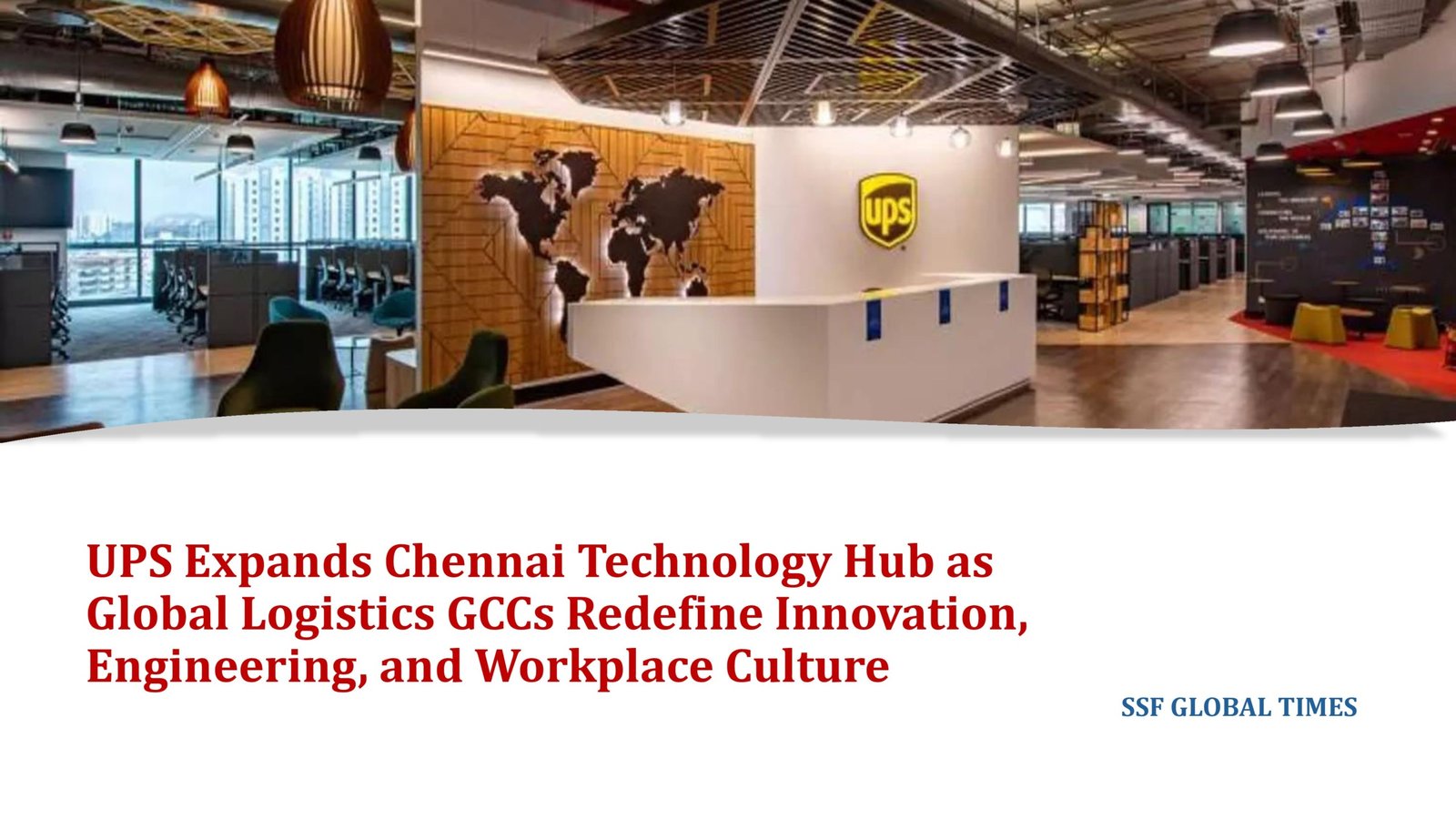
CHENNAI | May 25, 2026: United Parcel Service (UPS) has announced the launch of Phase 3 of its Chennai Technology Center alongside the launch of a new employee-led Creative Club initiative, reinforcing the company’s continued investment in India as a strategic hub for digital logistics engineering, enterprise technology, and innovation-led operations.
The dual development reflects a larger evolution underway across GCCs, where enterprises are increasingly scaling not only infrastructure and engineering capacity, but also investing in collaborative, innovation-oriented workplace ecosystems designed to attract and retain next-generation digital talent.
Founded in 1907, UPS today operates across more than 200 countries and territories, delivering approximately 22 million packages daily through one of the world’s largest integrated logistics networks. The company generated approximately US$91 billion in global revenue in 2025 and continues to invest heavily in automation, AI-enabled logistics systems, digital supply chain infrastructure, and enterprise technology modernization.
As global supply chains become increasingly digitized, data-driven, and interconnected, UPS has steadily expanded its technology and engineering capabilities worldwide to support:
- Intelligent logistics operations
- Real-time supply chain visibility
- Route optimization and network analytics
- Automation and robotics integration
- Enterprise cybersecurity and digital infrastructure
- Customer experience platforms and operational resilience
Within this transformation agenda, India has emerged as an increasingly strategic location for logistics engineering, enterprise platforms, digital operations, and global technology delivery.
Chennai Technology Centre Strengthens Role in UPS Global Innovation Ecosystem
The UPS Chennai Technology Centre functions as a critical component of the company’s global digital and operational infrastructure. Over the last several years, Chennai has steadily evolved into a major enterprise technology and GCC ecosystem, hosting large-scale engineering, automotive, logistics, BFSI, SaaS, and industrial capability centers for multinational enterprises.
UPS’ Chennai operations support a broad range of technology and operational initiatives spanning logistics engineering, enterprise systems, operational platforms, and digital transformation programs.
The inauguration of Phase 3 significantly expands the center’s infrastructure footprint and operational capacity, positioning the facility to support a growing portfolio of advanced technology initiatives and globally integrated logistics operations. While UPS has not publicly disclosed the financial scale or workforce expansion associated with Phase 3, the move reflects continued long-term confidence in India’s engineering ecosystem and Chennai’s ability to support complex enterprise technology environments at scale.
The expansion also aligns with a wider industry trend in which global logistics and supply chain enterprises are increasing investments in:
- AI-enabled supply chain orchestration
- Intelligent transportation systems
- Warehouse automation
- Predictive analytics
- Control tower operations
- Enterprise resilience technologies
Industry analysts estimate the global digital logistics market could surpass US$150 billion by 2030, driven by increasing e-commerce volumes, supply chain digitization, automation investments, and demand for real-time operational visibility.
UPS Launches Creative Club to Strengthen Innovation Culture
Alongside the infrastructure expansion, UPS Chennai also announced the launch of a new employee-driven Creative Club initiative led by Ramanujan Narayanan and a core internal team. The initiative is designed to encourage business storytelling, creativity, ideation, and cross-functional collaboration within the organization.
The significance of this development extends beyond employee engagement alone. Across the GCC landscape, enterprises are increasingly recognizing that innovation capacity is shaped not only by technical expertise, but also by communication, collaboration, contextual problem-solving, and organizational culture.
As engineering environments become more AI-enabled and globally distributed, organizations are placing greater emphasis on building workplaces that encourage:
- Innovation-led thinking
- Cross-functional collaboration
- Internal entrepreneurship
- Human-centered leadership
- Continuous learning and experimentation
UPS Chennai also introduced a Mini Gym initiative through its UPS Chennai Rejuvenators Club, further reinforcing employee wellness and workplace experience priorities within the organization.
GCCs Are Increasingly Competing on Culture, Innovation, and Workforce Experience
The UPS Chennai developments indicate a visible structural transition across the global GCC ecosystem. Historically, GCCs were primarily evaluated through operational efficiency, delivery scale, and cost optimization metrics. Increasingly, however, enterprises are viewing capability centers as long-term strategic environments responsible for Innovation acceleration; Enterprise platform engineering; Product and digital transformation; AI and automation enablement; Organizational resilience; and Talent development & retention.
As a result, physical infrastructure expansion alone is no longer sufficient. Global organizations are increasingly investing in integrated workplace ecosystems that combine engineering excellence, employee engagement, wellness, collaboration, creativity, and leadership development under a unified capability strategy. This trend is especially visible across technology-intensive sectors such as logistics, manufacturing, BFSI, automotive, healthcare, and industrial operations.