




 Ask an Expert

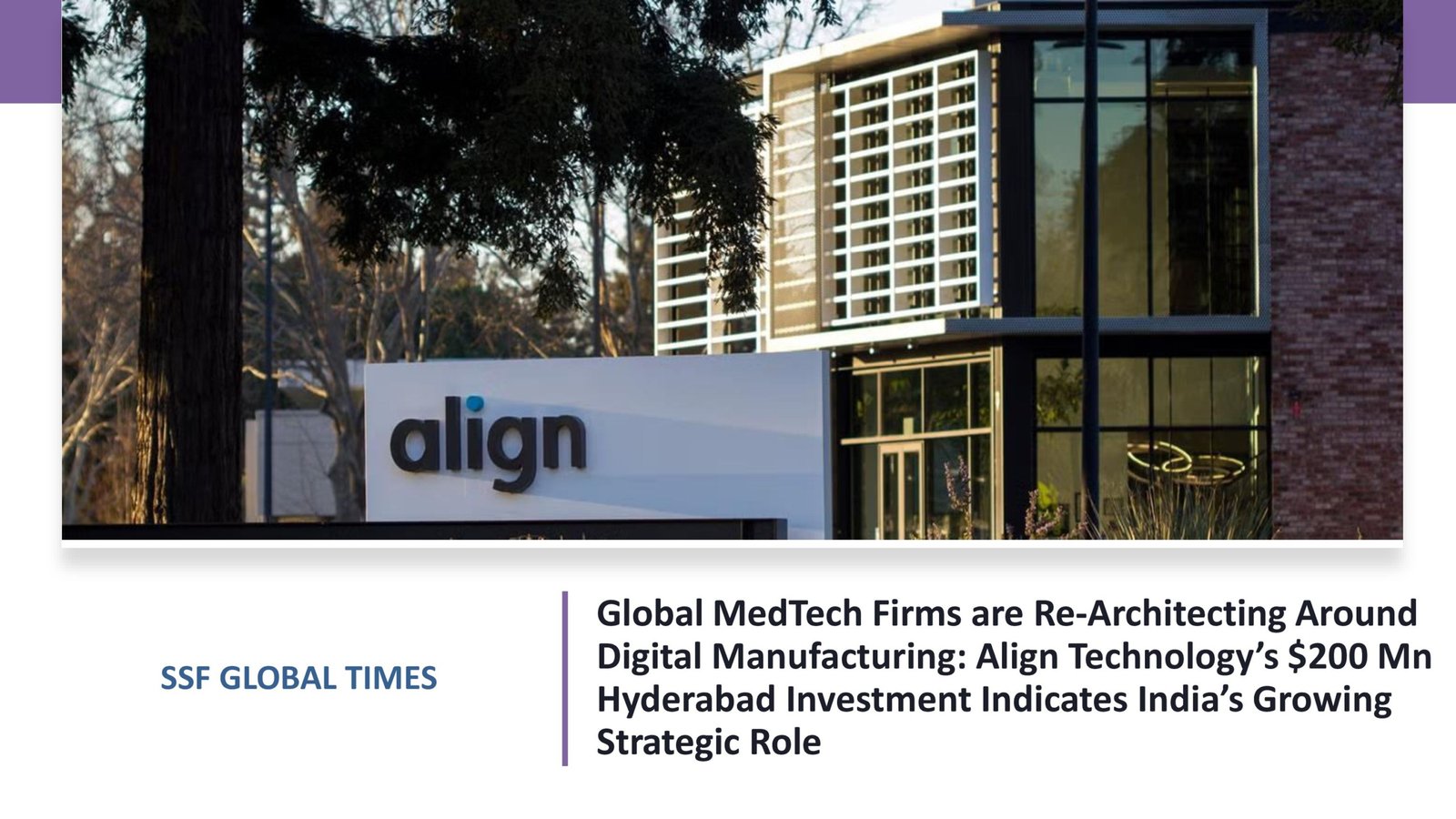
HYDERABAD | May 25, 2026: Align Technology has announced a US$200 million investment to establish a new advanced manufacturing facility in Hyderabad, marking the company’s first manufacturing site in India and its fourth globally.
Expected to become operational in 2027, the facility significantly expands Align’s Asia-Pacific manufacturing footprint and reinforces India’s growing role within globally integrated healthcare technology and medical device ecosystems. The move comes at a time when global medtech companies are increasingly redesigning supply chains, regionalizing advanced manufacturing operations, and embedding digital technologies deeper into clinical and patient-care workflows.
Align Technology is a global medical device company that pioneered the invisible orthodontics market. Known globally for the Invisalign platform, iTero imaging systems, and exocad software, Align Technology today supports nearly 299,500 trained doctors worldwide and reports that approximately 22.8 million patients have undergone treatment using its platforms over the last 29 years. The company generated approximately US$4 billion in global revenue in 2025, underscoring the growing scale of digitally enabled orthodontics and dental technology markets globally.
India represents an important growth market for Align, and we are excited about the opportunity to expand our global manufacturing network with a new facility in Hyderabad… This investment underscores our commitment to scaling our advanced manufacturing capabilities, supporting our doctor customers, and bringing the benefits of the Invisalign System to more patients worldwide.
JunHo Han (EVP & MD Asia Pacific, Align Technology) further emphasized the strategic importance of the region, noting that the expansion reflects Align’s long-term commitment to Asia-Pacific markets and builds upon ongoing investments in local teams, digital treatment planning infrastructure, and regional operational capabilities.
We are proud to expand Align’s global manufacturing footprint with our first manufacturing facility in India and a new state-of-the-art site in Hyderabad. This investment reflects our long-term commitment to the Asia-Pacific region and builds on our continued expansion across key markets, where we have been investing in local teams, capabilities, and digital treatment planning infrastructure
Hyderabad is emerging as a Convergence Point for MedTech, AI, and Digital Healthcare
The Hyderabad facility is expected to create more than 300 direct jobs while integrating closely with Align’s existing technology and operational footprint in the city. However, the broader significance of the investment lies beyond employment generation alone. The expansion reflects the accelerating convergence of healthcare software, AI-assisted clinical workflows, precision manufacturing, cloud-based treatment planning, and digital diagnostics, trends that are rapidly reshaping the global dental and orthodontics industry.
Digital dentistry has emerged as one of the fastest-growing segments within healthcare technology. Industry estimates project the global digital dentistry market to exceed US$17 billion by 2030, driven by increased adoption of:
- AI-assisted treatment planning
- 3D imaging and scanning technologies
- Personalized device manufacturing
- Cloud-enabled clinical workflows
- Aesthetic dentistry and orthodontic demand
The Hyderabad site is structured to deliver immediate business value while expanding global capacity. Notable aspects of this development include:
- Financial Viability: The plant is projected to be margin accretive during its initial year of operation, ensuring a rapid return on capital.
- Local Employment: The project is expected to create over 300 direct jobs, drawing on the region’s established technical and operational talent pool.
- Ecosystem Integration: The facility will operate in tandem with the company’s established tech centers in the city, creating a unified base for both digital engineering and physical production.
Increasingly, global healthcare enterprises are seeking integrated ecosystems where digital engineering, clinical intelligence, software development, and advanced manufacturing capabilities can operate in close coordination. This operating model evolution is creating new opportunities for markets such as India.
India’s Healthcare Capability Story Is Expanding Beyond IT Services
For decades, India’s healthcare ecosystem has been associated primarily with pharmaceutical manufacturing, IT services, clinical support operations, and enterprise technology delivery.
That positioning is now evolving. Global healthcare and medtech enterprises are progressively expanding India-based mandates across:
- Regulated manufacturing
- AI-enabled healthcare software
- Clinical data engineering
- Digital treatment planning
- Enterprise platforms
- Product engineering
- Quality and regulatory operations
India’s medical devices market itself is projected to surpass US$50 billion by 2030, supported by rising domestic healthcare demand, manufacturing incentives, digital health adoption, and increasing multinational investment. Within this landscape, Hyderabad has steadily strengthened its positioning as one of Asia’s leading life sciences and healthcare capability ecosystems.
The city today hosts major pharmaceutical, biotechnology, healthcare technology, and GCC operations for enterprises including Novartis, Medtronic, Sanofi, Pfizer, and Bristol Myers Squibb. Industry stakeholders increasingly view Hyderabad as a strategic hub for the intersection of:
- Healthcare GCCs
- AI-led clinical operations
- Digital therapeutics
- Pharma engineering
- MedTech manufacturing
- Healthcare analytics and enterprise platforms
Evolving Medical Device Operations in India
This $200 million commitment points to a wider structural trend within the medical technology sector. International device makers are increasingly looking beyond India’s traditional role as an IT and software support hub. Instead, they are establishing complex, highly regulated manufacturing operations in the country to diversify their global supply chains and capture emerging market growth.