




 Ask an Expert

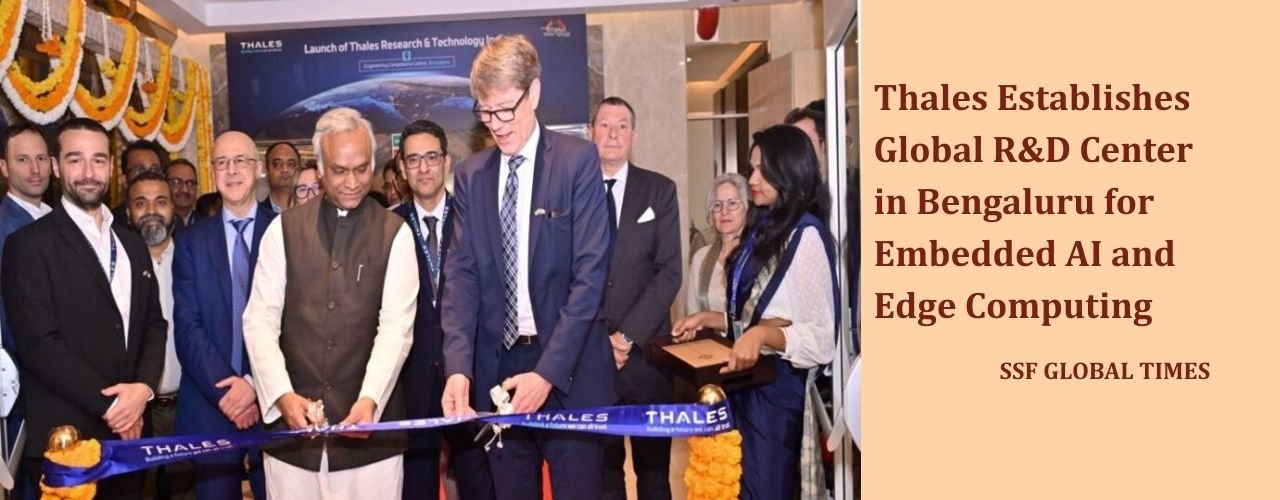
Bengaluru | 16 February 2026: Thales, the French aerospace, defense, and advanced technology company, has inaugurated its Research & Technology (R&T) center in Bengaluru. India now joins France, the UK, Canada, and Singapore as one of only five countries hosting Thales’ global corporate research laboratories.
The facility was unveiled during the India AI Impact Summit as part of the India-France Year of Innovation 2026 and will focus on real-time embedded software, edge computing, embedded AI, and hardware innovation.
“Thales is marking a decisive step in its journey in India. The company supports the Make in India vision and contributes significantly to strengthening the country’s wider industrial and technological landscape.”
– Marc Lamy, Consul General of France in Bengaluru
Advanced Engineering and AI
The R&T center operates within Thales’ existing Engineering Competence Centre in Bengaluru and will lead advanced research in:
- Real-time embedded software systems
- Edge computing architecture
- Embedded artificial intelligence
- Open hardware innovation
Real-time embedded systems are critical in aerospace, defense platforms, and industrial automation, where systems must respond within strict latency constraints. Edge computing enables local data processing for applications requiring low-latency performance or operating in limited-connectivity environments. Embedded AI focuses on deploying machine learning models directly on hardware devices with constrained computing resources.
“The launch of Thales Research & Technology India at our Engineering Competence Centre reinforces our commitment to ‘Make in India’, ‘Innovate in India’ and ‘Export from India’, strengthening the local ecosystem.”
-Ankur Kanaglekar, Vice-President – India, Thales
The center will collaborate with Indian startups, research institutions, and industry partners, reflecting a structured open-innovation model. Backed by Thales’ €4 billion annual global R&D investment, the Bengaluru lab is positioned for long-term research programs rather than short-term development cycles.